Organic Skincare Label Decoder
Select the features present on your skincare product packaging.
Result Title
Subtitle description
Detailed explanation goes here.
Select product features to decode its organic authenticity.
You pick up a bottle of serum. The label screams organic. Your brain instantly connects that word to dew-kissed plants, no chemicals, and pure goodness. You feel safe. But here is the uncomfortable truth: in the world of skincare, "organic" does not automatically mean "100% natural." In fact, it might mean almost nothing at all, depending on where you live and who is watching.
I’ve spent years digging into ingredient lists from my home in Wellington, New Zealand, where our approach to nature is pretty strict. Yet, even here, marketing tricks are everywhere. If you think buying an "organic" face cream guarantees a product free from synthetic preservatives or lab-made fragrances, you need to read this. We are going to strip away the greenwashing and look at what those labels actually promise.
The Legal Definition vs. The Marketing Dream
Let’s start with the big misconception. Many people believe that if a product says "organic," every single drop inside that jar comes directly from a farm without any human interference other than harvesting. That is simply not how chemistry works, nor is it how regulations work.
In many regions, including parts of Europe and Asia, there is no strict legal definition for the term "organic" when applied to cosmetics. A brand can slap "organic" on their packaging because they used one organic rosehip oil, while the rest of the formula is made of synthetic emulsifiers, stabilizers, and preservatives. This is called "greenwashing." It makes the product look eco-friendly without changing its chemical reality.
However, in places like the United States, the rules are tighter. The USDA National Organic Program sets specific standards. If you see the USDA seal, you know exactly what you are getting. But even then, "organic" refers to how the agricultural ingredients were grown (without synthetic pesticides or fertilizers), not necessarily whether the final product is entirely natural.
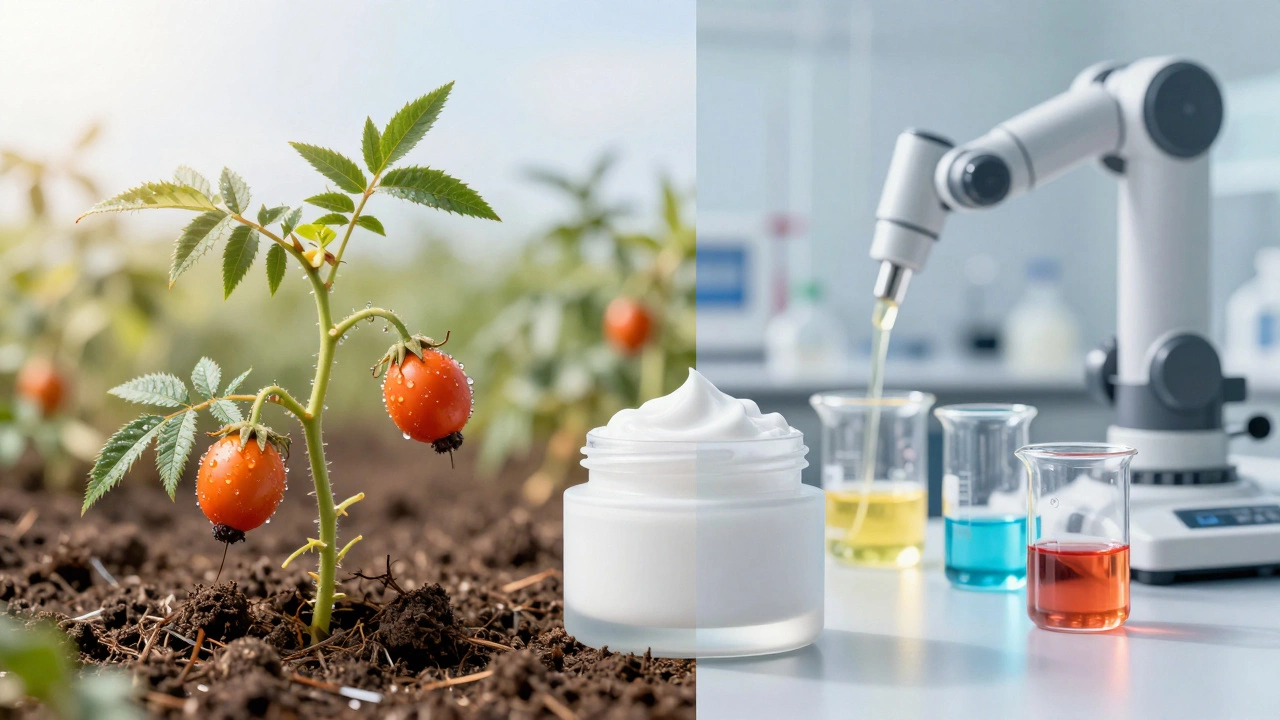
So, does organic mean 100% natural? No. It means the farming methods for certain plant ingredients were regulated. It does not ban synthetic processing aids, water (which is technically H2O, a chemical compound), or necessary preservatives that keep bacteria from growing in your lotion.
Natural vs. Organic: Two Different Buckets
To understand why these terms get mixed up, we have to separate them. They are related, but they are not synonyms.
- Natural: This implies the ingredient originates from nature-plants, minerals, or animals. However, "natural" is largely unregulated in skincare. Honey is natural. Petroleum jelly is derived from crude oil, which is natural, but most people don’t consider it "clean." Synthetic fragrance is not natural. But here is the kicker: natural things can be toxic. Poison ivy is 100% natural. Is it good for your face? Absolutely not.
- Organic: This refers to the cultivation process. An organic apple is grown without synthetic pesticides. An organic cotton towel is woven from cotton grown without synthetic pesticides. In skincare, it applies to the raw botanical materials.
A product can be organic but not fully natural if it uses organic plant extracts combined with synthetic preservatives. Conversely, a product can be natural but not organic if it uses wild-harvested herbs that weren't farmed under certified organic conditions.
The sweet spot for most conscious consumers is "Certified Organic." This usually requires a high percentage of organic content, but it still allows for some non-organic agricultural ingredients if they aren't commercially available in organic form, plus approved non-agricultural substances like water or salt.
Why Pure "Natural" Skincare Is Dangerous
If organic doesn't mean 100% natural, should you aim for 100% natural products? Here is why that goal is often flawed and potentially risky for your skin.
Preservation is the biggest hurdle. Water-based skincare products are breeding grounds for mold, yeast, and bacteria. To stop this, you need preservatives. Natural preservatives exist, like grapefruit seed extract or radish root ferment, but they are often less effective and can cause allergic reactions more frequently than synthetic ones like phenoxyethanol.
If a brand claims their product is 100% natural and contains water, ask yourself: how is it preserved? If they say "it's so potent you only use a little bit," that is a red flag. Bacteria grow fast. Without robust preservation, you risk putting microbial waste on your face. I’ve seen customers develop breakouts not from the active ingredients, but from contaminated "all-natural" jars left open on bathroom counters.
Furthermore, "natural" doesn't mean gentle. Essential oils are natural. They are also highly volatile and irritating to sensitive skin. Lavender oil, often praised for its calming scent, is a known allergen for many people. Synthetic alternatives can mimic the scent without the irritation potential. So, chasing "100% natural" might actually lead to worse skin health if you ignore the science of formulation.
Decoding Certification Labels
Since words like "natural" and "eco-friendly" are cheap and easy to print, certifications are your best friend. These third-party organizations audit brands to ensure they meet specific criteria. Not all certifications are created equal, though.
| Certification Body | Region Focus | Key Requirement | Strictness Level |
|---|---|---|---|
| USDA Organic | USA / Global | 95%+ organic agricultural ingredients | High |
| COSMOS Organic | Europe / Global | 20%+ organic ingredients (for rinse-off) / 10% (for leave-on) | Medium-High |
| Ecocert | France / Global | Bans GMOs, parabens, and animal testing; limits synthetic ingredients | High |
| NATRUE | Europe | Three levels: Natural, Organic, Bio. Bans synthetic fragrances/colors. | Very High |
Look for these logos on the front of the package. If a brand claims to be organic but hides behind vague language like "made with organic ingredients" without a certification logo, they likely contain less than 70% organic content. In the US, "made with organic ingredients" allows for as little as 70% organic content. The remaining 30% can be anything, including synthetic fillers.
In New Zealand, we often see the AsureQuality certification or international marks like COSMOS. These give you peace of mind that the supply chain has been audited. Without a logo, "organic" is just a marketing buzzword.
The Role of Synthetic Ingredients in "Clean" Beauty
Here is a controversial take: some synthetic ingredients are better for you and the planet than their natural counterparts. The fear of chemicals is irrational because everything is a chemical. Water is a chemical. Oxygen is a chemical.
Consider retinol. It is a derivative of Vitamin A. While you can find natural sources of Vitamin A, stable, effective retinol for anti-aging is typically synthesized in a lab to ensure potency and purity. Natural vitamin A from carrots degrades quickly and isn't strong enough to penetrate the skin barrier effectively.
Then there is hyaluronic acid. Originally extracted from rooster combs (gross, right?), modern hyaluronic acid is bio-fermented using bacteria. Is it natural? Technically, yes, it's biotech. Is it organic? No, because the bacteria aren't farmed. But it is incredibly effective and sustainable. Rejecting it because it's not "organic" would mean missing out on one of the best hydrators available.
Silicones are another example. Often demonized in the clean beauty movement, silicones create a breathable barrier that locks in moisture. While not "natural," they are inert and generally safe. Some natural oils can clog pores more easily than dimethicone. It’s about function, not just origin.

How to Read Ingredient Lists Like a Pro
Don't trust the front of the bottle. Turn it over. The ingredient list, or INCI (International Nomenclature of Cosmetic Ingredients), is the truth. Ingredients are listed in descending order of concentration. The first five ingredients make up the bulk of the product.
If a product claims to be "Organic Rose Water" but the first ingredient is "Aqua" (water) and the second is "Alcohol Denat" (denatured alcohol), and "Rosa Damascena Flower Water" is tenth on the list, you are mostly buying scented water with alcohol. That is not what you want.
Look for these signs of quality:
- Certification Logos: As mentioned, USDA, COSMOS, or Ecocert seals are your best bet.
- Short Ingredient Lists: Fewer ingredients often mean fewer potential irritants, though not always. It reduces the chance of hidden synthetics.
- Botanical Names First: If the product highlights lavender, you want to see "Lavandula Angustifolia Oil" near the top, not buried at the bottom after "Fragrance (Parfum)."
- Avoid "Fragrance": Even in organic products, "fragrance" can hide dozens of undisclosed chemicals. Look for "essential oils" or specific botanical names instead.
Also, check for the "Cold Processed" label. Many organic brands avoid high heat to preserve the nutrients in plant extracts. Heat can degrade vitamins and antioxidants, turning your expensive serum into warm water with a nice smell.
Is Organic Worth the Premium Price?
Organic skincare is expensive. Why? Because organic farming is labor-intensive. Farmers cannot use cheap synthetic pesticides to kill weeds instantly. They must hand-weed or use mechanical tools. Yields are lower. Processing organic ingredients requires separate facilities to avoid contamination with non-organic crops, which drives up operational costs.
When you buy a $60 organic moisturizer, you are paying for:
- Fair wages for farmers who follow stricter environmental practices.
- Certification fees paid to auditing bodies.
- Higher-quality raw materials that haven't been stripped of nutrients by harsh refining processes.
But is it worth it? For some, yes. If you have sensitive skin or eczema, reducing exposure to synthetic dyes and harsh preservatives can help. For others, a well-formulated conventional product with proven actives like niacinamide or salicylic acid might work better for acne or hyperpigmentation.
Don't let the price tag fool you into thinking a product is magical. An organic coconut oil is still comedogenic (pore-clogging) for many people, regardless of whether it's certified organic or not. Know your skin type first, then choose the formulation method that suits you.
Conclusion: What Should You Buy?
So, back to the original question: Does organic mean 100% natural? No. It means the agricultural ingredients were grown responsibly. It does not guarantee a zero-synthetic product, nor should it. Safety, efficacy, and stability matter more than ideological purity.
Your best move is to look for certified organic products if you care about environmental impact and farming practices. Ignore the word "natural" unless it's backed by a certification. And remember, the best skincare routine is one that works for your unique biology, whether that involves organic jojoba oil or lab-created peptides. Don't fall for the green hype. Read the label, check the cert, and trust the science.
Does organic skincare expire faster than regular skincare?
Yes, often. Because organic products may use milder, natural preservatives, they have a shorter shelf life once opened. Always check the PAO (Period After Opening) symbol on the jar, which looks like an open jar with a number and 'M' (e.g., 6M means 6 months). Store them in a cool, dark place to extend their life.
Can organic products cause allergies?
Absolutely. Just because something is natural doesn't mean your body will accept it. Essential oils, nuts, and seeds used in organic skincare are common allergens. Always patch test new products on your inner arm before applying them to your face.
What is the difference between USDA Organic and COSMOS Organic?
USDA Organic is primarily focused on the agricultural content of the ingredients, requiring 95% organic content for the "100% Organic" label. COSMOS is a European standard that covers both the ingredients and the manufacturing process, including bans on GMOs and animal testing, and allows for some synthetic preservatives if natural ones are insufficient.
Is "clean beauty" the same as organic?
No. "Clean beauty" is a marketing term with no legal definition. It generally implies products free from certain controversial ingredients like parabens or sulfates, but it does not require organic farming practices. A product can be "clean" but made with conventionally grown, pesticide-heavy crops.
Why do some organic creams feel greasy?
Organic formulations often rely heavily on plant oils and butters for texture and preservation, avoiding synthetic emulsifiers that create lightweight textures. If you dislike grease, look for organic water-based gels or serums rather than heavy balms.