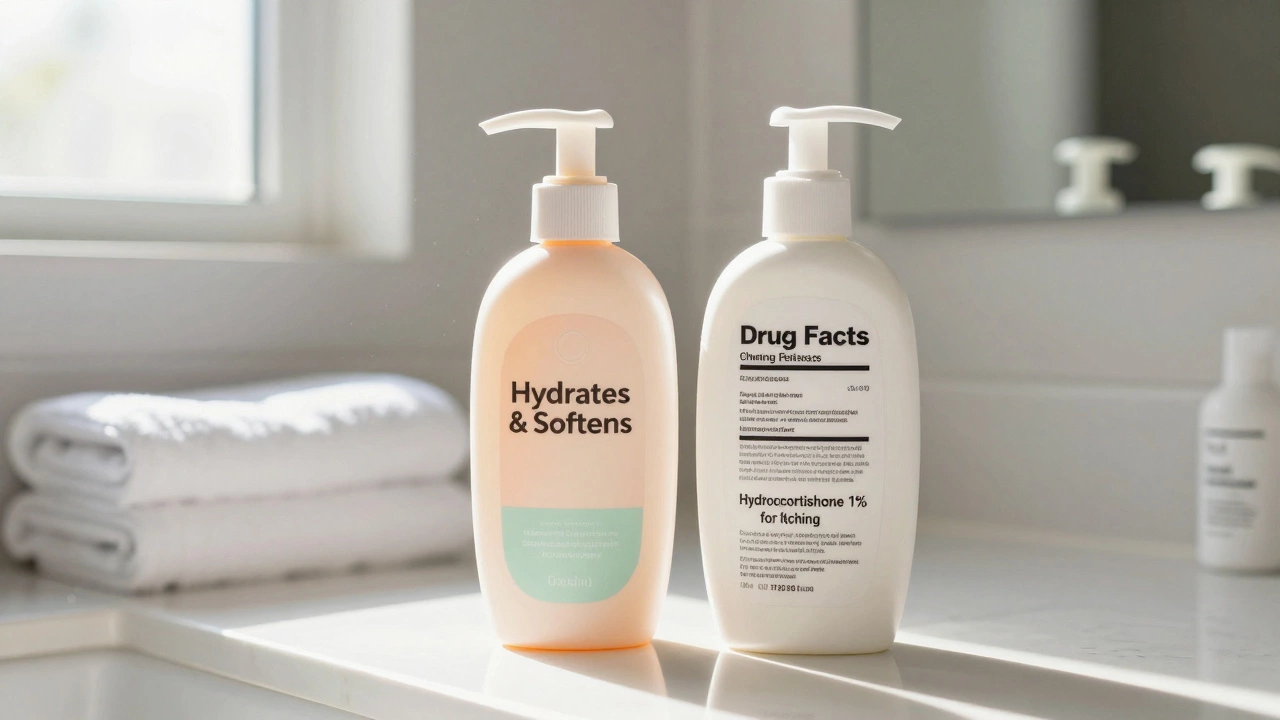
When you grab a bottle of body lotion from the shelf, are you picking up a cosmetic? It seems obvious-until you start digging. Some people think lotion is just moisturizer, nothing more. Others swear it’s medicine if it claims to heal dry skin. The truth? It depends on how it’s made, what it says on the label, and who’s watching.
What the law says about cosmetics
In the United States, the FDA defines a cosmetic as a product intended to cleanse, beautify, promote attractiveness, or alter the appearance without affecting the body’s structure or function. That includes things like shampoo, lipstick, foundation, and yes-lotion. If your lotion’s job is to soften skin, reduce flakiness, or make your arms feel smoother after a shower, it’s a cosmetic.
But here’s the catch: if that same lotion claims to treat eczema, reduce wrinkles by rebuilding collagen, or heal cracked heels, it crosses the line. Now it’s a drug. And drugs? They need FDA approval before they hit shelves. Cosmetics don’t.
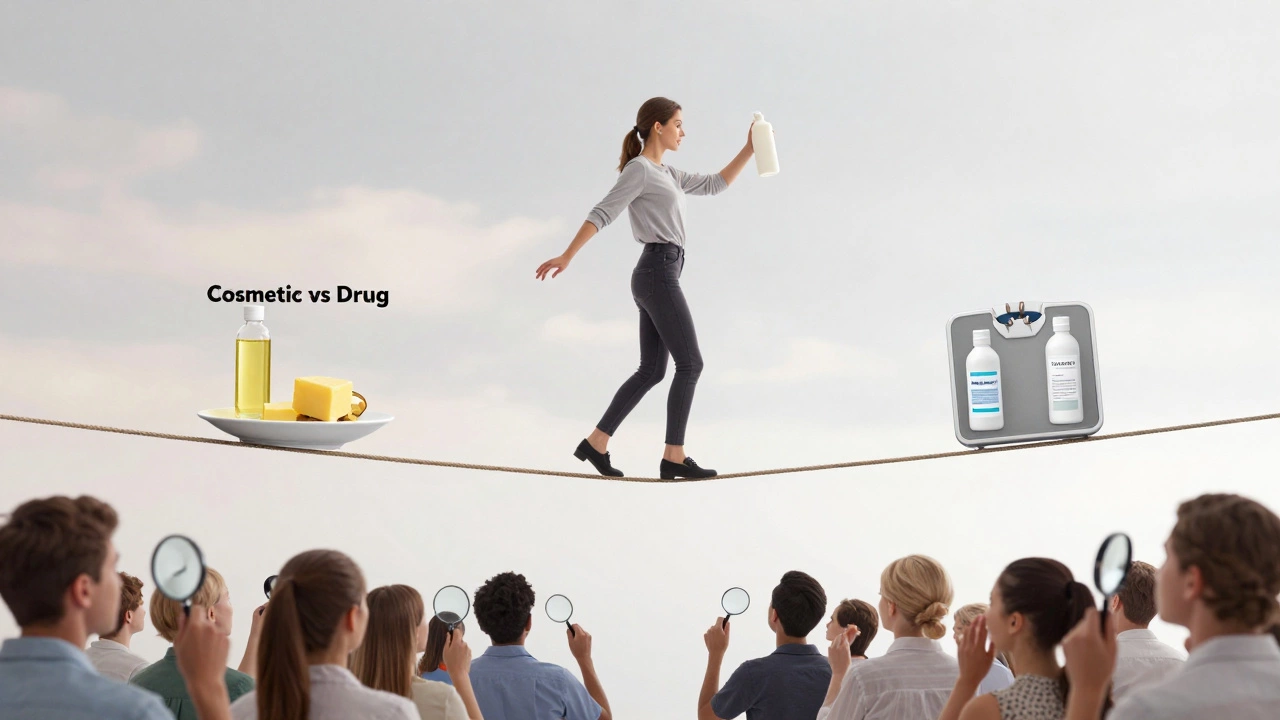
That’s why you’ll see phrases like “hydrates dry skin” on lotion bottles but never “treats psoriasis.” The wording is carefully chosen. Companies walk a tightrope between sounding effective and staying legal.
How lotion works as a cosmetic
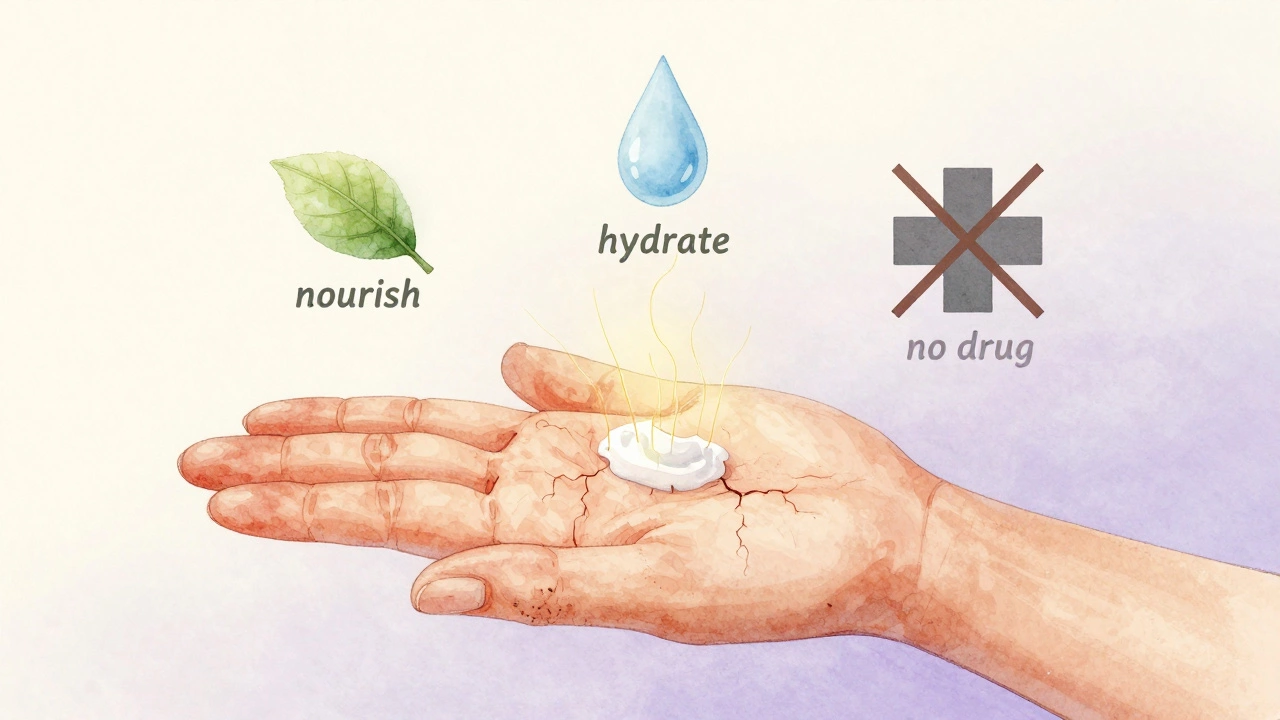
Most lotions you find in drugstores or supermarkets are designed to improve skin texture and feel. They contain ingredients like glycerin, shea butter, squalane, and dimethicone-all of which sit on top of the skin to lock in moisture. They don’t penetrate deeply or change how your skin cells behave. That’s classic cosmetic behavior.
Think of it like polish on nails. It makes them look better and feel smoother, but it doesn’t strengthen the nail bed. Lotion does the same for skin. It masks dryness, not fixes it. That’s why you need to reapply every day. It’s not healing-it’s covering.
Even luxury body lotions with fancy scents and botanical extracts fall under this category. Lavender oil might smell calming, and aloe vera might feel soothing, but unless they’re proven to alter skin biology, they’re still cosmetics.
The gray area: medicated lotions
Then there are the lotions that blur the line. Hydrocortisone cream for itching. Antifungal foot lotions. Anti-dandruff body washes. These are regulated as drugs because they’re meant to treat or prevent a condition.
Some brands sell “cosmetic” lotions with low-dose active ingredients-like niacinamide or retinol-that have proven skin benefits. Is that still a cosmetic? Technically, yes. The FDA allows these ingredients in cosmetics as long as they don’t make drug claims. So a lotion saying “reduces redness” is fine. One saying “treats rosacea” is not.
This is why you’ll see brands use phrases like “clinically shown to improve skin tone” instead of “cures acne.” They’re hinting at results without crossing into drug territory. It’s marketing, not medicine.
Global differences matter
Regulations aren’t the same everywhere. In the European Union, cosmetics are governed by the EU Cosmetics Regulation (EC) No 1223/2009. It’s stricter than the U.S. system. Certain ingredients banned in the EU are still allowed in American lotions. For example, formaldehyde-releasing preservatives are restricted in Europe but common in U.S. drugstore brands.
In Japan, skincare is treated with almost medical seriousness. Lotions labeled as “beauty essences” often contain high concentrations of active ingredients, yet they’re still classified as cosmetics because they don’t claim to treat disease.
So if you buy a lotion in Tokyo, Paris, or New Zealand, it might have the same name and smell-but the ingredients and legal status could be completely different.
Why this confusion exists
People want results. They see “anti-aging” on a bottle and assume it’s fixing wrinkles like a doctor would. But cosmetics can’t do that. They can only temporarily plump skin with hydration or reflect light to make fine lines less noticeable.
Manufacturers know this. That’s why they use language that feels powerful without being illegal. “Firming,” “renewing,” “revitalizing”-these words sound medical, but they’re legally safe. They don’t promise to change your skin’s structure.
Meanwhile, consumers get frustrated. They use a lotion for weeks and wonder why their deep wrinkles haven’t vanished. The product wasn’t broken. It was never meant to fix them.
How to tell if your lotion is a cosmetic
Here’s a simple test: look at the label.
- If it says “hydrates,” “softens,” “smoothes,” “nourishes,” or “fragrance-free” → cosmetic.
- If it says “treats,” “cures,” “reduces,” “prevents,” or lists a drug ingredient like benzoyl peroxide, salicylic acid (above 2%), or hydrocortisone → drug.
- If it’s sold in a pharmacy and labeled “for external use only” with a Drug Facts box → drug.
- If it’s sold in a beauty aisle with perfumes and body washes → cosmetic.
Check the ingredients list too. If it has a long list of plant extracts and oils with no active pharmaceutical ingredients, it’s almost certainly a cosmetic. If it has a single ingredient listed with a percentage (like “2% salicylic acid”), it’s likely regulated as a drug.
What this means for you
If you’re using lotion just to feel better after a shower, to stop itching from dry winter air, or to make your skin glow under lights-you’re using a cosmetic. That’s perfectly fine. Lotions are great at what they do: comfort and enhance.
If you have a medical skin condition like psoriasis, severe acne, or rosacea, don’t rely on a cosmetic lotion. Talk to a dermatologist. You need a product designed and tested as a drug.
And if you’re shopping for skincare, understand the difference. A $60 lotion won’t reverse aging. But a $15 one might give you the same smooth feel without the hype.
Knowing whether your lotion is a cosmetic-or something more-helps you make smarter choices. It stops you from wasting money on products that can’t deliver what they promise. And it keeps you safe from ingredients you might not want on your skin.
Final verdict
Yes, lotion is a cosmetic product-unless it’s doing more than moisturizing. Most lotions on the market are designed to improve appearance and feel, not treat disease. That’s the legal, scientific, and practical truth.
Don’t let fancy marketing fool you. The label holds the answer. Look at the claims. Check the ingredients. Understand the limits. That’s how you know what you’re really buying.
Is all lotion considered a cosmetic?
No, not all lotion is a cosmetic. If it’s meant to treat or prevent a medical condition-like eczema, acne, or fungal infections-it’s regulated as a drug. Most lotions sold in beauty aisles are cosmetics, but those sold in pharmacies with drug claims or active pharmaceutical ingredients are not.
Can a lotion be both a cosmetic and a drug?
No, a single product can’t be legally classified as both in most countries. If it makes a drug claim, it must follow drug regulations. Some products are sold in two versions: one as a cosmetic (no drug claims) and another as a drug (with active ingredients and FDA approval). Always check the label to see which version you’re buying.
Why do some lotions claim to reduce wrinkles if they’re just cosmetics?
Cosmetic companies use language that suggests results without making direct medical claims. Phrases like “visibly reduces fine lines” or “smooths appearance of wrinkles” are allowed because they don’t promise to change skin structure. They rely on temporary effects like hydration or light reflection. Real wrinkle reduction requires drugs like retinoids or procedures like lasers.
Are natural or organic lotions always safer?
No. “Natural” and “organic” are marketing terms, not legal ones. A lotion labeled organic can still contain irritants like essential oils or plant extracts that cause allergic reactions. The safety of a product depends on its ingredients and concentration-not whether it’s labeled “natural.” Always patch test new products, even if they’re labeled organic.
Does the country where I buy lotion affect its classification?
Yes. Regulations vary by country. The EU bans more ingredients than the U.S. Japan allows higher concentrations of actives in cosmetics. In New Zealand, lotions are regulated under the Cosmetic Products Group Standard, which follows similar rules to the U.S. But what’s legal in one place may be restricted or banned in another. Always check local guidelines if you’re unsure.