Build Your Personal Skincare Routine
Your Recommended Routine
Cleanser
Gel Cleanser with Salicylic Acid
Removes excess oil without strippingMoisturizer
Lightweight Gel Cream
Hydrates while maintaining barrierSunscreen
Broad-Spectrum SPF 30+ (Mineral or Chemical)
Non-negotiable daily defenseExfoliant (2-3x Week)
BHA (Salicylic Acid) Liquid Exfoliant
Clears pores and prevents buildupTreatment (Optional)
Retinol Serum
Targeted solution for agingSelect your skin details and click "Generate My Routine"
We'll customize the 5 categories of skincare products for you.
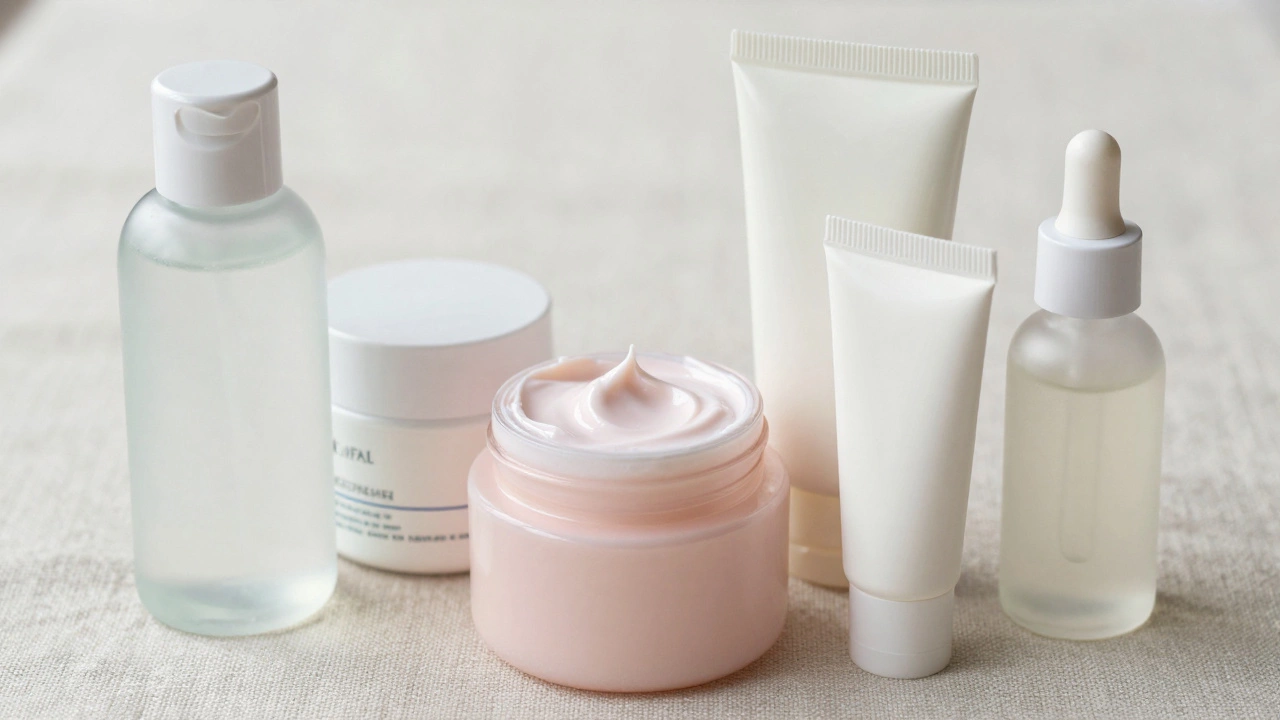
You walk into a pharmacy or browse an online beauty store, and you are immediately hit with a wall of bottles, jars, and tubes. There is something for every skin type, every concern, and every budget. It is easy to feel overwhelmed. You might wonder if you really need ten different steps just to look decent in the morning. The truth is simpler than marketing suggests. While there are hundreds of specific product types, they all fall into five main categories of skincare products. Understanding these core groups helps you build a routine that actually works, without wasting money on things you do not need.
Cleansers: The Foundation of Every Routine
Everything starts with cleaning your face. If you skip this step, the rest of your routine is like painting over a dirty wall. Cleansers remove dirt, oil, makeup, and pollution that accumulate throughout the day. Without a good cleanser, pores get clogged, leading to breakouts and dull skin. But not all cleansers are created equal. Choosing the wrong one can strip your skin of its natural oils, leaving it tight and irritated.
On the other hand, people with dry or sensitive skin should look for cream or milk cleansers. These formulas are gentler and help maintain the skin's moisture barrier while washing away impurities. Oil cleansers have also become popular, especially for removing waterproof makeup and sunscreen. They work on the principle that "like dissolves like," meaning oil binds to the oil on your skin and lifts it away without harsh scrubbing. Most dermatologists recommend cleansing twice a day-once in the morning to remove night sweat and once at night to take off the day's grime.
Moisturizers: Hydration and Barrier Protection
After cleansing, you need to lock in hydration. Moisturizers are not just for dry skin; even oily skin needs moisture. The goal is to keep the skin barrier healthy. A strong skin barrier keeps irritants out and water in. When your barrier is compromised, you experience redness, flaking, and increased sensitivity. Moisturizers come in various textures, from heavy balms to lightweight gels, depending on your climate and skin type.
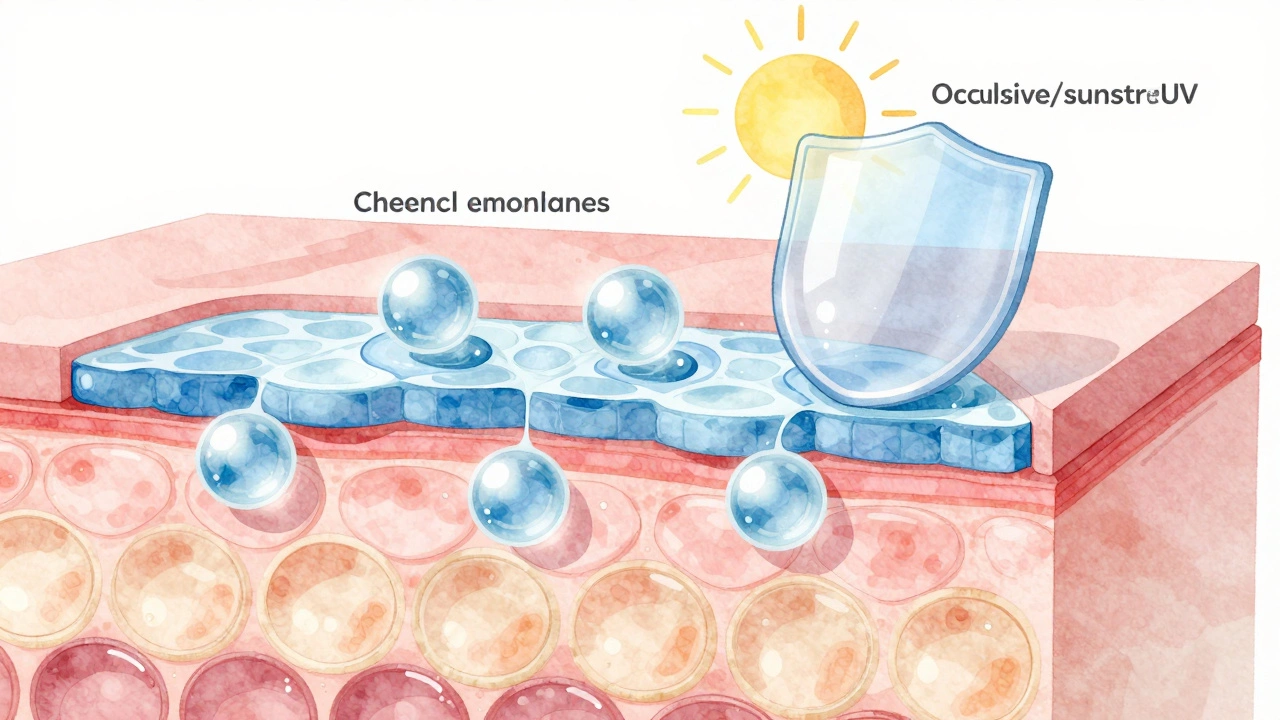
The key ingredients in moisturizers usually fall into three groups: humectants, emollients, and occlusives. Humectants, like hyaluronic acid or glycerin, draw water into the skin. Emollients, such as ceramides or fatty acids, smooth out rough patches by filling in gaps between skin cells. Occlusives, like petrolatum or dimethicone, create a physical seal on top of the skin to prevent water loss. For most people, a simple moisturizer containing a mix of these ingredients is sufficient. In humid climates, a gel-based moisturizer might be enough. In dry, cold weather, you might need a richer cream to prevent cracking and irritation.
Sunscreens: Non-Negotiable Daily Defense
If there is one product that every single person needs, regardless of age or skin type, it is sunscreen. Sun damage is the number one cause of premature aging, dark spots, and skin cancer. Many people think they only need sunscreen when going to the beach, but UV rays penetrate windows and reflect off surfaces like snow and water. Daily use is essential.
There are two main types of sunscreens: chemical and mineral. Chemical sunscreens absorb UV radiation and convert it into heat, which is then released from the skin. They tend to be lighter and easier to blend under makeup. Mineral sunscreens, containing zinc oxide or titanium dioxide, sit on top of the skin and physically block UV rays. They are often better for sensitive skin or those prone to rosacea because they are less likely to cause irritation. Reapplication is crucial. If you are outside, you need to reapply every two hours. If you are indoors near a window, applying it once in the morning is usually sufficient, provided you use a generous amount.
Exfoliants: Removing Dead Skin Cells
Your skin naturally sheds dead cells every day, but sometimes the process slows down. This leads to a buildup of dead skin cells, making your complexion look dull and uneven. Exfoliants help speed up this shedding process, revealing fresher, brighter skin underneath. However, over-exfoliating is a common mistake that can damage the skin barrier. Most people should exfoliate only two to three times a week, depending on their skin's tolerance.
Exfoliants are divided into physical and chemical types. Physical exfoliants include scrubs with beads or brushes that manually slough off dead skin. While they provide immediate smoothness, they can be too harsh if used aggressively. Chemical exfoliants are generally preferred by skincare experts. They use acids to dissolve the bonds holding dead skin cells together. Alpha Hydroxy Acids (AHAs), like glycolic acid, work on the surface of the skin and are great for improving texture and brightness. Beta Hydroxy Acids (BHAs), like salicylic acid, penetrate deeper into pores and are ideal for treating blackheads and acne. Using the right exfoliant can make your other products, like serums and moisturizers, absorb better and work more effectively.
Treatments: Targeted Solutions for Specific Concerns
The fifth category covers targeted treatments. These products address specific issues that cleansers, moisturizers, and sunscreens cannot fix alone. This category includes serums, spot treatments, eye creams, and masks. Unlike the previous four categories, which are part of a basic routine for everyone, treatments are optional and depend on your individual goals.
| Ingredient | Primary Benefit | Best For |
|---|---|---|
| Vitamin C | Brightening and antioxidant protection | Dull skin, dark spots |
| Retinol | Cell turnover and collagen production | Fine lines, acne, aging |
| Niacinamide | Pore refinement and barrier support | Oily skin, redness |
| Hyaluronic Acid | Deep hydration | Dry, dehydrated skin |
For example, if you struggle with fine lines, you might add a retinol serum to your evening routine. Retinol speeds up cell turnover, helping to smooth wrinkles over time. If you have hyperpigmentation, Vitamin C can help fade dark spots and protect against further damage from pollution. The key with treatments is to introduce them slowly. Start with a lower concentration and use them a few times a week to see how your skin reacts. Layering too many active ingredients at once can lead to irritation and counterproductive results. Stick to one or two treatment products at a time to monitor their effects accurately.
Building Your Personal Routine
Now that you know the five main categories, how do you put them together? You do not need to buy a product from each category every day. A minimal effective routine consists of a cleanser, a moisturizer, and a sunscreen. Add an exfoliant a few times a week. Finally, incorporate treatments based on your specific concerns. Listen to your skin. If it feels tight after cleansing, switch to a gentler formula. If you break out after using a new treatment, pause it and let your skin recover. Skincare is not one-size-fits-all. It is about finding the balance that keeps your skin healthy, comfortable, and resilient.
Do I need all five categories of skincare products?
No, you do not need every category every day. The essentials are a cleanser, moisturizer, and sunscreen. Exfoliants and treatments are added based on frequency and specific skin needs. Starting with the basics prevents overwhelming your skin and wallet.
Can I use an exfoliant every day?
Generally, no. Daily exfoliation can damage your skin barrier, leading to sensitivity and breakouts. Most dermatologists recommend exfoliating two to three times a week. Always follow the instructions on the product label and monitor your skin's reaction.
What is the difference between a serum and a moisturizer?
Serums are lightweight treatments designed to deliver high concentrations of active ingredients deep into the skin. Moisturizers are heavier products that hydrate and seal the skin's barrier. You typically apply serum before moisturizer to lock in the benefits.
Is sunscreen necessary if I stay indoors?
Yes, if you are near windows. UV rays can penetrate glass and cause cumulative damage over time. If you work far from windows and have no exposure to daylight, you might skip it, but daily application is still recommended for consistent protection against aging.
How do I know which cleanser is right for my skin?
If your skin feels tight or squeaky after washing, the cleanser is too harsh. Aim for a clean but soft feeling. Oily skin benefits from gel or foaming cleansers, while dry or sensitive skin does better with cream, milk, or oil-based cleansers.