Aging Skin Ingredient Builder
Select your primary skin concerns and sensitivity level to generate a recommended ingredient stack.
Your Personalized Ingredient Stack
Morning Routine
Evening Routine
Key Advice for Your Profile
You wake up, look in the mirror, and notice that your skin doesn’t bounce back quite like it used to. Maybe there’s a new fine line near your eye, or your cheeks look a bit flatter than they did five years ago. It’s frustrating, but here’s the truth: aging skin isn’t just about wrinkles. It’s about a fundamental shift in how your body produces collagen, retains moisture, and repairs itself. If you’re wondering what is best for aging skin, the answer isn’t one magic cream. It’s a strategic combination of ingredients that actually change how your cells behave.
Most people waste money on products that sit on top of their skin without doing anything meaningful. To get real results, you need to understand what your skin is losing and what it needs to regain. This guide cuts through the marketing noise to tell you exactly which ingredients work, why they work, and how to build a routine that delivers visible changes.
Understanding What Happens to Your Skin as You Age
Your skin is an organ, and like any other part of your body, it slows down with time. By your mid-20s, your natural production of Collagen begins to decline by about 1% per year. Collagen is the structural scaffolding that keeps your skin firm and plump. When it breaks down, you lose volume and elasticity. Simultaneously, your cell turnover rate-the speed at which fresh skin cells rise to the surface-slows dramatically. In your 20s, this cycle takes about 28 days. By your 50s, it can take nearly 60 days. That means dead, dull cells linger longer, making your complexion look gray or tired.
Elastin is another key player. While collagen provides structure, elastin gives skin its snap-back ability. Once elastin fibers degrade due to sun exposure and age, they don’t regenerate easily. This leads to sagging and loose skin, particularly around the jawline and neck. Finally, your skin barrier weakens. The lipid layer that holds moisture in becomes thinner, leading to chronic dryness and increased sensitivity. Understanding these three pillars-collagen loss, slow turnover, and barrier damage-is the first step to fixing the problem.
The Gold Standard: Retinoids for Cell Renewal
If you only pick one ingredient to fight aging, make it a retinoid. Retinol is a derivative of Vitamin A that has decades of clinical data backing its efficacy. Unlike most ingredients that just moisturize, retinol communicates with your cells. It tells them to act younger. Specifically, it speeds up cell turnover, pushing fresh cells to the surface faster and fading dark spots. More importantly, it penetrates deep into the dermis to stimulate fibroblasts, the cells responsible for producing new collagen.
There is a hierarchy of potency here. Over-the-counter Retinaldehyde (retinal) is stronger than standard retinol but gentler than prescription strength. Prescription Tretinoin is the gold standard, offering the most dramatic results for texture and pigmentation, though it comes with a higher risk of irritation. Start low and go slow. Apply a pea-sized amount at night, always paired with a heavy moisturizer to counteract dryness. Expect some peeling or redness in the first few weeks; this is normal adaptation, not damage.
Protecting and Brightening with Antioxidants
While retinoids repair damage at night, antioxidants defend against daily attacks during the day. The biggest enemy of aging skin isn’t just time-it’s oxidative stress from UV rays, pollution, and blue light. These factors create free radicals that chop up collagen and cause inflammation. Vitamin C is the most potent topical antioxidant available. It neutralizes free radicals before they can harm your cells and inhibits melanin production, which helps fade age spots and brighten overall tone.
Not all Vitamin C is created equal. Look for L-ascorbic acid at a concentration between 10% and 20%, formulated at a low pH (below 3.5) to ensure penetration. Other effective antioxidants include Vitamin E and Ferulic Acid, which stabilize Vitamin C and boost its effectiveness. Applying a serum with this trio every morning under your sunscreen creates a protective shield. Without this daytime defense, your nighttime repair efforts are constantly being undone by environmental damage.
Hydration Strategies: Hyaluronic Acid and Ceramides
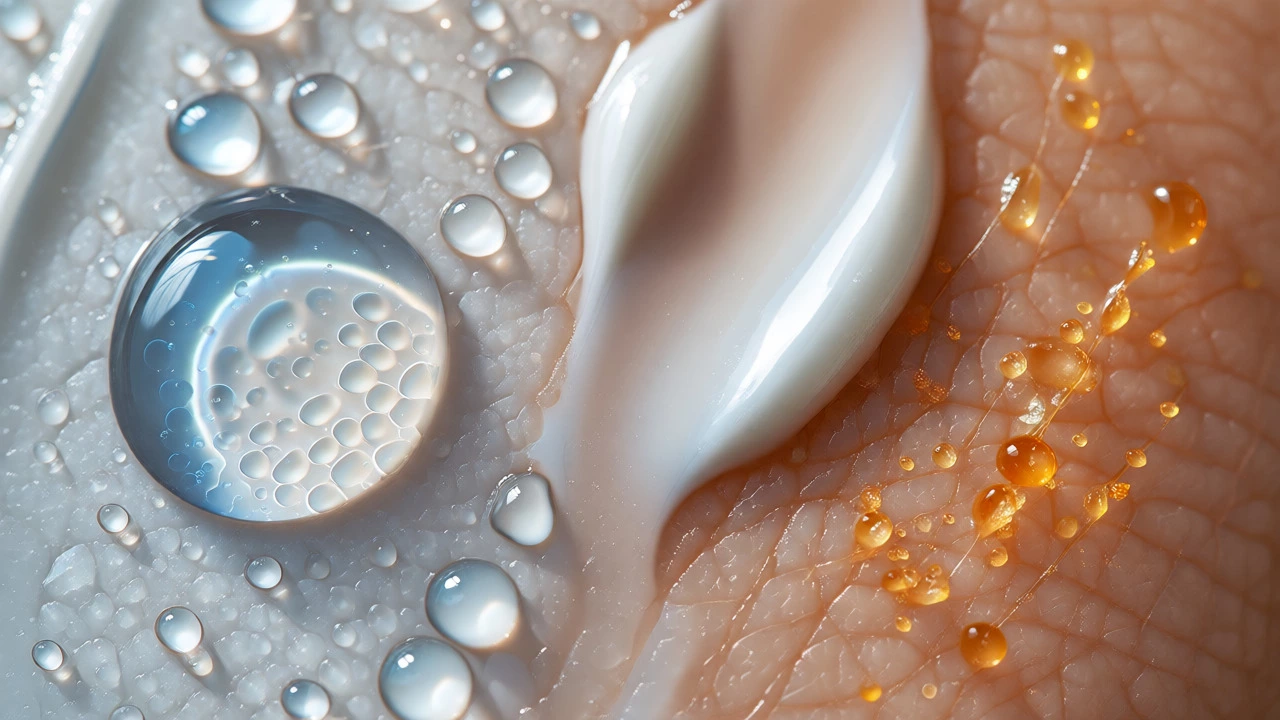
Aging skin loses its ability to hold water. This isn’t just about feeling tight; dehydrated skin looks crepey and emphasizes fine lines. Enter Hyaluronic Acid. This molecule can hold up to 1,000 times its weight in water. However, it’s often misunderstood. Hyaluronic acid is a humectant, meaning it draws moisture from its surroundings. If the air is dry, it might pull water from deeper layers of your skin, leaving you drier if not sealed in properly.
To use hyaluronic acid correctly, apply it to damp skin immediately after cleansing, then lock it in with a moisturizer containing occlusives. For long-term barrier health, prioritize Ceramides. These lipids are the mortar between your skin cells. As we age, our natural ceramide levels drop, compromising the barrier. Using a ceramide-rich cream helps restore that seal, preventing transepidermal water loss and keeping irritants out. Think of hyaluronic acid as the sponge and ceramides as the container that keeps the water inside.
Exfoliation Done Right: AHAs vs. BHAs
Because cell turnover slows down, dead skin cells pile up, creating a rough texture and dull appearance. Chemical exfoliants are far superior to physical scrubs, which can cause micro-tears in fragile aging skin. Alpha Hydroxy Acids (AHAs), such as Glycolic Acid and Lactic Acid, work on the surface to dissolve the bonds holding dead cells together. Glycolic acid has the smallest molecular size, allowing it to penetrate deepest for maximum impact on texture and tone. Lactic acid is larger, making it gentler and more hydrating, ideal for sensitive skin.
Beta Hydroxy Acids (BHAs), like Salicylic Acid, are oil-soluble and better for pores, but less critical for pure anti-aging unless you also struggle with breakouts. Limit chemical exfoliation to 2-3 times a week. Over-exfoliating strips the barrier, leading to inflammation, which actually accelerates aging (a process known as 'inflammaging'). Always follow exfoliation with soothing ingredients and never skip sunscreen, as AHAs increase sun sensitivity.

Building Your Routine: A Practical Example
Knowing the ingredients is half the battle; putting them together without causing irritation is the other half. Here is a balanced routine designed for mature skin that balances efficacy with tolerance.
| Step | Morning Routine | Evening Routine | Why It Works |
|---|---|---|---|
| Cleanse | Gentle Cream Cleanser | Oil Cleanser + Gel Cleanser | Removes impurities without stripping natural oils. |
| Treat | Vitamin C Serum | Retinol or Tretinoin | Day protects against damage; Night repairs and renews. |
| Hydrate | Hyaluronic Acid on Damp Skin | Niacinamide or Peptides | Boosts moisture retention and supports barrier function. |
| Moisturize | Ceramide-Rich Moisturizer | Rich Night Cream | Seals in active ingredients and prevents water loss. |
| Protect | Broad-Spectrum SPF 30+ | N/A | Prevents further photoaging and hyperpigmentation. |
Note that you should not use strong acids and retinoids on the same night initially. Alternate nights if your skin is sensitive. Consistency beats intensity. A moderate routine followed religiously will yield better results than an aggressive one that causes redness and forces you to quit.
Professional Treatments: When Topicals Aren’t Enough
While skincare is powerful, it has limits. For significant volume loss or deep static wrinkles, professional interventions offer faster, more dramatic results. Chemical Peels performed by estheticians use higher concentrations of acids to remove damaged outer layers, revealing smoother skin underneath. Microneedling stimulates collagen production by creating controlled micro-injuries, triggering the body’s natural healing response. This is particularly effective for improving texture and reducing the appearance of scars.
For those seeking non-invasive tightening, radiofrequency treatments heat the deeper layers of skin to contract existing collagen and stimulate new growth. Injectable treatments like Botox relax muscles to prevent dynamic wrinkles, while dermal fillers restore lost volume in cheeks and lips. Consult a board-certified dermatologist to determine which treatment aligns with your goals and budget. Remember, professional treatments maintain the results of your home care-they don’t replace it.
Lifestyle Factors That Accelerate Aging
You can buy the best serums in the world, but if your lifestyle habits are working against you, you’ll see limited gains. Sun exposure accounts for up to 80% of visible skin aging. Wearing SPF daily is non-negotiable. Sugar consumption also plays a role through a process called glycation, where sugar molecules bind to proteins like collagen and elastin, forming Advanced Glycation End-products (AGEs). These make collagen stiff and brittle, leading to yellowing and sagging.
Sleep deprivation increases cortisol levels, which breaks down collagen. Aim for 7-9 hours of quality sleep. Smoking constricts blood vessels, depriving skin of oxygen and nutrients, while alcohol dehydrates the skin and causes inflammation. Addressing these internal factors amplifies the effectiveness of your external skincare regimen.
How long does it take to see results from anti-aging products?
It depends on the ingredient. Hydration effects from hyaluronic acid are immediate. Brightening from Vitamin C may take 4-6 weeks. Structural changes from retinoids typically require 3-6 months of consistent use because collagen synthesis is a slow biological process. Patience is essential.
Can I use retinol and Vitamin C together?
Yes, but timing matters. Use Vitamin C in the morning to protect against free radicals and retinol at night to repair. Using them simultaneously can sometimes cause irritation or reduce efficacy due to pH differences, so splitting them across the day is the safest and most effective approach.
Is expensive skincare better for aging skin?
Not necessarily. Price often reflects packaging and marketing. Key ingredients like retinol, niacinamide, and hyaluronic acid are affordable and effective regardless of brand. However, higher-end brands may have better formulation stability or delivery systems. Focus on ingredient concentration and formulation technology rather than price tag alone.
What is the most important product for aging skin?
Sunscreen. No amount of retinol or Vitamin C can counteract daily UV damage. Preventing further photoaging is easier and cheaper than reversing it. A broad-spectrum SPF 30 or higher is the single most critical anti-aging product you own.
Should I start using anti-aging products in my 20s?
Prevention starts early. In your 20s, focus on sunscreen and antioxidants. Introduce mild retinoids in your late 20s or early 30s when collagen production naturally begins to dip. Starting too aggressively too soon can compromise your skin barrier unnecessarily.