Skin Barrier Health Checker
How many products do you use daily?
Your Skin Barrier Assessment
You’ve scrolled through ten skincare routines. Ten. Each one says you need twelve steps, five serums, and a jade roller just to survive the morning. But here’s the truth: you don’t need any of that.
Skincare Isn’t About Layers - It’s About Protection
Most people think skincare is about fixing problems. Dark spots? Add a vitamin C serum. Dry skin? Layer on three moisturizers. Breakouts? Try a 10% salicylic acid toner. But that’s backwards. Skincare isn’t a repair shop. It’s a shield.
Your skin’s job is to protect you. It blocks germs, holds in moisture, and shuts out pollution. All you really need to do is help it do that job - without breaking it.
Here’s what actually works, backed by dermatologists and real skin behavior, not influencer trends:
- A gentle cleanser to remove dirt without stripping natural oils
- A moisturizer with barrier-supporting ingredients like ceramides or squalane
- A broad-spectrum SPF 30+ every single day
That’s it. Three products. That’s all your skin needs to stay healthy, balanced, and resilient.
Why More Products Make Things Worse
Let’s say you’re using a foaming cleanser, an exfoliating toner, a niacinamide serum, a retinol cream, a hydrating essence, and a night oil. That’s six products. Now add sunscreen in the morning - seven.
What happens? Your skin gets overwhelmed. It doesn’t know what to focus on. The pH balance shifts. The barrier gets damaged. And suddenly, your skin isn’t just dry - it’s red, flaky, and sensitive.
A 2023 study from the Journal of the American Academy of Dermatology found that people using more than five topical products daily were 3.2 times more likely to develop contact dermatitis than those using three or fewer. It’s not about what you add - it’s about what you don’t break.
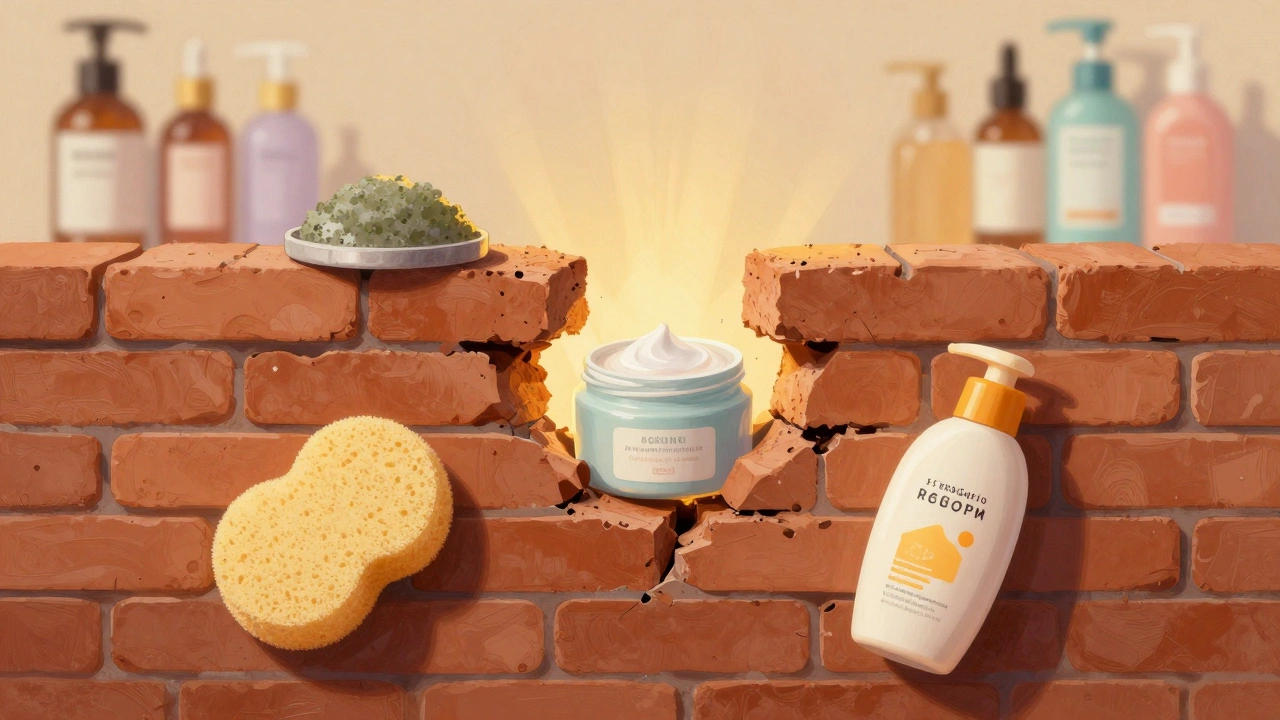
Think of your skin like a brick wall. Each product is a tool. Some help lay bricks. Others chip them away. Too many tools, and the wall crumbles.
The Three Essentials - Explained
1. Gentle Cleanser
Don’t use something that squeaks when you’re done. That’s not clean - that’s stripped. Your skin makes natural oils (sebum) to stay protected. Harsh cleansers remove them, then your skin overcompensates by making even more. That’s why oily skin gets oilier after using strong soaps.
Look for cleansers labeled “non-comedogenic” and “pH-balanced.” Ingredients like glycerin, ceramides, or amino acids are your friends. Avoid sodium lauryl sulfate (SLS), alcohol, and fragrance if your skin reacts easily.
Wash twice a day - morning and night. No scrubbing. Just rinse with lukewarm water. Your skin isn’t dirty. It’s just coated in dust, sweat, and leftover sunscreen.
2. Moisturizer
Moisturizer isn’t about hydration. It’s about sealing. Water gets absorbed from the air or your skin’s inner layers. But without a barrier, it evaporates. That’s when you feel tightness or flakiness.
Good moisturizers have three types of ingredients:
- Humectants - pull water in (hyaluronic acid, glycerin)
- Emollients - smooth the surface (squalane, jojoba oil)
- Barrier repair agents - rebuild the skin’s wall (ceramides, cholesterol, fatty acids)
You don’t need a $120 jar. A $20 moisturizer with ceramides and squalane works just as well. Apply it while your skin is still damp after cleansing. That locks in moisture better than waiting until your skin dries.
3. SPF 30+ Daily
This isn’t optional. It’s the single most effective anti-aging, anti-dark-spot, anti-cancer product you’ll ever use.
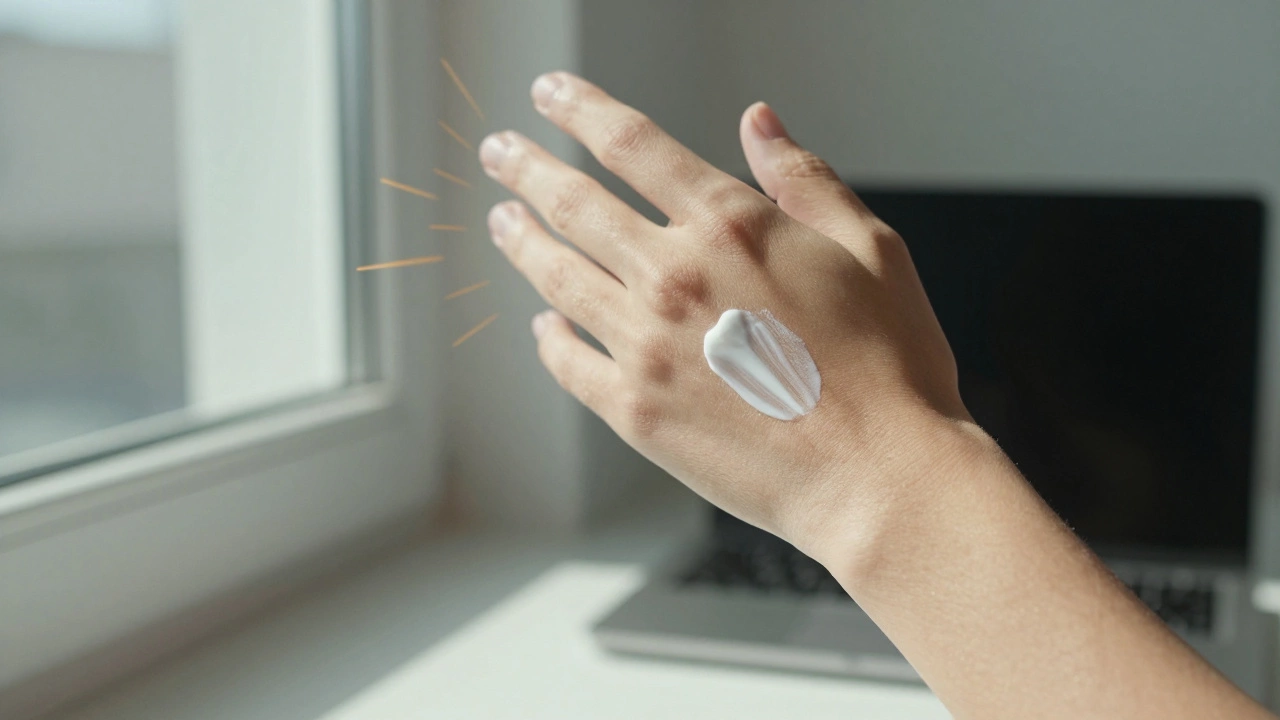
UV rays don’t wait for sunny days. They’re there on cloudy days. They go through windows. In Wellington, even in winter, UV levels hit 3-4 on the scale - enough to damage skin over time.
Use at least SPF 30. Mineral sunscreens (zinc oxide, titanium dioxide) are gentler if you have sensitive skin. Chemical sunscreens work too - just make sure they’re broad-spectrum and reapplied every 2-3 hours if you’re outside.
Don’t skip this because you’re indoors. Your desk near a window? You’re exposed. Your commute? Exposed. Your morning walk? Exposed.
When Do You Need More?
Not everyone needs extra steps. But if you have a specific concern, you can add one targeted product - not five.
Here’s a simple guide:
- Dark spots or dullness? Try a vitamin C serum in the morning - just one. Apply after cleansing, before moisturizer.
- Acne or clogged pores? Use a low-dose salicylic acid (0.5-2%) cleanser or toner, 2-3 nights a week. Not every day.
- Fine lines or texture? Add a retinoid (retinol or adapalene) at night, 2-3 times a week. Start slow. Your skin needs to adjust.
- Redness or rosacea? Skip actives. Stick to the three basics and look for centella asiatica or allantoin in your moisturizer.
Never combine retinoids with strong acids. Never use two actives in the same routine unless you’ve tested them separately. Skin doesn’t multitask well.
What to Avoid - The Real Traps
There are three traps everyone falls into:
- “I need to exfoliate every day.” No. Physical scrubs or chemical exfoliants more than twice a week damage your barrier. Your skin sheds naturally - you don’t need to force it.
- “This serum is from Korea and has 17 ingredients.” More ingredients don’t mean better. Often, it means more risk of irritation. Simpler is safer.
- “I’ll skip sunscreen if I’m not going out.” You’re still getting UV exposure. Indoor lighting, especially LED screens, emits low-level blue light that can contribute to pigmentation over time.
Also, stop buying products based on “anti-aging” claims. Aging isn’t a disease. It’s a process. You can slow visible signs - but not by slathering on a $200 cream with “collagen-boosting” in the name. Collagen molecules are too big to penetrate skin. That’s marketing, not science.
Your Real Skincare Routine (Simple Version)
Here’s what your actual routine should look like:
Morning:
- Wash face with gentle cleanser
- Apply moisturizer
- Apply SPF 30+ (reapply if outside for more than 3 hours)
Night:
- Wash face with gentle cleanser
- Apply moisturizer
That’s it. No toners. No essences. No serums unless you’re addressing a specific issue - and even then, just one.
If you’re tired, stressed, or sick? Stick to just cleanser and moisturizer. Your skin doesn’t need perfection. It needs consistency - and rest.
How to Know If It’s Working
Don’t look for instant glow. Look for stability.
After four weeks of this simple routine:
- Your skin doesn’t feel tight after washing
- You’re not breaking out more than once a month
- Redness or irritation has reduced
- Your skin feels calm, not reactive
That’s success. Not a “glass skin” filter. Not a 12-step ritual. Just healthy, functioning skin.
What Comes Next?
If your skin is stable and you want to upgrade, pick one new product. Test it for 4-6 weeks. If nothing changes - good. If it irritates - stop. If it helps - keep it.
Skincare isn’t a race. It’s not a collection. It’s not about having the latest product. It’s about giving your skin what it actually needs - and nothing more.
Less is not just simpler. It’s smarter. And in the long run, it’s the only way your skin will thank you.