
Skin Treatment Timeline Calculator
Find Your Treatment Timeline
Select your skin type and concerns to see realistic results timeline. Based on 2025 dermatological research.
Expected Results Timeline
Important Notes
Consistency is critical. Over-treating can cause redness, flaking, and barrier damage. For acne-prone skin: use salicylic acid peels every 2-4 weeks. For mature skin: RF microneedling works best when spaced 4 weeks apart. Never combine retinol and vitamin C in the same routine.
There’s no one-size-fits-all answer to "Which treatment is best for skin?" because your skin isn’t like anyone else’s. What works for someone with oily, acne-prone skin might do nothing for someone with dry, sensitive skin-or even make it worse. The truth is, the best treatment depends on your skin type, your concerns, and your lifestyle. And in 2025, with so many options flooding the market, it’s easy to feel overwhelmed.
What’s Actually Working Right Now?
In 2025, dermatologists and estheticians aren’t just pushing flashy gadgets or expensive creams. They’re focusing on treatments backed by real data, proven results, and minimal downtime. The top performers fall into three buckets: medical-grade procedures, targeted topical therapies, and lifestyle-integrated care.
For acne, the gold standard remains chemical peels with salicylic or glycolic acid. A 2024 study from the Journal of Clinical and Aesthetic Dermatology showed that patients with moderate acne saw a 68% reduction in breakouts after four weekly peels. Unlike oral antibiotics, which can disrupt gut health, peels work locally, clearing pores without systemic side effects.
For fine lines and sun damage, microneedling with radiofrequency (RF) is outpacing older laser treatments. Why? It stimulates collagen without burning the surface. Patients in Wellington report noticeable tightening after three sessions, spaced four weeks apart. The recovery? Just 24-48 hours of redness. No peeling. No scabbing. Just smoother skin.
And for dull, uneven tone? Low-concentration vitamin C serums paired with daily SPF 50+ are still the most reliable combo. Not the fancy 20% formulas you see online-those can irritate. Stick with 10-15% L-ascorbic acid in a stable, dark-glass bottle. Use it every morning. Don’t skip the sunscreen. That’s it. No magic wand needed.
What to Avoid
Not every trending treatment is worth your time-or your skin’s health.
At-home LED masks sound great, but unless they’re FDA-cleared and deliver real irradiance (measured in mW/cm²), they’re basically fancy nightlights. Most consumer devices emit less than 10% of the energy needed to trigger cellular repair. You’re paying for the glow, not the results.
DIY scrubs with sugar or coffee grounds are a bad idea. Those jagged particles tear at your skin’s barrier, especially if you’re over 30. Skin thins with age. What felt exfoliating in your 20s now causes micro-tears and inflammation. Use enzyme-based exfoliants instead-like papain or bromelain. Gentle. Effective. No grit.
Overusing retinoids is another common mistake. People think more is better. It’s not. Using retinol every night, especially with other actives like AHAs, leads to redness, flaking, and a compromised barrier. Start with 0.1% retinol twice a week. Build slowly. Let your skin adapt.
How to Choose Based on Your Skin Type
Here’s how to match your skin’s needs with the right treatment:
- Oily or acne-prone: Start with salicylic acid peels (20-30%) every 2-4 weeks. Add a niacinamide serum (5%) daily. Avoid heavy oils and occlusives.
- Dry or sensitive: Focus on barrier repair. Use ceramide-rich moisturizers, hyaluronic acid serums, and gentle RF microneedling (low intensity). Skip peels and retinoids until your skin stabilizes.
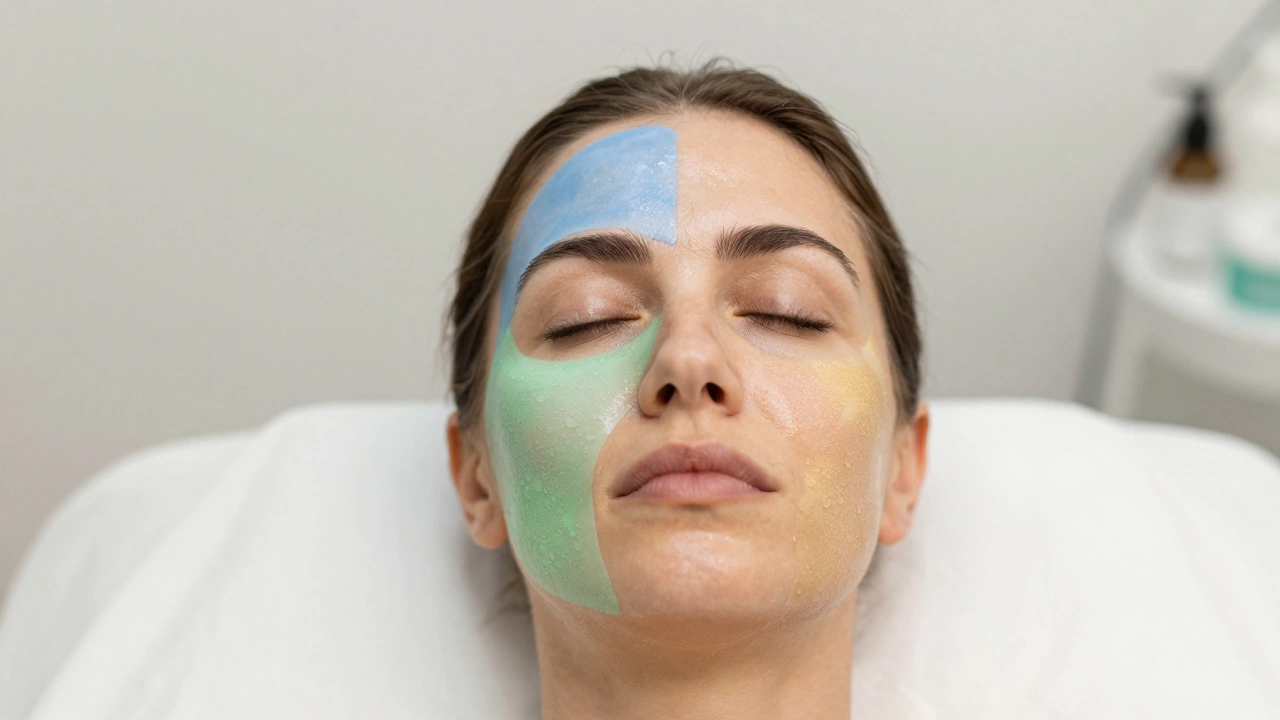
- Combination: Treat zones differently. Use a mild peel on the T-zone, and hydrating serums on cheeks. Microneedling works well here too-it’s customizable.
- Mature or sun-damaged: Combine RF microneedling with daily vitamin C and broad-spectrum SPF. Consider quarterly platelet-rich plasma (PRP) facials. Studies show PRP improves skin texture and elasticity over 3-6 months.

Real Results, Real Time
How long does it take to see changes? Don’t expect overnight miracles. Skin renews every 28-40 days, depending on age. That’s the baseline.
For acne: You’ll see fewer breakouts in 4-6 weeks. Full clearing takes 3-4 months.
For texture and tone: After 2-3 microneedling sessions, skin feels tighter and looks brighter. Pigmentation fades gradually over 8-12 weeks.
For hydration and glow: With consistent vitamin C and SPF, most people notice a visible difference in 2-3 weeks. That’s faster than most treatments.
Patience isn’t optional. Rushing leads to over-treatment, which causes more problems than it solves.
What You Can Do at Home
Professional treatments help-but they’re not a substitute for daily care. The best skin in 2025 belongs to people who do the basics, consistently.
- Wash your face with a gentle, pH-balanced cleanser-no foaming soaps.
- Apply a serum with antioxidants (vitamin C, ferulic acid, or resveratrol) every morning.
- Use SPF 50+ every single day, even when it’s cloudy. UV damage adds up.
- At night, use a moisturizer with ceramides or squalane to repair the barrier.
- Get 7-8 hours of sleep. Your skin repairs itself while you rest.
That’s it. No complicated routines. No 12-step systems. Just smart, simple habits.
When to See a Professional
Don’t wait until your skin is in crisis. If you’ve tried consistent at-home care for 3 months and see no improvement-or if you’re dealing with persistent redness, scarring, or rapid aging-it’s time to consult a dermatologist or licensed aesthetician.
Look for someone who asks about your lifestyle: sleep, stress, diet, hormones. Skin isn’t just surface-deep. Hormonal acne in women over 30? That’s often tied to PCOS or thyroid issues. A good provider will refer you to a GP if needed.
And avoid places that push expensive packages upfront. The best clinics offer a single session first. Let you feel the results. Then decide.
What’s Coming in 2026
Science is moving fast. In early 2026, we’ll start seeing FDA-approved at-home devices that use targeted light therapy with real dosing metrics. There’s also growing interest in microbiome-balancing sprays-live probiotics applied topically to calm inflammation.
But here’s the thing: the next big thing won’t replace the basics. It’ll just enhance them. Your skin still needs clean ingredients, sun protection, and time to heal.
What is the fastest skin treatment for glowing skin?
The fastest way to get glowing skin is a combination of a gentle chemical peel (like a 10% glycolic acid treatment) and daily use of a stable vitamin C serum with SPF 50+. Most people notice brighter, more even skin within 7-10 days. No downtime. Just consistency.
Are at-home laser devices worth it?
Most consumer laser and IPL devices lack the power to deliver real results. They’re safe, but ineffective for anything beyond mild redness or hair reduction. For acne scars, pigmentation, or wrinkles, professional-grade lasers (like Fraxel or PicoSure) are far more effective-and worth the investment if done by a licensed provider.
Can I use retinol and vitamin C together?
Yes, but not at the same time. Use vitamin C in the morning (it protects against UV damage) and retinol at night (it boosts cell turnover). Using them together can cause irritation, especially if you have sensitive skin. Space them out by 12 hours.
What’s better: microneedling or chemical peels?
It depends on your goal. Chemical peels are best for surface issues: dullness, acne, and mild pigmentation. Microneedling targets deeper concerns: fine lines, scars, and loss of firmness. Many people do both-peels monthly, microneedling every 3 months-for full-spectrum results.
Is expensive skincare better than drugstore products?
Not necessarily. Many high-end brands charge for packaging and branding, not ingredients. Look at the active components: vitamin C, niacinamide, retinol, hyaluronic acid, ceramides. You’ll find effective, science-backed versions at drugstores like CeraVe, The Ordinary, or La Roche-Posay. Spend your money on professional treatments, not overpriced jars.
Final Thought
The best skin treatment isn’t the most expensive or the most trendy. It’s the one you’ll stick with. Consistency beats intensity every time. Cleanse. Protect. Repair. Repeat. Add professional care only when you need it-and choose providers who listen, not sell. Your skin doesn’t need a revolution. It needs a reliable routine.