
Skin Exam Expectation Calculator
Not sure what to expect at your next dermatologist appointment? Select your primary reason for visiting and any relevant risk factors to see how thorough the exam is likely to be.
You’re sitting in the waiting room, clutching your number ticket. You’ve booked this appointment because of that weird mole on your back or the rash that won’t quit. But then a thought hits you like a cold shower: Are they going to look down there?
If you’ve never had a full-body skin exam before, the idea of a doctor inspecting your genitalia can feel awkward, invasive, or just plain confusing. Do dermatologists actually check privates? The short answer is yes, if it’s part of a comprehensive check. But no, they don’t do it for every single visit. It depends entirely on why you’re there and what kind of exam is happening.
The Truth About Full-Body Skin Exams
A full-body skin examination is exactly what it sounds like: a head-to-toe inspection of your skin. Dermatologists perform these to catch early signs of skin cancer, such as melanoma, which often hides in places you can’t see yourself-like your scalp, between your toes, or yes, your groin area.
According to the American Academy of Dermatology (AAD), regular skin checks are crucial for anyone with a history of sun exposure, fair skin, or a family history of skin cancer. During these exams, doctors follow a systematic approach. They start at the top of your head and work their way down. This means they will eventually reach areas covered by underwear or swimwear.
Here’s the thing: most dermatologists won’t ask you to strip completely naked unless necessary. Usually, they’ll ask you to change into a gown or keep your underwear on, depending on where the concern is. If you have a suspicious lesion near the bikini line or inner thigh, they might need a closer look. But if your issue is a pimple on your forehead, they likely won’t touch anything below the neck.
When Do They Actually Look?
Context matters. There are specific scenarios where checking the "private" areas becomes standard procedure:
- High-Risk Patients: If you have many moles, a personal history of melanoma, or genetic conditions like familial atypical multiple mole melanoma syndrome, doctors tend to be more thorough.
- Symptoms in Sensitive Areas: If you report itching, bleeding, or a new growth in the groin or buttocks, the dermatologist must examine that area to diagnose the problem.
- Annual Screening: For patients who come in for routine annual checks, especially those over 50 or with significant sun damage, a complete review including genital regions is common practice.
- STI Concerns: While dermatologists specialize in skin, hair, and nails, some issues like warts or molluscum contagiosum appear in intimate areas and require visual inspection.
Conversely, if you’re visiting for acne treatment on your face or eczema on your hands, the doctor will focus strictly on those zones. They aren’t being rude; they’re respecting your time and comfort. Always clarify the scope of the exam when booking or during the initial chat.
What Happens During the Exam?
Let’s walk through the actual process so you know what to expect. When you enter the room, the dermatologist usually starts with a conversation. They’ll ask about your medical history, any changes in moles, and your sun habits. This builds trust and helps them decide how deep the physical exam needs to go.
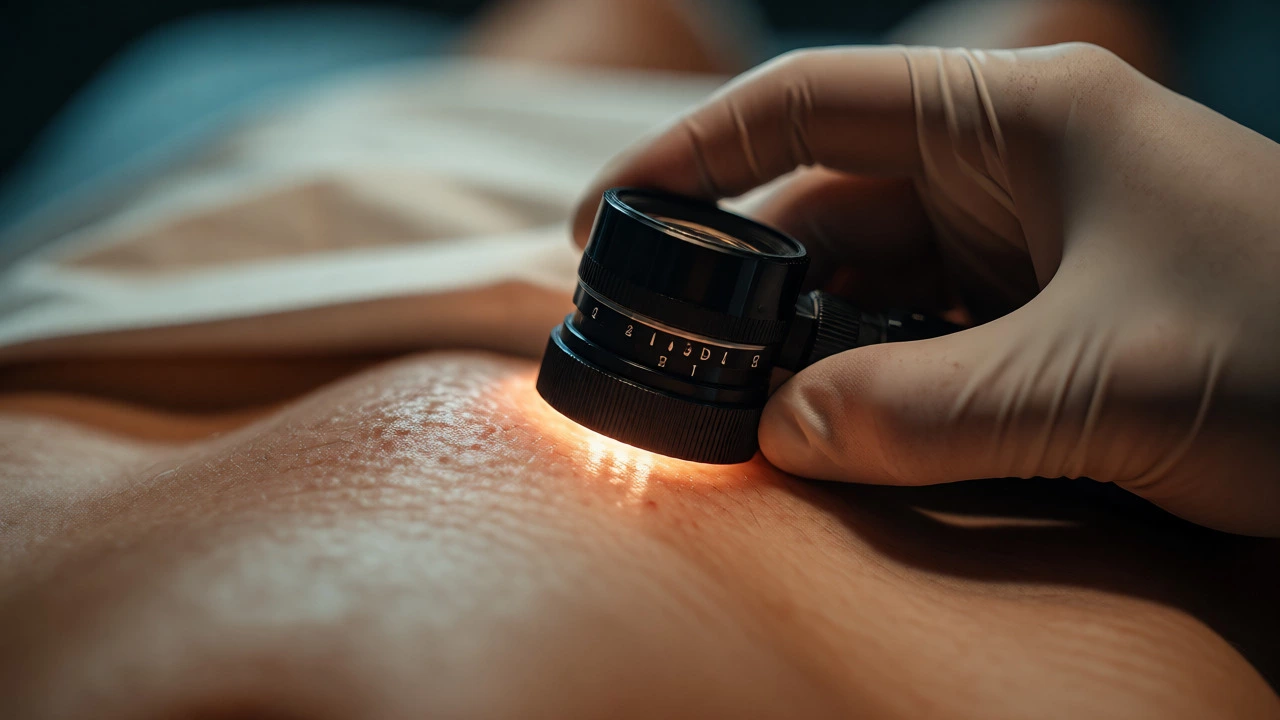
If a full-body check is agreed upon, you’ll typically be asked to undress to your underwear level or change into a paper gown. The doctor will use a bright light and sometimes a dermoscope-a handheld magnifying tool-to look closely at pigmented spots. They move methodically: arms, torso, legs, feet, and finally, the groin and buttocks.
For the private areas, the inspection is quick and clinical. They aren’t looking for anatomical perfection; they’re scanning for asymmetry, border irregularity, color variation, diameter larger than 6mm, or evolving shape (the ABCDE rule). If they spot something odd, they might take a photo or mark it for monitoring. In rare cases, they may perform a biopsy right then and there.
| Visit Reason | Likelihood of Private Area Check | Typical Attire Required |
|---|---|---|
| Acne or Facial Issues | Very Low | Fully Clothed |
| Rash on Arms/Legs | Low | Shorts/Sleeveless Top |
| General Skin Cancer Screen | Moderate to High | Underwear or Gown |
| Groin Itch/Growth | Certain | Underwear Removed or Pulled Aside |
| High-Risk Melanoma History | High | Full Body Inspection |
Why Doctors Are Unbothered (And Why You Should Be Too)
It’s easy to feel self-conscious, but remember: to a dermatologist, your body is a map of potential health risks. They see thousands of bodies a year. Genitalia, folds of skin, and hairy patches are just another surface to check for abnormalities. They aren’t judging your hygiene or appearance; they’re hunting for disease.
Many patients worry about modesty, but dermatologists are trained to make these exams comfortable. They often use draping techniques, keeping parts of your body covered while examining others. If you’re nervous, speak up. You can ask them to explain each step before they move to a new area. You can also request a chaperone if that makes you feel safer, though it’s rarely required for routine skin checks.
There’s also a practical side. Skin cancers can develop anywhere, even in areas shielded from the sun. Merkel cell carcinoma, for instance, can appear in less exposed areas. Missing a spot in the groin because of embarrassment could mean missing an early-stage cancer that’s highly treatable. The discomfort of a five-minute glance is worth the peace of mind.
Tips for a Smooth Appointment
To make your first full-body skin exam less stressful, try these strategies:
- Wear Easy Clothing: Choose outfits that are simple to remove. Avoid complicated belts, jumpsuits, or one-piece dresses that require full disrobing.
- Communicate Boundaries: Tell the doctor upfront if you’re uncomfortable with certain areas being checked. Ask if it’s medically necessary for your specific complaint.
- Prepare Your Questions: Write down any concerns beforehand. This keeps the visit focused and reduces anxiety.
- Bring Photos: If you have a mole you’re worried about, bring a dated photo showing its progression. This helps the doctor assess changes without needing to dig deeper into unrelated areas.
Remember, consent is key. A good dermatologist will always explain what they’re doing and why. If they rush or ignore your discomfort, that’s a red flag. You have the right to pause the exam or stop it entirely.

Beyond the Basics: Specialized Checks
Some dermatological conditions specifically target sensitive areas. Lichen sclerosus, for example, causes thin, white patches on the skin of the vulva or penis. Tinea cruris (jock itch) is a fungal infection that thrives in warm, moist folds. These require direct visualization and sometimes swab tests.
If you suffer from chronic irritation in the groin, don’t assume it’s just sweat or friction. A dermatologist can distinguish between fungal infections, contact dermatitis from laundry detergents, and autoimmune conditions. Skipping the check because it feels embarrassing might leave you dealing with months of unnecessary itching and inflammation.
Also, consider age-related factors. As we get older, our skin loses elasticity and becomes more prone to lesions. Regular checks become even more critical. Many guidelines suggest adults should have professional skin exams every 1-3 years, depending on risk factors. Including all body parts ensures nothing slips through the cracks.
Final Thoughts on Comfort and Care
So, do dermatologists check privates? Yes, when it serves your health. It’s not a prying eye; it’s a protective one. The goal is always early detection and effective treatment. By understanding what happens during these exams, you can approach your next appointment with confidence rather than dread.
If you’re due for a skin check, book it. Wear comfortable clothes, breathe deeply, and trust the process. Your skin covers everything, and it deserves equal attention everywhere.
Do I have to take my pants off for a dermatologist?
Not necessarily. For a general skin check, you usually only need to remove clothing covering the areas being examined. Often, you can keep your underwear on unless the doctor needs to inspect the groin or buttocks specifically. Always ask the doctor what attire is best for your specific visit.
How long does a full-body skin exam take?
A typical full-body skin exam takes about 10 to 15 minutes. This includes the consultation, the physical inspection, and any brief discussions about findings. If biopsies are performed, the appointment may last longer.
Can I refuse a private area check?
Yes, you can always refuse any part of a medical exam. However, the doctor may warn you that skipping certain areas could miss potential issues. If you’re concerned about a specific symptom elsewhere, you can limit the exam to that region.
Do dermatologists check for STIs?
Dermatologists can identify visible signs of some sexually transmitted infections, such as genital warts or syphilis rashes. However, they are not primary care providers for STIs. If an STI is suspected, they will typically refer you to a gynecologist, urologist, or sexual health clinic for testing and treatment.
Is it normal to feel embarrassed during the exam?
Absolutely. Most patients feel some level of vulnerability. Dermatologists are used to this and prioritize professionalism and efficiency. Remember, they view your body clinically, focusing on health markers rather than aesthetics.