Stop chasing a time machine and start working with your skin
Most people think that looking younger means erasing every single line from their face. But let's be real: that usually leads to the "frozen" look we see on some celebrities, which often looks more unnatural than a few wrinkles. The real goal isn't to look 18 again, but to look like the healthiest, most vibrant version of yourself right now. Whether you're dealing with sagging jawlines, dullness, or those deep creases around the mouth, you can actually reverse some of the visible damage and slow down the clock with a few specific changes.Key Takeaways for a Youthful Glow
- Prioritize sun protection to stop new wrinkles from forming.
- Use Retinoids to speed up cell turnover and boost collagen.
- Keep skin plump with hydration and Hyaluronic Acid.
- Combine topical creams with professional treatments like Microneedling.
- Support your skin from the inside with hydration and sleep.
The gold standard of topical anti-aging
If you only have room in your budget for one active ingredient, make it a retinoid. Retinol is a derivative of Vitamin A that communicates with skin cells to increase turnover and stimulate collagen production. It doesn't just sit on the surface; it actually changes how your skin behaves. By speeding up the process where old cells flake off and new ones emerge, it smooths out fine lines and fades those stubborn brown spots from sun damage. But here is the catch: if you jump in too fast, you'll wake up with red, peeling skin. Start with a low concentration, maybe 0.25% or 0.5%, and use it only twice a week. Once your skin adjusts, you can move to a prescription-strength Tretinoin, which is significantly more powerful and often used by dermatologists to treat deeper wrinkles.Hydration is the secret to "plumping"
Have you noticed how your skin looks instantly worse when you're dehydrated? That's because your skin loses its volume. This is where Hyaluronic Acid comes into play. Hyaluronic Acid is a humectant that can hold up to 1,000 times its weight in water, drawing moisture from the air into your skin. When you apply a serum containing this molecule to damp skin, it fills in the gaps between your skin cells, making fine lines virtually disappear for a few hours. It's not a permanent fix, but it provides that "dewy" look associated with youth. For a more lasting effect, combine this with Ceramides, which are lipids that repair the skin barrier and keep that precious moisture from evaporating into the air.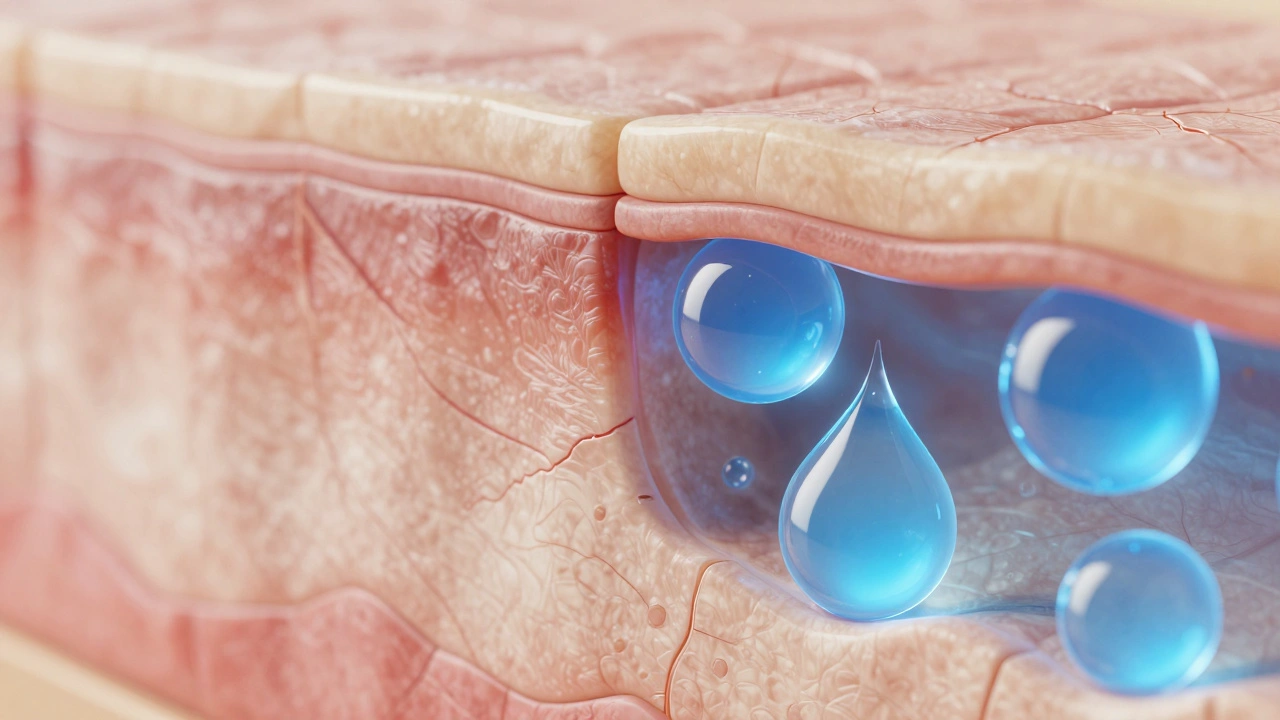
Stopping the damage before it starts
You can spend thousands on creams, but if you aren't using a Sunscreen, you're essentially pouring water into a leaky bucket. Ultraviolet (UV) rays break down the collagen and elastin fibers that keep your skin firm. This process, known as photoaging, is responsible for up to 80% of visible skin aging. Switch to a broad-spectrum SPF 30 or higher every single morning, even when it's cloudy. Look for mineral filters like Zinc Oxide or Titanium Dioxide if you have sensitive skin. If you're outdoors all day, reapply every two hours. It's the single most effective anti-aging treatments strategy because it prevents the degradation of the structural proteins in your dermis.| Ingredient | Primary Goal | Speed of Result | Skin Type |
|---|---|---|---|
| Retinol | Collagen production & texture | Slow (3-6 months) | All (start slow) |
| Vitamin C | Brightening & Antioxidant | Medium (weeks) | All |
| Hyaluronic Acid | Instant Plumping | Immediate | All |
| Peptides | Firming & Elasticity | Slow (months) | Sensitive/Mature |
Professional treatments for deeper issues
Sometimes, a cream isn't enough to lift a sagging cheek or erase a deep fold. If you're looking for more dramatic results, professional interventions offer a way to physically stimulate the skin to rebuild itself. Microneedling is a fantastic option. Microneedling uses tiny needles to create controlled micro-injuries in the skin, triggering a natural healing response that floods the area with new collagen. It's far less aggressive than a full chemical peel but provides a noticeable lift in skin density. If you're seeing significant loss of volume, Dermal Fillers (like Hyaluronic Acid-based fillers) can restore the "triangle of youth" by adding volume back to the cheeks and jawline. Unlike older methods, modern fillers are designed to integrate with your own tissue, making the result look natural rather than inflated. For those who want a permanent change without surgery, Laser Resurfacing uses concentrated beams of light to remove the top layer of skin and tighten the layers beneath.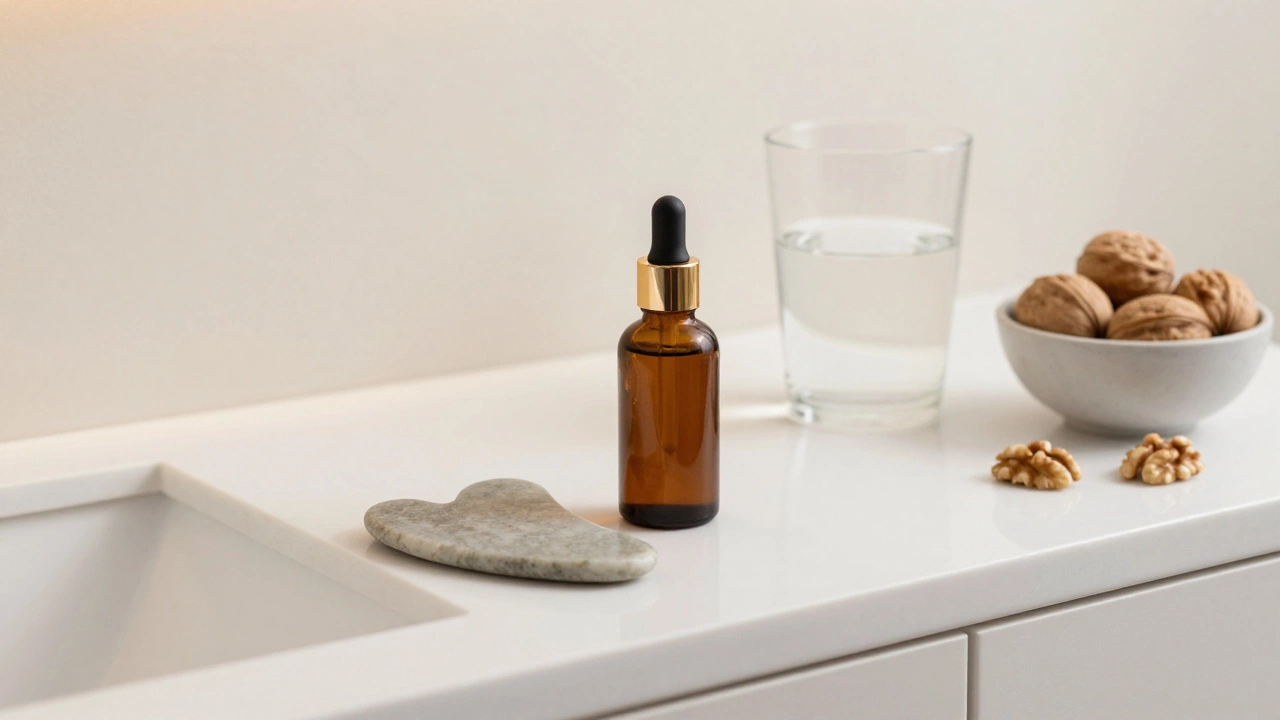
The lifestyle shift: Food, sleep, and face yoga
Your skin is an organ, and it reflects what's happening inside your body. If you're eating high-sugar foods, you might be experiencing Glycation. This is a process where sugar molecules attach to collagen fibers, making them stiff and brittle. Cutting back on processed sugars and focusing on omega-3 fatty acids (found in salmon or walnuts) keeps the cell membranes supple. Don't overlook the power of Facial Yoga. While it won't replace a facelift, toning the muscles under your skin can prevent the "drooping" effect. Focus on exercises that target the cheeks and the area around the mouth. Pair this with a Gua Sha tool-a flat stone used for lymphatic drainage-to reduce puffiness and define your bone structure. Finally, prioritize sleep. During the deep stages of sleep, your body releases growth hormones that repair damaged cells. If you're only getting five hours a night, your skin won't have the time it needs to recover from the day's environmental stress.Avoiding common anti-aging pitfalls
One of the biggest mistakes people make is over-exfoliating. When you use too many acids-like glycolic or salicylic acid-alongside retinol, you strip away the skin's natural protective barrier. This leads to chronic inflammation, which actually accelerates aging (a process called "inflammaging"). If your skin feels tight, stings when you apply moisturizer, or looks overly shiny but feels dry, stop all actives and focus on hydration for two weeks. Another mistake is neglecting the neck and hands. The skin on your neck is thinner than the skin on your face and has fewer oil glands, meaning it wrinkles faster. Always extend your skincare routine down to your chest. If your face looks 30 but your neck looks 60, the effect is jarring. Treat your neck and hands with the same level of care as your forehead.Can I actually reverse wrinkles, or just slow them down?
You can't completely erase deep-set wrinkles, but you can significantly soften them. Fine lines caused by dehydration can be reversed almost instantly with hydration. Dynamic wrinkles (those caused by movement) can be reduced with Retinoids and professional treatments that build new collagen, making the skin thicker and more resilient.
Is a 10-step skincare routine necessary for anti-aging?
Not at all. In fact, too many products can irritate your skin. The "core three" are all you really need: a gentle cleanser, a potent active (like Retinol or Vitamin C), and a high-quality SPF. Anything else, like serums or masks, is just a bonus.
When is the best age to start these treatments?
Prevention is easier than correction. Most dermatologists recommend starting sunscreen in childhood and introducing antioxidants (like Vitamin C) in your mid-20s. Retinoids are typically introduced in the late 20s or early 30s as collagen production naturally begins to dip.
Does drinking more water really make you look younger?
Water is essential, but drinking it alone won't fix wrinkles. Hydration is a two-part process: you need to drink water to hydrate the body, and you need topical humectants (like Hyaluronic Acid) to keep that water from evaporating through your skin barrier.
Are natural remedies as effective as chemical treatments?
Natural oils (like Rosehip or Argan) are great for moisturizing and protecting the skin barrier, but they don't have the same cellular-level impact as Retinoids or Vitamin C. A balanced approach-using natural oils for hydration and scientific actives for repair-usually gives the best results.