Skincare Routine Builder
Select your skin type to get your customized 3-step essentials list:
Gentle wash to remove overnight oil.
Hydrate and prep.
Broad-spectrum SPF 30+ (Essential!)
Remove pollution and SPF.
Seal in moisture for night repair.
Click a skin type above to generate your customized minimalist routine.
Key Takeaways
- Most 10-step routines are overkill and can actually damage your skin barrier.
- The only non-negotiables are a cleanser, a moisturizer, and a sunscreen.
- Focusing on these three basics prevents irritation and ensures long-term skin health.
- The secret isn't more products, but using the right ones for your specific skin type.
Ever feel like you need a chemistry degree just to walk down the beauty aisle? Between the serums, ampoules, and overnight peels, the industry has convinced us that skin health requires a dozen different bottles. Here is the truth: your skin is an organ, not a science project. For most of us, piling on too many active ingredients does more harm than good, often leading to redness, breakouts, or a destroyed moisture barrier.
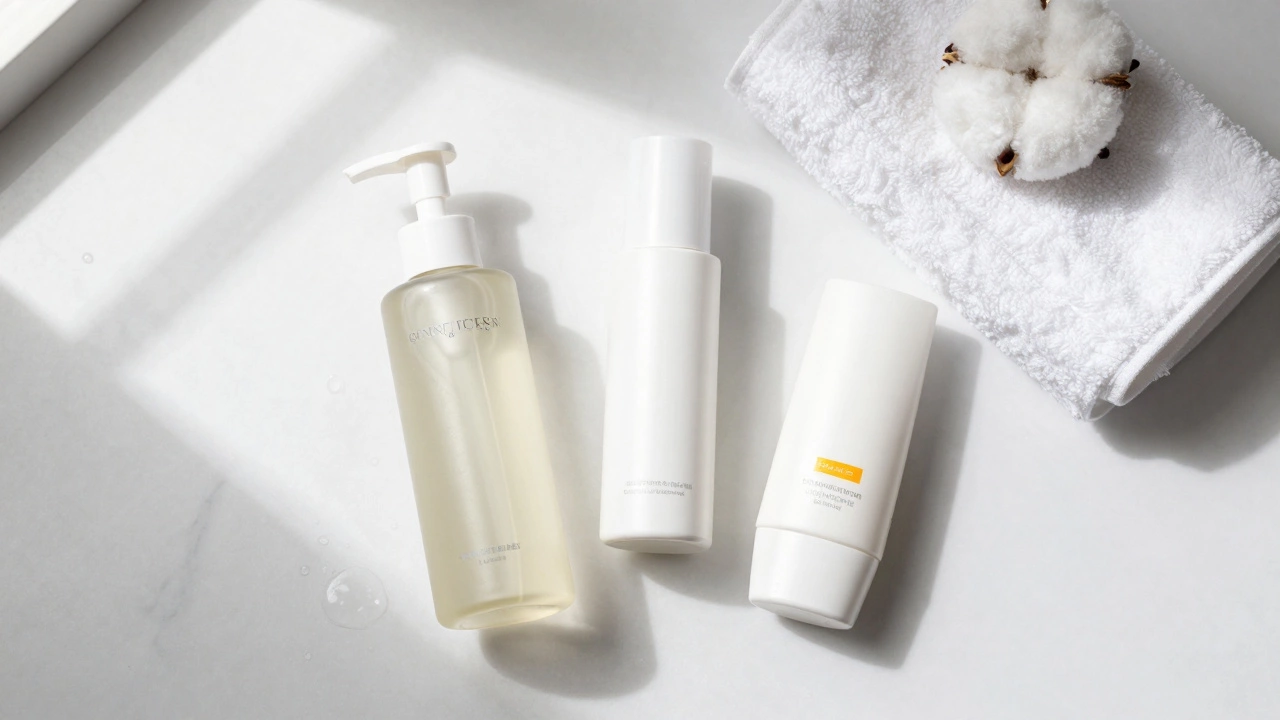
If you want skin that looks healthy and feels comfortable, you don't need a vanity full of products. You just need a minimalist skincare routine that covers the three fundamental needs of your skin: cleaning, hydrating, and protecting. Everything else is just extra.
The First Essential: A Gentle Cleanser
You can't build a house on a dirty foundation, and you can't apply skincare to a face full of grime. Cleanser is a surfactant-based product designed to remove sebum, pollutants, and dead skin cells without stripping the skin's natural oils. Think of it as the reset button for your face. If you don't wash away the day's buildup, your other products just sit on top of a layer of dirt, which can clog pores and cause acne.
The biggest mistake people make here is using something too harsh. If your skin feels "squeaky clean" or tight after washing, you've gone too far. That tight feeling is actually your skin screaming because you've stripped away the lipids that keep moisture in. For those with oily skin, a foaming gel often works best to cut through excess oil. If you have dry or sensitive skin, look for a non-foaming cream or lotion cleanser.
A great rule of thumb? Only use your cleanser twice a day-once in the morning and once before bed. Over-washing can trigger your skin to produce more oil to compensate for the dryness, leaving you in a frustrating cycle of grease and breakouts.
The Second Essential: A Reliable Moisturizer
Once the skin is clean, you have to seal the deal. Moisturizer is a topical formulation that hydrates the skin and creates a protective seal to prevent transepidermal water loss. It doesn't matter if you have oily skin; you still need a moisturizer. When oily skin gets dehydrated, it often overproduces sebum to protect itself, making you look shinier than usual.
Moisturizers generally fall into two camps: humectants and occlusives. Humectants, like Hyaluronic Acid, pull water into the skin. Occlusives, like Ceramides or petrolatum, lock that water in. For the best results, look for a product that does both. If you're in a humid climate, a lightweight gel moisturizer is plenty. In a dry, windy place like Wellington, a thicker cream helps prevent your skin from cracking.
| Skin Type | Recommended Texture | Key Ingredient to Look For | Goal |
|---|---|---|---|
| Oily/Acne-Prone | Gel or Lightweight Lotion | Niacinamide | Oil control & hydration |
| Dry/Flaky | Thick Cream or Balm | Ceramides | Barrier repair & moisture lock |
| Combination | Light Cream | Glycerin | Balance oily and dry zones |
| Sensitive | Fragrance-free Lotion | Centella Asiatica | Calming & soothing |
The Third Essential: Broad-Spectrum Sunscreen
If you use a cleanser and moisturizer but skip this step, you're wasting your time. Sunscreen is a topical agent that protects the skin from ultraviolet (UV) radiation, preventing premature aging and skin cancer. This is the most important product in any routine, period. UV rays are constant, even on cloudy days, and they are responsible for about 80% of the visible aging we see on our faces-think wrinkles, leathery texture, and dark spots.
You'll see two main types: chemical and physical. Chemical Sunscreens absorb UV rays and convert them into heat, while Physical Sunscreens (usually containing zinc oxide or titanium dioxide) sit on top of the skin and reflect the rays like a mirror. Neither is "better," but physical ones are often better for people with extremely sensitive skin or rosacea.
The gold standard is a broad-spectrum SPF 30 or higher. "Broad-spectrum" means it protects you from both UVA rays (which age the skin) and UVB rays (which burn the skin). Apply it every single morning, regardless of whether you're staying indoors or heading to the beach. Your future self will thank you when you have fewer sunspots in twenty years.
Why These Three Are Enough
You might be wondering, "What about vitamin C? What about retinol?" Here is the thing: those are treatments, not essentials. They are like vitamins for your skin-helpful if you have a specific goal, but not the foundation. If you use a strong acid like Glycolic Acid without a solid moisturizer and sunscreen, you're actually making your skin more vulnerable to sun damage and irritation.
By sticking to the basics, you allow your skin's natural microbiome to balance itself. When you over-engineer your routine, you risk "perioral dermatitis" or chronic inflammation. A simple routine reduces the chance of an allergic reaction and makes it much easier to figure out what's actually working. If you break out using three products, you know exactly where the problem is. If you're using twelve, you're just guessing.
How to Put It All Together
The order of operations is simple. You want to go from the thinnest consistency to the thickest, and always finish with protection.
The Morning Routine:
- Cleanse: Wash away the sweat and oil from the night.
- Moisturize: Hydrate and prep the skin.
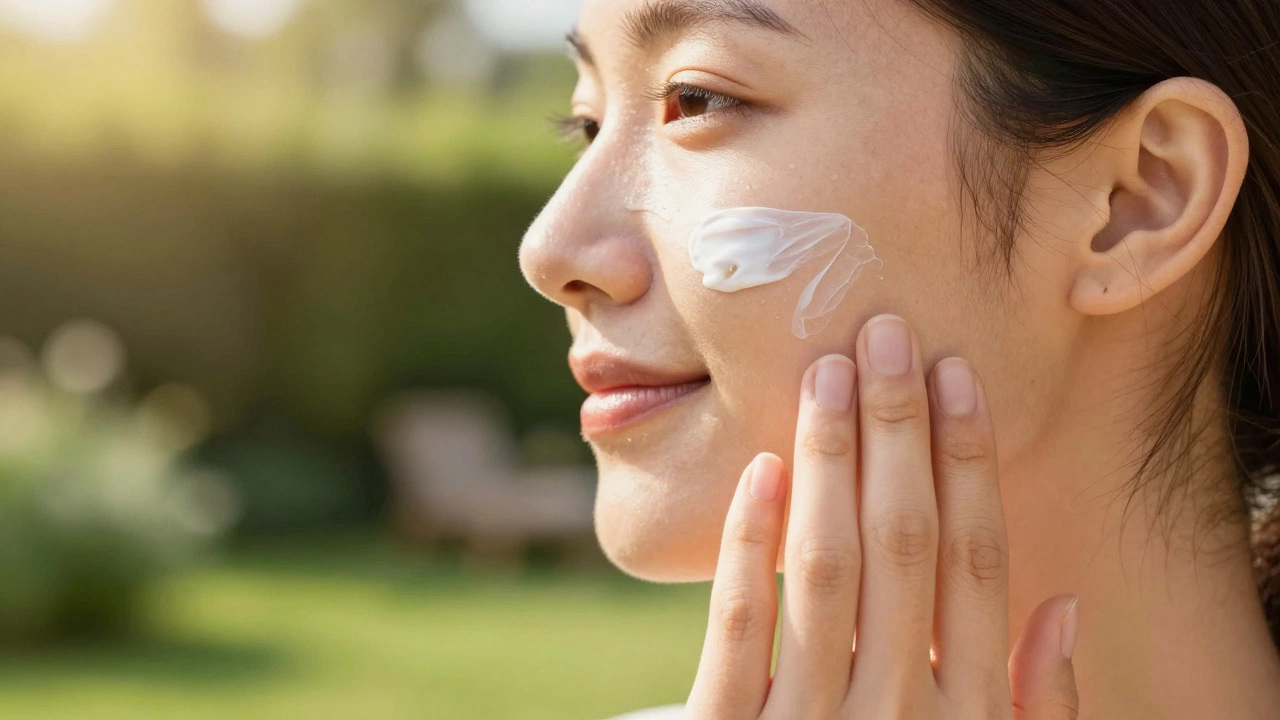
- Protect: Apply your SPF. This is your shield for the day.
The Evening Routine:
- Cleanse: Remove the sunscreen, pollutants, and makeup from the day.
- Moisturize: Use a slightly heavier layer if needed to help your skin repair itself while you sleep.
That's it. No serums, no toners, no fancy masks. Just the basics. If you eventually decide you want to target a specific issue-like dark circles or fine lines-you can add one single treatment product into this mix. But until your foundation is solid, keep it simple.
Can I just use a moisturizer with SPF built-in?
Yes, you can, but there's a catch. To get the actual SPF rating listed on the bottle, you have to apply a significant amount of the product. Most people don't use enough moisturizer to get the full sun protection. For the best defense, it's usually better to use a dedicated sunscreen over your moisturizer.
What if I have really oily skin? Do I still need a moisturizer?
Absolutely. Oily skin is not the same as hydrated skin. If you skip moisturizer, your skin may produce even more oil to compensate for the lack of water. Look for a "non-comedogenic" gel-based moisturizer that won't clog your pores but will keep your skin balanced.
Is it okay to use the same cleanser for morning and night?
Yes, that is perfectly fine. However, some people prefer a very gentle wash in the morning and a more thorough cleanse at night to remove stubborn sunscreen or makeup. As long as your skin doesn't feel stripped, one cleanser for both is great.
How long does it take to see results with a simple routine?
Skin cells typically turn over every 28 to 40 days. You'll notice immediate comfort from a good moisturizer, but for overall clarity and tone, give it at least a month of consistent use. Consistency beats intensity every time.
Should I use a toner before my moisturizer?
In the past, toners were used to balance the pH of the skin after using harsh alkaline soaps. Modern cleansers are pH-balanced, making most toners unnecessary. If you enjoy the feeling of a toner, it's fine, but it isn't an essential for healthy skin.
Next Steps for Your Skin Journey
If you are currently using a 10-step routine and want to switch to a minimalist approach, don't stop everything cold turkey. Your skin might react to the sudden change. Instead, phase out the optional serums and exfoliants over two weeks, leaving only the three essentials.
For those struggling with severe acne or cystic breakouts, these three steps are your baseline, but you may need a targeted treatment from a dermatologist. Once you have the habit of cleansing, moisturizing, and protecting, any medical treatment you add will be more effective because your skin barrier is healthy and intact.