Natural Anti-Aging Routine Builder
Step 1: Your Profile
Your Personalized Routine
Select your profile and click generate to see your recommended natural skincare routine.
Walking down the aisle of any major pharmacy in Wellington or anywhere else, you are bombarded with promises. Creams claim to erase time, serums promise instant youth, and labels shout "clinical results." But when you flip those bottles over, the ingredient list often reads like a chemistry exam from hell. Synthetic preservatives, questionable stabilizers, and unpronounceable polymers take center stage. You want something that works, but you also want it to be clean. The question isn't just about looking good; it is about trusting what you put on your face.
So, is there actually a natural ingredient that rivals the heavy hitters of clinical dermatology? The short answer is yes, but it requires nuance. There is no single magic bullet. Instead, there are specific botanical compounds that have been scientifically proven to stimulate collagen, boost hydration, and protect against environmental damage. If you are ready to swap synthetic fillers for plant-powered potency, here is exactly what works and why.
Bakuchiol: The Gentle Powerhouse
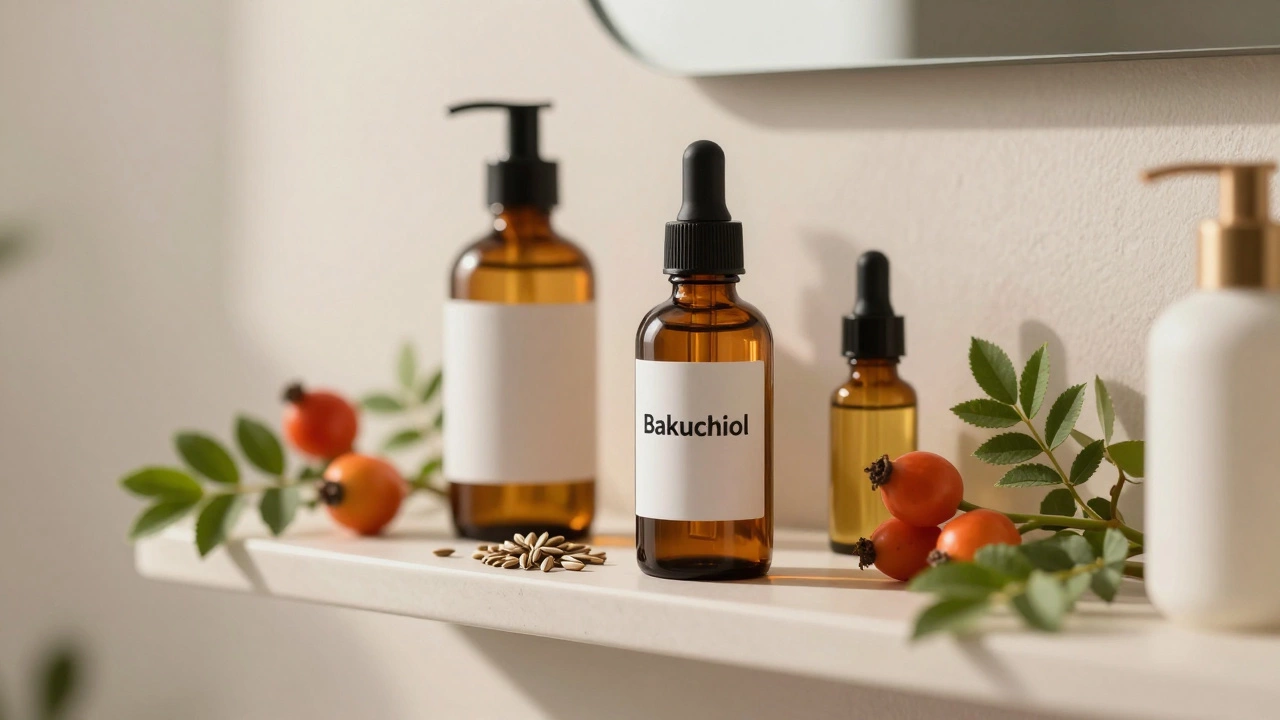
If you have tried retinol before, you know the drill. Redness, peeling, and that dreaded "retinization" period where your skin feels like sandpaper. Retinol is the gold standard for anti-aging, but it is harsh. Enter Bakuchiol. Extracted from the seeds and leaves of the Psoralea corylifolia plant, this compound has taken the organic skincare world by storm. It is not a retinol mimic in the sense of being a weaker version; it triggers similar cellular pathways without the irritation.
Studies published in the journal *Clinical, Cosmetic and Investigational Dermatology* show that Bakuchiol can improve skin elasticity and reduce fine lines significantly after eight weeks of use. It works by upregulating collagen synthesis genes, much like retinol does, but it also possesses strong antioxidant and anti-inflammatory properties. This makes it ideal for sensitive skin types that usually avoid active ingredients. You do not have to choose between effectiveness and comfort anymore.
Rosehip Seed Oil: Nature's Repair Kit
While Bakuchiol handles cell turnover, Rosehip Seed Oil handles repair and hydration. Sourced from the fruit of the Rosa rubiginosa plant, native to South America, this oil is packed with essential fatty acids, specifically linoleic acid (Omega-6) and alpha-linolenic acid (Omega-3). These fats are crucial for maintaining the skin barrier. A compromised barrier leads to moisture loss, which in turn makes wrinkles appear deeper and more pronounced.
But the real star in Rosehip oil is trans-retinoic acid, a natural form of Vitamin A. While less potent than pharmaceutical-grade retinoids, it still encourages cell regeneration. Combine that with high levels of Vitamin C and E, and you have an antioxidant powerhouse that fights free radicals caused by UV exposure and pollution. In New Zealand, where our UV index can spike even on cloudy days, this protection is non-negotiable. Apply a few drops of cold-pressed Rosehip oil as the last step in your night routine to lock in moisture and soften fine lines around the eyes and mouth.
Vitamin C: The Brightening Shield
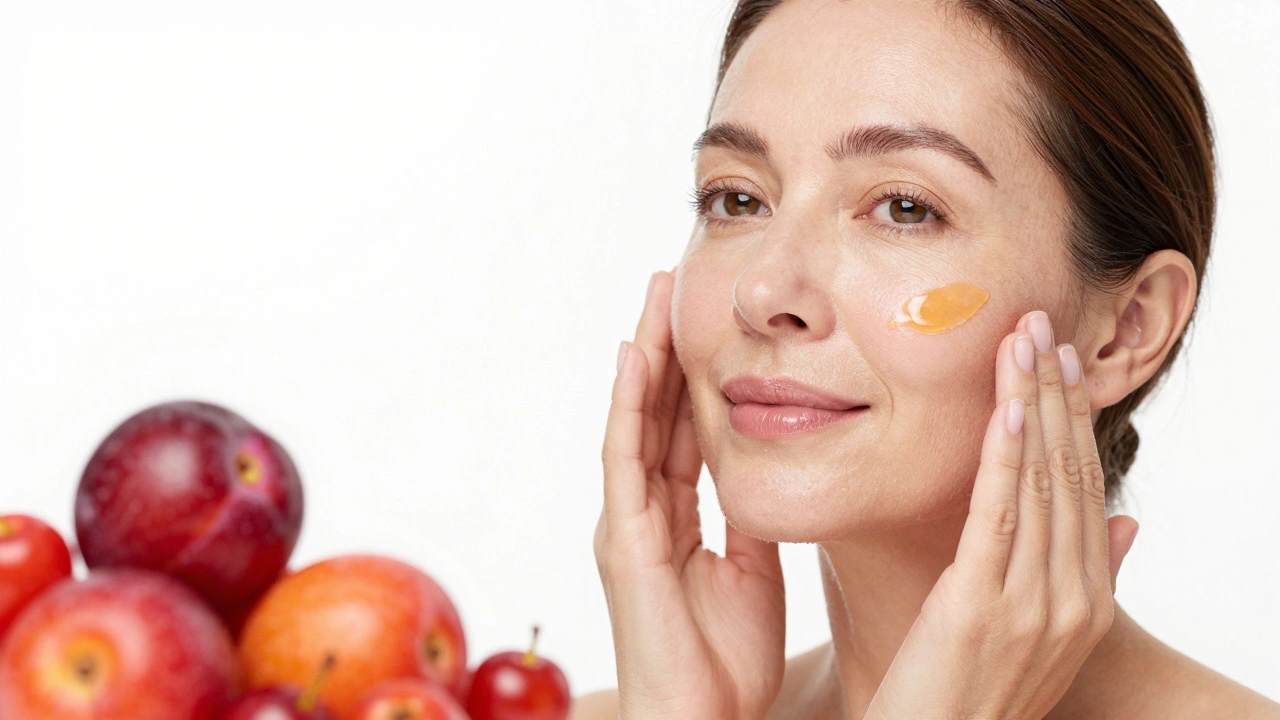
You cannot talk about wrinkles without talking about collagen destruction. Free radicals-unstable molecules generated by sun exposure and stress-break down collagen fibers, leading to sagging and creasing. Vitamin C is the primary defender against this process. Naturally sourced Vitamin C comes from fruits like Kakadu plum, camu camu, and acerola cherry. The Kakadu plum, found in the Australian outback, holds the highest natural concentration of Vitamin C in the world, boasting up to 100 times more than oranges.
When applied topically, L-ascorbic acid (the most bioavailable form of Vitamin C) stimulates fibroblasts to produce new collagen. It also inhibits tyrosinase, the enzyme responsible for melanin production, which helps fade age spots and uneven skin tone. Look for serums that combine Vitamin C with Vitamin E and ferulic acid. This trio stabilizes the Vitamin C, preventing it from oxidizing (turning brown) too quickly, and boosts its photoprotective effects. Use it every morning under your sunscreen for maximum defense.
Hyaluronic Acid: The Hydration Hero
Wait, isn't Hyaluronic Acid synthetic? Not necessarily. While many commercial versions are lab-fermented, hyaluronic acid is naturally occurring in human skin and can be derived from plant sources through fermentation processes using bacteria like Streptococcus zooepidemicus. It is a humectant, meaning it draws moisture from the environment into your skin. One gram of hyaluronic acid can hold up to six liters of water.
Dehydrated skin looks tired and emphasizes every fine line. Plumping the skin with hydration creates a smoother surface, making wrinkles less visible instantly. For long-term benefits, look for products containing multiple molecular weights of hyaluronic acid. Low-molecular-weight HA penetrates deeper to hydrate at the cellular level, while high-molecular-weight HA sits on the surface to create a protective film. Pair this with a moisturizer containing ceramides or squalane (derived from olives) to seal the moisture in.
Peptides: The Communication Signals
Peptides are short chains of amino acids, the building blocks of proteins like collagen and elastin. When applied to the skin, they act as messengers, signaling your cells to produce more collagen. Copper peptides, in particular, have gained traction in the organic community. They are formed by binding copper ions to peptide chains. This combination promotes wound healing, reduces inflammation, and strengthens the extracellular matrix of the skin.
Unlike harsh exfoliants, peptides work gently over time. They do not strip the skin barrier; they reinforce it. Incorporating a peptide-rich serum into your routine can help firm loose skin and improve texture. Look for ingredients like Palmitoyl Pentapeptide-4 or Matrixyl on the label. These are often synthesized but are biocompatible and gentle, fitting well within a clean beauty philosophy if formulated without other irritants.
Comparison of Top Natural Anti-Aging Ingredients
| Ingredient | Primary Benefit | Best For | Potential Side Effects |
|---|---|---|---|
| Bakuchiol | Stimulates collagen, reduces inflammation | Sensitive skin, retinol alternatives | Minimal; rare allergic reactions |
| Rosehip Oil | Hydration, scar reduction, antioxidant protection | Dry skin, hyperpigmentation | May feel heavy for oily skin types |
| Vitamin C | Brightening, collagen synthesis, UV protection | Dull skin, early signs of aging | Can cause tingling; unstable if poorly formulated |
| Hyaluronic Acid | Intense hydration, plumping | All skin types, dehydrated skin | None; highly compatible |
| Copper Peptides | Firming, wound healing, barrier support | Sagging skin, mature skin | Slow results; may interact with strong acids |

Building Your Routine: Practical Steps
Knowing the ingredients is one thing; using them correctly is another. Here is how to structure your daily routine for maximum impact:
- Morning: Start with a gentle cleanser. Apply a Vitamin C serum to fresh, dry skin. Follow with a lightweight moisturizer containing Hyaluronic Acid. Finish with a broad-spectrum SPF 30+ sunscreen. Sunscreen is the ultimate anti-aging product; no natural ingredient can undo the damage of unprotected UV exposure.
- Evening: Double cleanse to remove makeup and pollutants. Apply a Bakuchiol serum or cream. If your skin is dry, layer Rosehip Oil over the serum. On nights when you need extra firming, incorporate a Copper Peptide serum before your moisturizer.
- Weekly: Use a mild exfoliant, such as lactic acid from milk or fruit enzymes, once or twice a week to remove dead skin cells and allow your active ingredients to penetrate better. Avoid over-exfoliating, which can compromise your barrier.
Pitfalls to Avoid
The natural skincare market is rife with greenwashing. Just because a product says "organic" does not mean it is effective or safe. Watch out for these common traps:
- Essential Oils: Many brands add lavender, citrus, or peppermint oils for scent. These can be highly irritating and photosensitizing, especially for mature skin. Stick to fragrance-free options or those scented only with natural extracts that are not volatile.
- Diluted Actives: Check the ingredient list order. Ingredients are listed by concentration. If Bakuchiol or Vitamin C is near the bottom, you are not getting enough to see results.
- Ignoring Patch Testing: Even natural ingredients can cause allergies. Always patch test new products on your inner arm for 24 hours before applying them to your face.
Conclusion: Patience and Consistency
There is no overnight fix for wrinkles, whether you use synthetic or natural ingredients. Skin cell turnover slows down as we age, taking about 28 days in our twenties and up to 45 days in our forties and beyond. Give any new regimen at least three months to show visible changes. Focus on consistency, protect your skin from the sun, and trust the science behind these botanical powerhouses. Your skin will thank you for the gentle, nourishing approach.
Is Bakuchiol really as effective as Retinol?
Research indicates that Bakuchiol offers comparable improvements in wrinkle depth and hyperpigmentation to 0.5% retinol, but without the associated irritation, redness, or photosensitivity. It is an excellent alternative for those who cannot tolerate traditional retinoids.
Can I use Vitamin C and Bakuchiol together?
Yes, they complement each other well. Vitamin C provides antioxidant protection during the day, while Bakuchiol supports cell renewal at night. Using them at different times of day maximizes their benefits and minimizes any potential interaction.
How long does it take to see results from natural anti-aging ingredients?
Most users notice improved hydration and brightness within two weeks. However, significant reductions in fine lines and wrinkles typically require 8 to 12 weeks of consistent use, as collagen remodeling is a slow biological process.
Are natural ingredients safe for sensitive skin?
Generally, yes. Ingredients like Bakuchiol and Rosehip Oil are gentler than synthetic alternatives. However, "natural" does not guarantee hypoallergenic. Always check for potential allergens like nut oils or specific plant extracts, and perform a patch test before full application.
Do I still need sunscreen if I use natural anti-aging products?
Absolutely. No topical ingredient, natural or synthetic, can fully protect against UV damage. Sunscreen remains the most critical step in preventing premature aging. Natural antioxidants like Vitamin C enhance sunscreen's efficacy but do not replace it.