Beauty Brand Strategy Simulator
Build your beauty empire! Allocate your resources to see how different strategies affect your market success based on industry trends from 2026.
Market Projection
The Heavyweights of Global Beauty
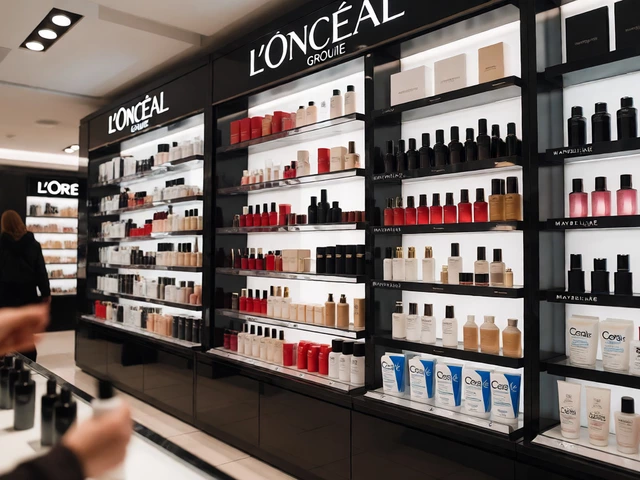
If we are looking strictly at the numbers, L'Oréal is the world's largest cosmetics company, based in France and controlling a massive portfolio of diverse beauty brands. Also known as L'Oréal Group, it doesn't just sell one type of product. It owns everything from drugstore staples to high-end luxury lines. In 2025, they continued to lead the market by integrating AI into their skincare diagnostics, allowing users to scan their faces and get personalized product recommendations.
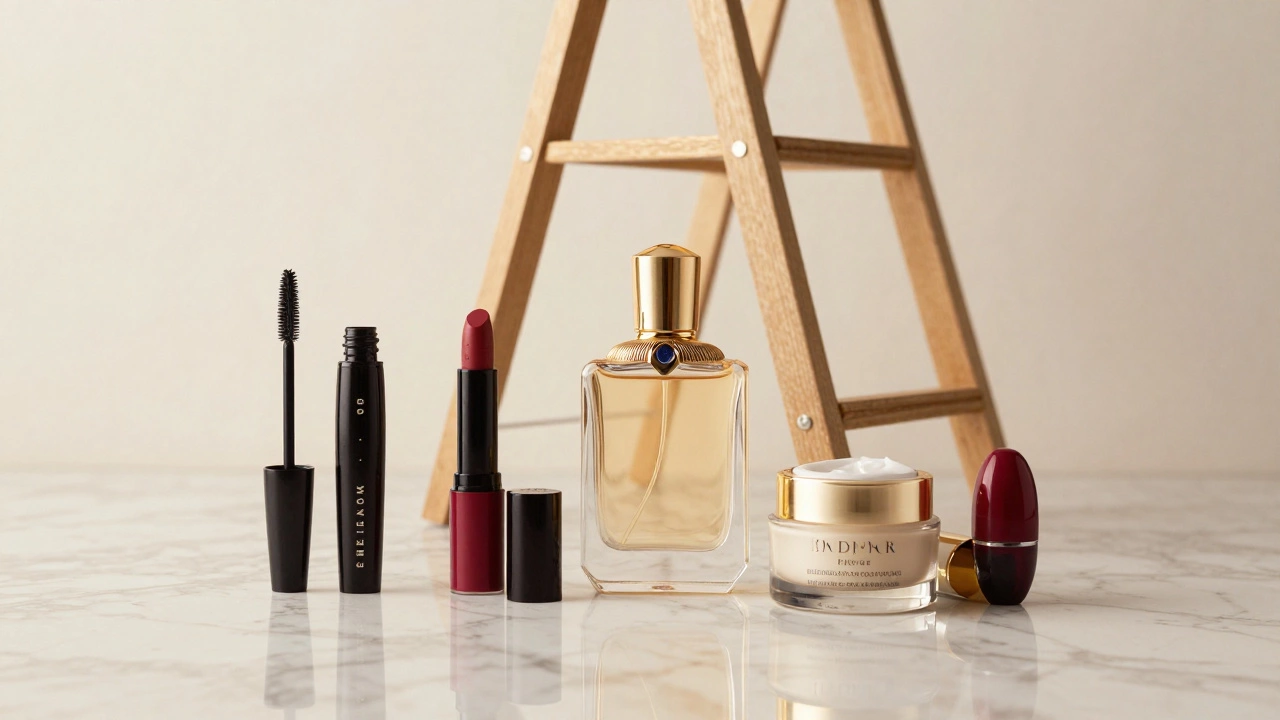
Why does this make them the most successful? Because they've mastered the 'ladder' strategy. They have Maybelline and L'Oréal Paris for the mass market, and then Lancôme and Yves Saint Laurent Beauté for the luxury shoppers. This means they capture a customer whether that person has $5 or $500 to spend on a fragrance.
Defining Success Beyond the Balance Sheet
Revenue is one thing, but brand loyalty is where the real battle happens. This is where Estée Lauder Companies enters the chat. While L'Oréal might lead in sheer volume, Estée Lauder has historically dominated the high-end prestige sector. They focus on a smaller number of high-margin brands like MAC Cosmetics and Clinique. Success for them isn't just about selling the most lipstick; it's about owning the 'luxury' experience.
Then there is the 'disruptor' success. Look at Fenty Beauty. Launched by Rihanna, it didn't start with a hundred-year history. Instead, it succeeded by solving a concrete problem: the lack of inclusive shades for all skin tones. By launching 40 shades of foundation at once, they forced every other brand in the world to rethink their product lines. That is a different kind of success-cultural dominance.
| Brand Group | Primary Market | Core Strength | Key Brand Example |
|---|---|---|---|
| L'Oréal | Mass & Luxury | Scale and R&D | Maybelline |
| Estée Lauder | Prestige | High-end loyalty | MAC |
| Coty | Fragrance & Mass | License Management | CoverGirl |
| LVMH | Ultra-Luxury | Exclusivity | Dior Beauty |
The Secret Sauce of Market Dominance
So, how do these brands actually stay on top? It usually comes down to three things: supply chain, research, and psychological positioning. L'Oréal spends hundreds of millions of dollars annually on Dermatological Research. They don't just guess what works; they create molecules in labs. When they launch a new active ingredient, like a stabilized Vitamin C, it's backed by clinical data that makes it hard for small indie brands to compete.
Then there's the supply chain. The most successful brands have a 'omnichannel' presence. This means you can buy their products at a high-end boutique, a Walmart, or via a TikTok Shop. This ubiquity creates a psychological loop: the more you see a brand, the more you trust it. If you see a product in a professional makeup artist's kit and then see it at your local pharmacy, your brain flags it as a 'gold standard' product.
The Rise of the 'Clean Beauty' Shift
In the last few years, the definition of success has shifted. It's no longer just about who has the most stores. Consumers are now obsessed with Clean Beauty and sustainability. This has allowed brands like Rare Beauty to grow at a staggering rate. By focusing on mental health and a 'natural' look, they've captured Gen Z in a way that the old giants struggled to do.
The big players didn't just sit back. We've seen a wave of acquisitions. When a giant like L'Oréal sees a small, organic brand gaining traction, they often just buy them. This is how they maintain their status as the most successful cosmetic brand-by absorbing the competition and integrating those trends into their own corporate machine.
Fragrance: The Silent Profit Maker
If you want to know where the real money is, look at the perfumes. LVMH (Louis Vuitton Moët Hennessy) might not be the biggest in 'makeup' per se, but their luxury fragrance and skincare wings are incredibly profitable. Fragrance has a much higher profit margin than a mascara. A bottle of high-end perfume costs relatively little to produce compared to its retail price, which can be hundreds of dollars.
This is why you'll see brands like Dior or Chanel pushing their beauty lines so hard. The makeup acts as an entry point. A teenager might not be able to afford a $3,000 handbag, but she can afford a $40 Dior lipstick. Once she is in the brand's ecosystem, she's more likely to save up for the bigger luxury items later in life. It's a genius customer acquisition funnel.
Avoiding the Pitfalls of Success
Even the biggest brands can fail. We've seen it happen when companies ignore the 'skin-first' movement. For a long time, the most successful brands focused on coverage-hiding the skin. But the market shifted toward Skincare-Infused Makeup. If a brand didn't pivot to include hyaluronic acid or SPF in their foundations, they lost market share to the nimble 'indie' brands.
Another trap is the 'over-extension' of a brand. When a luxury brand puts its logo on too many cheap products, it loses its prestige. The most successful companies know exactly how to balance their 'mass' and 'prestige' arms so they don't cannibalize each other. L'Oréal does this perfectly by keeping Maybelline and Lancôme as entirely separate corporate entities with different marketing teams.
Is L'Oréal actually the biggest cosmetic brand?
Yes, in terms of global revenue and market share, L'Oréal is generally considered the largest. They operate across multiple segments, including consumer products, professional hair care, and luxury cosmetics, giving them a broader reach than any other beauty company.
Why are 'indie' brands growing so fast?
Indie brands can pivot much faster than corporate giants. They use social media-specifically TikTok and Instagram-to build direct relationships with customers and can launch new products in weeks rather than the years it takes for a giant corporation to go through testing and approvals.
Does 'most successful' always mean the most popular?
Not necessarily. A brand like Fenty Beauty might be more 'culturally' popular or influential among young people, while a brand like Estée Lauder is more 'financially' successful in the prestige luxury market. Success depends on whether you measure it by profit, volume, or influence.
How do beauty brands use AI in 2026?
Brands now use AI for 'Virtual Try-Ons' and hyper-personalized skincare. By analyzing skin texture and tone via a smartphone camera, AI can suggest the exact shade of foundation or the specific serum needed to treat a user's unique skin concerns.
What is the role of 'Clean Beauty' in brand success?
Clean beauty-focusing on non-toxic, sustainable ingredients-has become a requirement for success. Brands that don't offer transparent ingredient lists or sustainable packaging are seeing a drop in loyalty, especially among Gen Z and Millennial consumers.
What's Next for the Beauty Industry?
If you're tracking the next big winner, stop looking at just the makeup and start looking at 'biotech beauty.' The next era of success won't be about better colors, but about lab-grown ingredients that mimic the skin's natural biology perfectly without using animal-derived components. Brands that can master this will likely take the crown from the current leaders.
For those trying to build their own brand or just wanting to buy the best, remember that 'success' in this industry is often a result of how well a company can blend science with a story. The brands we love aren't just selling chemicals in a bottle; they're selling a version of ourselves that we want to be.