Anti-Aging Treatment Recommender
Discover which science-backed anti-aging treatments work best for your skin type, age, and concerns. Based on clinical evidence from the article "What Is the Best Treatment for Anti-Aging Face? Proven Options That Actually Work".
Every time you look in the mirror and notice fine lines deepening around your eyes or your jawline losing its definition, you’re not alone. Anti-aging isn’t about chasing youth-it’s about keeping your skin healthy, resilient, and glowing as you get older. But with so many treatments advertised-from $500 serums to laser clinics promising miracle results-it’s hard to know what actually works. The truth? There’s no single magic bullet, but there are a few science-backed approaches that deliver real, lasting results when used the right way.
Top Three Proven Anti-Aging Facial Treatments
The most effective anti-aging treatments don’t just mask wrinkles-they repair the skin’s structure from within. Three options stand out based on clinical data, dermatologist recommendations, and long-term user outcomes.
Retinoids are still the gold standard. Prescription tretinoin (Retin-A) and over-the-counter retinol both boost collagen production and speed up cell turnover. A 2023 study in the Journal of Clinical and Aesthetic Dermatology showed that after six months of daily retinol use, participants had a 28% reduction in wrinkle depth and improved skin texture. Start with 0.3% retinol every other night to avoid irritation, then slowly increase to nightly use. Pair it with a gentle moisturizer and always use sunscreen-retinoids make skin more sensitive to UV damage.
Professional chemical peels offer faster results than creams. Glycolic acid (50-70%) and trichloroacetic acid (TCA) peels remove damaged outer skin layers, revealing fresher, smoother skin underneath. A single peel can reduce sun spots and fine lines by 30-50%. Most people need three to four sessions spaced four weeks apart. Recovery takes about a week-skin peels and feels tight-but the glow lasts months. Don’t try this at home with store-bought kits; improper use can cause burns or permanent discoloration.
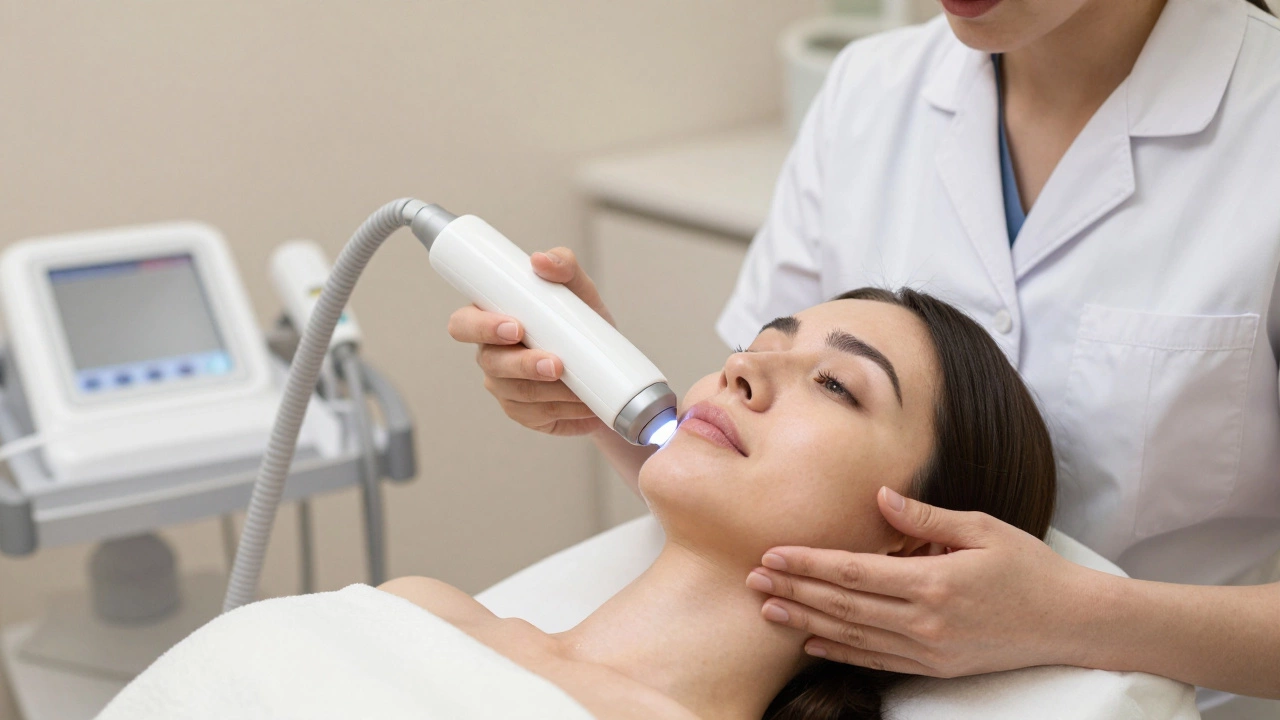
Low-level light therapy (LLLT), especially red and near-infrared light, is gaining traction. Devices like the Dr. Dennis Gross SpectraLite FaceWare or in-clinic LED panels stimulate fibroblasts-the cells that make collagen and elastin. A 2024 meta-analysis found that 12 weeks of consistent LLLT use improved skin elasticity by 22% and reduced wrinkle volume by 19%. It’s non-invasive, painless, and safe for all skin tones. You can use handheld devices at home three to five times a week, or get professional sessions monthly.
What Doesn’t Work (And Why)
Not everything labeled ‘anti-aging’ lives up to the hype. Some treatments are overpriced, ineffective, or even harmful.
Colloidal silver serums? No evidence they reduce wrinkles. In fact, long-term use can cause argyria-a rare condition that turns skin blue-gray.
Face rollers and jade stones? They might feel soothing and temporarily reduce puffiness, but they don’t stimulate collagen or alter skin structure. They’re nice for self-care, not science.
‘Miracle’ creams with exotic ingredients like caviar extract or gold flakes? These are mostly marketing. Unless the cream contains proven actives like retinoids, peptides, or vitamin C, the expensive ingredients won’t penetrate deeply enough to matter.
And don’t fall for ‘non-surgical facelift’ devices sold on infomercials. Most use microcurrents or radiofrequency that give a temporary lift-like a facial massage-but don’t rebuild collagen long-term. Real results require consistent, targeted treatment, not a 10-minute gadget.
Combining Treatments for Maximum Impact
The best results come from stacking treatments that work in different ways. Think of it like building a house: retinoids lay the foundation, peels smooth the walls, and light therapy adds the finishing coat.
Here’s a simple weekly plan that works for most people in their 30s to 50s:
- Monday, Wednesday, Friday: Apply retinol after cleansing, wait 20 minutes, then moisturize.
- Tuesday: Use a vitamin C serum in the morning to fight free radicals and brighten skin.
- Thursday: LED light therapy at home for 10-15 minutes.
- Saturday: Gentle exfoliation with a low-percentage AHA (like lactic acid) if skin isn’t irritated.
- Sunday: Rest. Skip actives and focus on hydration.
Every 8-12 weeks, book a professional glycolic peel. That’s it. No need for daily masks, 10-step routines, or expensive oils. Consistency beats intensity every time.

What You Can’t Ignore: Sunscreen
Even the best treatments fail if you don’t protect your skin from UV rays. Sun exposure is responsible for up to 80% of visible aging. That’s not a guess-it’s from the British Journal of Dermatology’s 2025 review of skin aging studies.
Use a broad-spectrum SPF 30 or higher every single day, even when it’s cloudy. Mineral sunscreens with zinc oxide or titanium dioxide are gentler for sensitive skin. Reapply every two hours if you’re outside. And yes, that includes driving, walking the dog, or sitting by the window. UVA rays penetrate glass.
Many people skip sunscreen because it feels greasy or leaves a white cast. That’s outdated. Modern formulas like EltaMD UV Clear or La Roche-Posay Anthelios are lightweight, invisible, and blend into all skin tones.
When to See a Dermatologist
Home treatments work well for mild to moderate aging signs. But if you have deep wrinkles, sagging skin, or stubborn sun damage, it’s time to consult a professional.
Here’s what a dermatologist can offer that you can’t do at home:
- Prescription-grade retinoids (tretinoin, tazarotene) that are 5-10x stronger than OTC versions.
- Fractional laser resurfacing (like Fraxel) that targets deeper layers of skin to rebuild collagen. Results last 2-3 years.
- Radiofrequency microneedling (like Morpheus8) that heats skin from within to tighten and lift.
- Neuromodulators (Botox, Dysport) to relax dynamic wrinkles caused by facial expressions.
These aren’t quick fixes-they’re medical procedures with downtime and costs. But for people who want real, long-term improvement, they’re worth considering. Always choose a board-certified dermatologist or licensed aesthetic practitioner. Avoid medspas run by salespeople without medical training.
Realistic Expectations Matter
Anti-aging isn’t about erasing every line. It’s about slowing down the process and keeping skin looking vibrant and healthy. Even the best treatments won’t turn 60-year-old skin into 20-year-old skin. But they can make you look 5-10 years younger than you would without them.
Results take time. Retinoids show changes after 12 weeks. Peels need multiple sessions. Light therapy requires consistency. If you stop, your skin will gradually return to its baseline. Think of it like exercise-you don’t get fit by working out once, and you don’t keep skin youthful by using one product for a month.
The goal isn’t perfection. It’s confidence. When your skin feels smooth, looks even-toned, and responds well to care, you don’t need to hide behind makeup. That’s the real win.
What to Avoid in Your 20s and 30s
Anti-aging doesn’t start at 40. It starts now. The best way to prevent deep wrinkles later is to protect your skin early.
Don’t skip sunscreen. Don’t smoke. Don’t sleep on your face (yes, that causes sleep lines). Don’t over-exfoliate. And don’t use harsh products just because they ‘tingle’-that’s irritation, not effectiveness.
Start with a simple routine: cleanse, moisturize, SPF. Add vitamin C in the morning and retinol at night once your skin adjusts. That’s enough. You don’t need 12 products. You need consistency and protection.
By your 40s, you’ll be glad you didn’t wait until then to start.