Clean Beauty Ingredient Checker
Select Ingredients Found in Your Product
Click on the ingredients listed on your foundation or makeup label.
Purity Score
Waiting...
Select ingredients from your product label to see how clean your makeup is.
Selected Ingredients:
- None selected
Look closely at the ingredient list on your favorite foundation. Do you see terms like 'parabens,' 'phthalates,' or 'synthetic fragrances'? If so, you might be applying more than just color to your skin. The question of what is the cleanest face makeup isn't just about marketing buzzwords; it’s about understanding what actually touches your pores for eight hours a day. Your skin is your largest organ, and it absorbs a significant portion of what you put on it. Choosing cleaner options means avoiding chemicals linked to hormonal disruption, irritation, and long-term health concerns.
The term 'clean beauty' has evolved rapidly since 2019. Today, it generally refers to products free from toxic ingredients, formulated with safety in mind, and often produced ethically. But because there is no single legal definition enforced by global regulatory bodies, you have to do a bit of detective work. This guide breaks down exactly what makes face makeup 'clean,' which ingredients to avoid, and how to find brands that truly prioritize your health without sacrificing coverage or finish.
Defining Clean Beauty: Beyond the Label
Clean beauty is not a regulated term like 'organic' or 'gluten-free.' This lack of standardization is why confusion exists. One brand might call its product 'clean' simply because it’s vegan, while another uses the label to mean it contains zero synthetic preservatives. To identify the genuinely cleanest face makeup, look for a combination of three pillars: ingredient transparency, ethical sourcing, and third-party certification.
EWG Verified™ is a certification by the Environmental Working Group that ensures products meet strict standards for health and transparency. When you see this mark, you know the product has been screened for hidden harmful chemicals. Similarly, Cosmos Organic is an international standard for organic and natural cosmetics that verifies both the percentage of organic ingredients and the manufacturing process. These certifications cut through the greenwashing noise.
True clean makeup also avoids 'fragrance' as a catch-all term. Fragrance can hide hundreds of undisclosed chemicals, many of which are known allergens or endocrine disruptors. Instead, clean brands use essential oils or clearly list every component of their scent profile. If a product smells good but lists only 'parfum' or 'fragrance,' it’s likely not meeting the highest standards of cleanliness.
Ingredients to Avoid in Face Makeup
Knowing what to exclude is just as important as knowing what to include. Several common cosmetic ingredients have raised red flags in dermatological and toxicological studies over the past decade. Here are the primary culprits to watch out for in foundations, powders, and concealers:
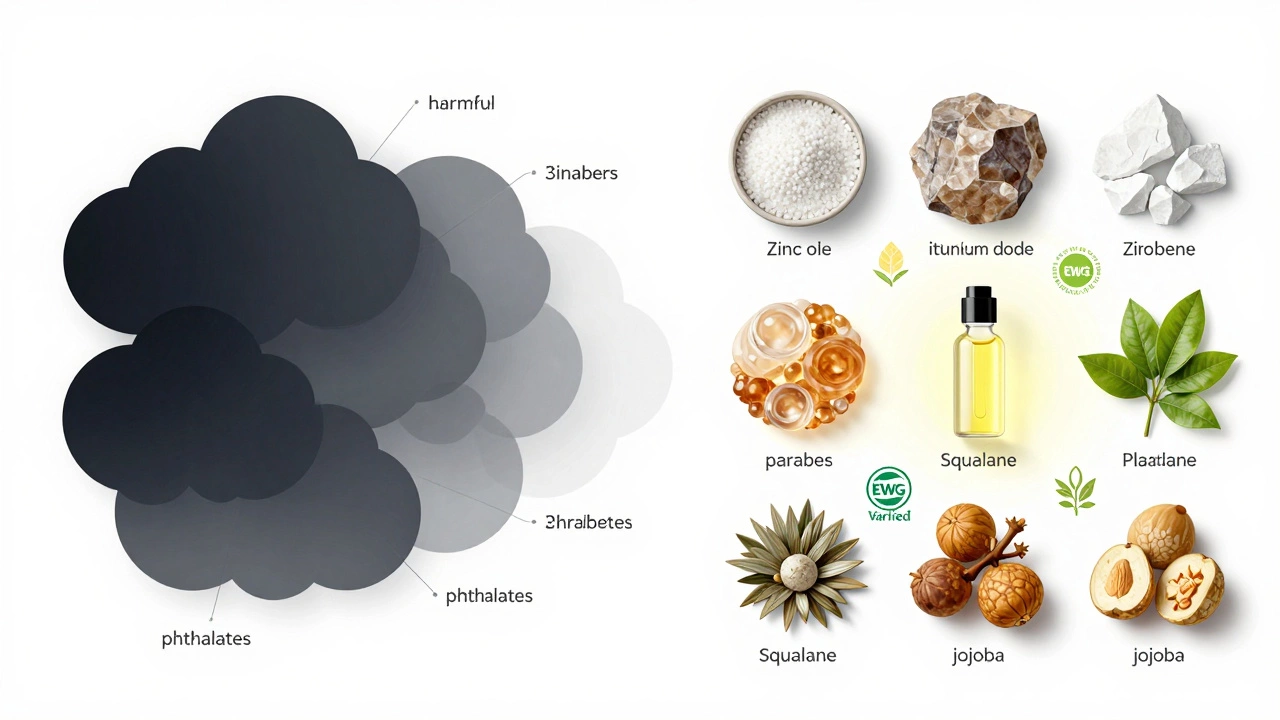
- Parabens (Methylparaben, Propylparaben): These preservatives prevent bacterial growth but mimic estrogen in the body. High exposure has been linked to breast cancer risks in some studies, leading many clean brands to switch to safer alternatives like phenoxyethanol or radish root ferment filtrate.
- Phthalates (DEP, DBP): Often hidden under the word 'fragrance,' phthalates are plasticizers that help formulas stay flexible. They are potent endocrine disruptors associated with reproductive issues. Clean makeup never uses these.
- Silicones (Dimethicone, Cyclopentasiloxane): While not inherently toxic, silicones create a barrier on the skin that can trap dirt and bacteria, potentially causing breakouts. More importantly, they are derived from petroleum, a non-renewable resource. Clean brands prefer plant-based alternatives like squalane or jojoba oil for slip and hydration.
- Talc: Commonly found in setting powders and foundations, talc has faced scrutiny due to potential asbestos contamination in mining processes. Even if asbestos-free, talc particles can irritate sensitive skin. Mineral-based alternatives using zinc oxide or magnesium carbonate are safer bets.
- Formaldehyde Releasers (DMDM Hydantoin): These preservatives release small amounts of formaldehyde over time to preserve the product. Formaldehyde is a known human carcinogen, making these ingredients unacceptable in clean formulations.
Avoiding these doesn’t mean your makeup will expire tomorrow. Modern preservation systems using vitamin E, rosemary extract, and broad-spectrum antimicrobials keep products safe for months without compromising your health.
Top Ingredients in Clean Face Makeup
If you’re removing harsh chemicals, what replaces them? The best clean face makeup relies on high-performance botanicals and mineral pigments that nourish the skin while providing coverage. These ingredients offer benefits beyond aesthetics, often doubling as skincare treatments.
Hyaluronic Acid is a powerful humectant that draws moisture into the skin, preventing foundation from looking cakey or settling into fine lines. It’s a staple in clean hydrating foundations. Another hero ingredient is Niacinamide (Vitamin B3), which reduces inflammation, minimizes pore appearance, and strengthens the skin barrier. Many tinted moisturizers now include niacinamide to address acne-prone skin simultaneously.
Mineral pigments like Zinc Oxide and Titanium Dioxide provide physical sun protection alongside color. Unlike chemical sunscreens that absorb UV rays and convert them to heat, these minerals sit on top of the skin and reflect light. They are gentle enough for post-procedure skin and rosacea sufferers. Look for 'non-nano' versions, which are too large to penetrate the skin barrier, ensuring safety.
Plant oils such as Squalane (derived from sugarcane or olives) and Jojoba Oil mimic the skin’s natural sebum. They provide a dewy finish without clogging pores. For matte finishes, clean brands use rice starch or arrowroot powder instead of silica-heavy blends that can dry out the complexion.
Best Clean & Cruelty-Free Brands for 2026
Finding the right brand is easier when you know who plays by the rules. In 2026, several companies have set the gold standard for clean, cruelty-free face makeup. These brands don’t just claim to be safe; they publish full ingredient glossaries and undergo rigorous third-party testing.
| Brand | Key Feature | Best For | Price Range |
|---|---|---|---|
| RMS Beauty | Raw, food-grade ingredients | Natural glow, minimalists | $$$ |
| Kosas | Skin-care infused formulas | Anti-aging, hydration | $$$ |
| High pigment, clean minerals | Full coverage, longevity | $$$ | |
| Vegan, zero-waste packaging | Budget-conscious, eco-warriors | $ | |
| Hypoallergenic, certified organic | Sensitive, reactive skin | $$$$ |
RMS Beauty pioneered the 'skin first' movement with its Unify Living Color Foundation. It uses coconut oil as a base, offering incredible blendability and a luminous finish. However, those with very oily skin might find it too emollient. Kosas targets the aging demographic with its Tinted Hydra Glow Serum, packed with hyaluronic acid and peptides. It blurs the line between serum and foundation perfectly.
For those needing higher coverage, Ilia Beauty’s Super Serum Skin Tint is a standout. It provides medium buildable coverage while protecting against blue light and pollution. On the budget end, Meow Meow Tweet offers simple, effective mineral powders in compostable packaging. Their Stick-Up Concealer is a cult favorite for its creamy texture and lack of irritants.
How to Read Ingredient Labels Like a Pro
Empower yourself by learning to decode labels. Ingredients are listed in descending order of concentration. The first five ingredients make up the bulk of the product. If you see water (Aqua), caprylic/capric triglyceride, or glycerin at the top, that’s a good sign. These are safe, hydrating bases.
Watch out for 'hidden' names. Ethoxydiglycol and PEG compounds are often used as thickeners or solvents but can contain traces of 1,4-dioxane, a probable carcinogen. Clean brands avoid ethoxylation entirely. Also, check for 'CI' numbers followed by digits. These indicate synthetic dyes. While not all are harmful, clean brands typically use iron oxides (natural minerals) for color instead.
Use apps like EWG’s Healthy Living or Think Dirty to scan barcodes. These tools cross-reference ingredients with scientific databases to give a hazard score. Aim for products with scores below 3. Remember, 'natural' doesn’t always mean safe-poison ivy is natural, after all. Always verify with a trusted source.
Common Myths About Clean Makeup
Misinformation spreads quickly in the beauty world. Let’s clear up three persistent myths that hold people back from switching to cleaner options.
Myth 1: Clean makeup doesn’t last. This was true ten years ago when formulas relied heavily on waxes and oils. Today, advanced binding agents like xanthan gum and plant-derived polymers ensure long wear. Ilia and RMS foundations easily last 8-10 hours without touch-ups.
Myth 2: It costs a fortune. While luxury clean brands exist, affordable options are abundant. The Body Shop, e.l.f. Cosmetics (many lines), and Meow Meow Tweet offer verified clean products under $20. You pay for quality ingredients, not just branding.
Myth 3: Natural ingredients cause allergies. Actually, synthetic fragrances and preservatives are far more common triggers for contact dermatitis. Clean makeup eliminates these unknown variables. However, always patch test new products, especially if you have nut allergies (due to almond or shea butter).
Transitioning to Clean Makeup: A Step-by-Step Guide
Switching overnight can be overwhelming and expensive. Try this gradual approach:
- Audit your current stash: Check expiration dates. Most mascaras last 3 months; foundations, 12 months. Discard anything old to reduce waste.
- Replace one category at a time: Start with your daily driver-foundation or tinted moisturizer. Once that runs out, buy a clean alternative.
- Patch test everything: Apply a small amount behind your ear or on your jawline for 24 hours to check for reactions.
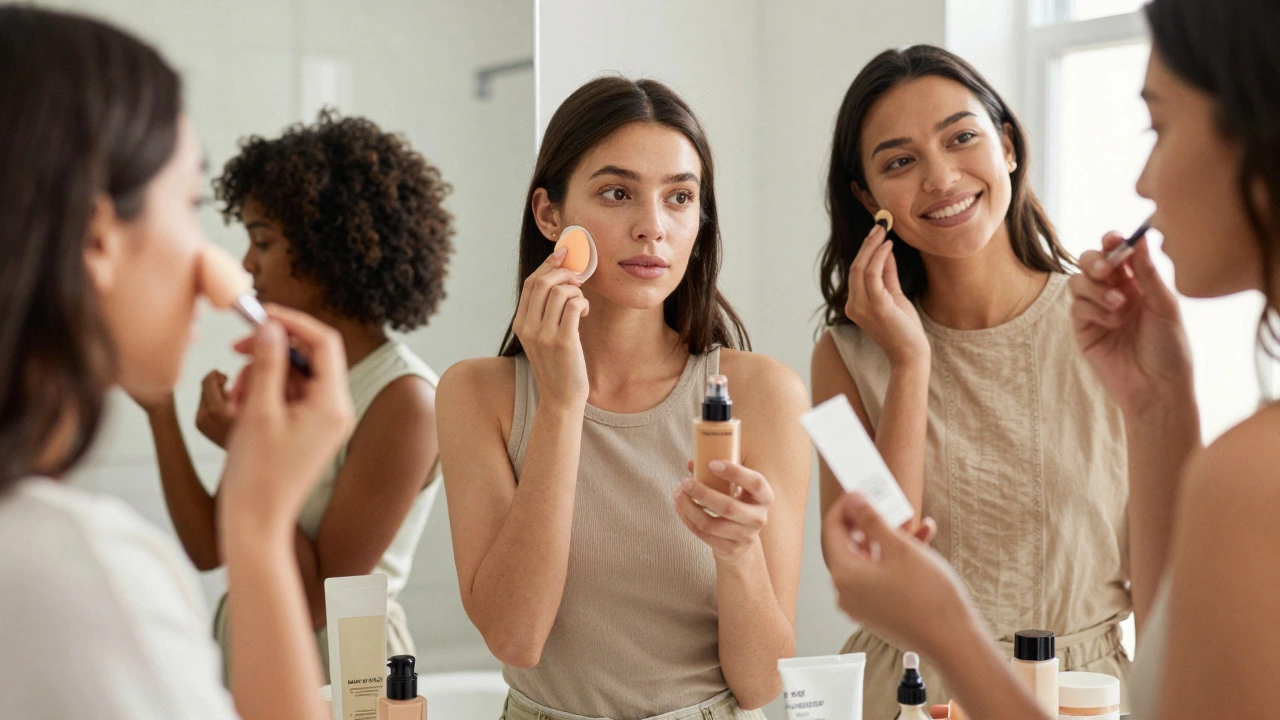
- Invest in applicators: Clean makeup often requires different application techniques. Use damp beauty sponges for liquid formulas to enhance blendability without adding heavy layers.
- Store properly: Keep products away from direct sunlight and heat, which degrade natural preservatives faster than synthetic ones.
This method allows your skin to adjust and helps you identify which textures and finishes you prefer without breaking the bank.
Frequently Asked Questions
Is clean makeup safe for pregnant women?
Yes, clean makeup is generally safer during pregnancy because it avoids retinoids, high-dose salicylic acid, and endocrine-disrupting chemicals like parabens and phthalates. However, always consult your OB-GYN before starting new skincare or makeup routines, especially if you have specific sensitivities.
Does clean makeup expire faster?
Clean makeup may have a shorter shelf life once opened because it lacks strong synthetic preservatives. Most clean foundations last 6-12 months after opening, compared to 12-24 months for conventional brands. Store them in cool, dry places and wash applicators regularly to extend usability.
Can I use clean makeup if I have acne?
Absolutely. Many clean brands formulate specifically for acne-prone skin using non-comedogenic ingredients like zinc oxide and tea tree oil. Avoid heavy oils like coconut oil if you are prone to clogged pores, and opt for mineral-based powders or water-gel foundations instead.
Are all cruelty-free brands also clean?
No. Cruelty-free means the product wasn’t tested on animals, but it doesn’t guarantee the ingredients are non-toxic. A brand can be cruelty-free yet still use parabens, sulfates, or synthetic fragrances. Look for both 'Leaping Bunny' or 'PETA' certification AND 'EWG Verified' or similar clean labels to ensure both ethics and safety.
Where can I buy authentic clean makeup?
Purchase directly from brand websites or authorized retailers like Credo Beauty, Sephora (check the 'Clean at Sephora' filter), and Ulta Beauty. Buying from unauthorized third-party sellers increases the risk of counterfeit products, which may contain harmful adulterants even if labeled as clean.
Is mineral makeup the same as clean makeup?
Not necessarily. Mineral makeup focuses on inorganic pigments like zinc and titanium dioxide, which are often gentler on skin. However, some mineral brands still add synthetic binders, fragrances, or preservatives. True clean makeup goes further by ensuring every single ingredient, including binders and scents, meets strict safety standards.