Your Personalized Anti-Aging Routine Builder
What is your primary skin type?
Normal
Balanced oil and moistureDry / Dehydrated
Tightness or flakingOily / Combination
Shiny T-zoneSensitive / Reactive
Redness or stingingPregnant / Nursing
Need safe alternativesWhat is your biggest aging concern?
Deep Wrinkles & Lines
Forehead, crow's feet, nasolabial foldsDark Spots & Sun Damage
Age spots, uneven toneTexture & Dullness
Rough skin, lack of glowPrevention
Young skin, maintaining healthWhat is your experience with actives like Retinol?
Beginner
Never used them or stopped due to irritation.
Intermediate
Used them occasionally, tolerated okay.
Expert
My skin handles strong actives easily.
Your Hero Ingredient:
Recommended Routine
Imagine if there was a single ingredient that could erase years of sun damage, smooth out deep wrinkles, and turn back the clock on your skin. It sounds like a fantasy, doesn't it? But in the world of dermatology and skincare science, we actually have access to some incredibly potent molecules. The question isn't just about finding *an* anti-aging substance; it's about identifying the heavyweight champion among them.
If you are looking for the absolute most powerful anti-aging substance backed by decades of clinical research, the answer is almost universally retinol. However, "powerful" doesn't always mean "best for you." Some ingredients work faster but cause irritation, while others are gentler but require more patience. Understanding which substance fits your skin type and goals is the real key to unlocking youthful radiance.
The Gold Standard: Why Retinol Reigns Supreme
When scientists talk about the most effective topical agent for reversing signs of aging, they are talking about retinoids. Specifically, over-the-counter Retinol is a derivative of vitamin A that accelerates cell turnover and stimulates collagen production. It has been studied since the 1980s, and the data is undeniable. Retinol penetrates the epidermis and converts into retinoic acid, the only form of vitamin A that can directly communicate with skin cells to change their behavior.
Here is what makes retinol so aggressive against aging:
- Boosts Collagen: It signals fibroblasts to produce new collagen, plumping up fine lines from within.
- Exfoliates Deeply: Unlike surface exfoliants, retinol works at the cellular level to shed dead skin cells, revealing brighter, smoother skin underneath.
- Fades Hyperpigmentation: By speeding up cell turnover, it helps fade dark spots and age spots faster than natural processes would allow.
The downside? Retinol is notorious for causing the "retinol uglies"-a period of redness, peeling, and dryness when you first start using it. If your skin barrier is compromised or highly sensitive, this power might come at too high a cost.
The Protective Powerhouse: Vitamin C
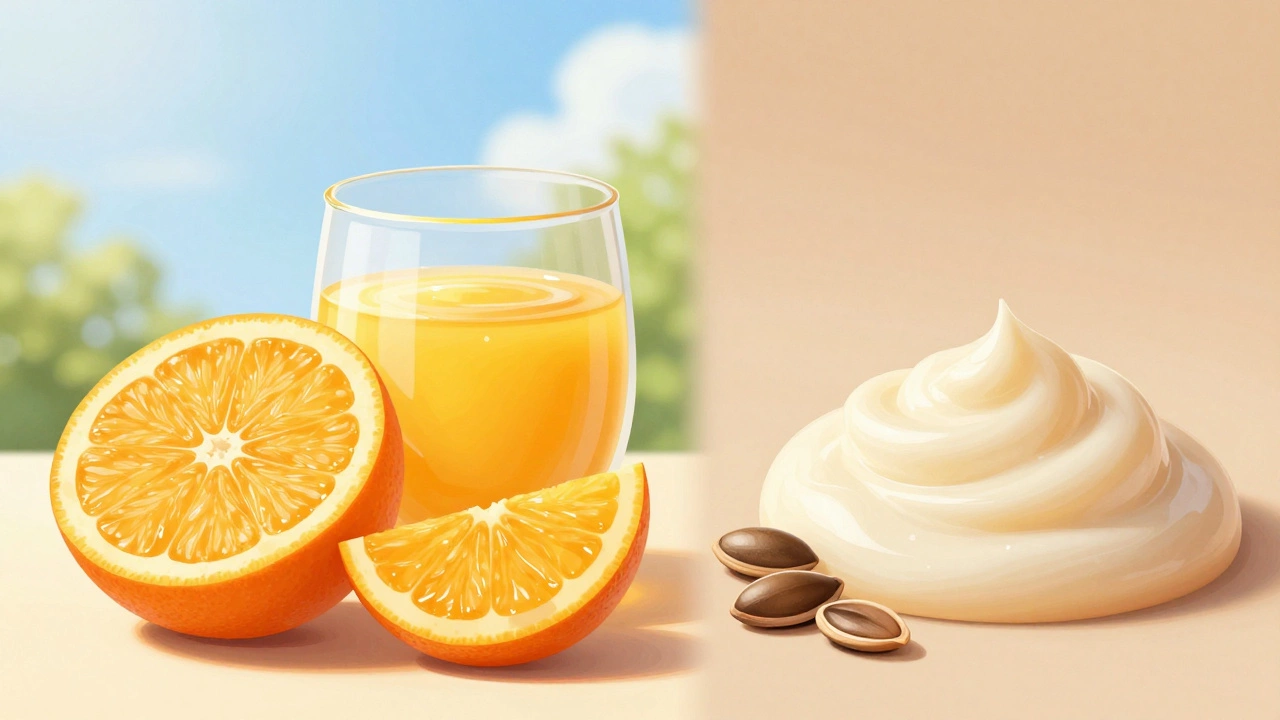
If retinol is the repair crew working overnight, Vitamin C (specifically L-ascorbic acid) is a potent antioxidant that protects skin from free radical damage caused by UV rays and pollution. You cannot have healthy, young-looking skin without protection. Every day, environmental stressors generate free radicals that break down collagen and elastin. Vitamin C neutralizes these radicals before they can do harm.
But Vitamin C does more than just defend. It is also essential for the synthesis of collagen. Studies show that applying stable forms of Vitamin C in the morning can significantly reduce the appearance of photoaging. For best results, look for serums containing between 10% and 20% L-ascorbic acid, paired with Vitamin E and Ferulic Acid to boost stability and efficacy.
The catch with Vitamin C is stability. Pure L-ascorbic acid oxidizes quickly when exposed to light and air, turning orange and becoming useless. If you are buying an anti-aging substance, check the packaging. Opaque, airless pumps are non-negotiable for high-quality Vitamin C serums.
The Gentle Alternative: Bakuchiol
Not everyone can tolerate retinol. Pregnant women, people with rosacea, and those with extremely sensitive skin often find retinoids too harsh. This is where Bakuchiol is a plant-derived compound extracted from the seeds of Psoralea corylifolia that mimics the effects of retinol without the irritation. Recent studies published in the International Journal of Cosmetic Science have shown that bakuchiol activates similar gene pathways as retinol, promoting collagen production and reducing wrinkles, but without disrupting the skin barrier.
Bakuchiol is not just a gentle retinol alternative; it is also an antimicrobial and anti-inflammatory agent. This makes it excellent for aging skin that also struggles with acne or redness. While it may take slightly longer to see dramatic results compared to prescription-strength tretinoin, bakuchiol offers a sustainable, long-term approach to anti-aging that you can use morning and night without fear of photosensitivity.
The Hydration Hero: Hyaluronic Acid
Wrinkles often look deeper because our skin loses water content as we age. Hyaluronic Acid is a humectant molecule capable of holding up to 1,000 times its weight in water. While it doesn't stimulate collagen like retinol, it provides immediate visual improvement by plumping the skin. Dehydrated skin highlights every line and crease; hydrated skin reflects light better and looks smoother.
To get the most out of hyaluronic acid, apply it to damp skin. If you apply it to dry skin in a dry climate (like Wellington’s windy days), it can actually pull moisture *from* your skin, making things worse. Always seal it in with a moisturizer containing ceramides or occlusives to lock that hydration in place.
Comparison of Top Anti-Aging Substances
| Ingredient | Primary Benefit | Best For | Potential Side Effects | Usage Time |
|---|---|---|---|---|
| Retinol | Cell turnover & collagen | Deep wrinkles, texture | Dryness, redness, peeling | Night only |
| Vitamin C | Antioxidant protection | Brightening, prevention | Stinging (if pH is low) | Morning |
| Bakuchiol | Gentle collagen boost | Sensitive skin, pregnancy | Minimal to none | AM & PM |
| Hyaluronic Acid | Hydration & plumping | Dehydration, fine lines | Pillowing effect if overused | AM & PM |
| Niacinamide | Barrier repair & pore refinement | Redness, enlarged pores | Flushing (rare) | AM & PM |
How to Layer These Substances for Maximum Impact
You don't have to choose just one. In fact, combining these substances strategically yields better results than using any single ingredient alone. Here is a simple routine framework:
- Morning: Cleanse → Vitamin C Serum → Hyaluronic Acid → Moisturizer → SPF 30+ (Non-negotiable! No anti-aging product works if you aren't wearing sunscreen).
- Evening: Cleanse → Retinol (start 2-3 times a week) OR Bakuchiol (daily) → Moisturizer.
Avoid mixing Vitamin C and Retinol in the same routine, as the different pH levels can cancel each other out or cause irritation. Keep them separate: Vitamin C in the AM, Retinol in the PM.
The Role of Peptides and Growth Factors
While retinol and Vitamin C steal the spotlight, Peptides are short chains of amino acids that signal the skin to produce more collagen and elastin. They are less aggressive than retinol but work synergistically with it. Copper peptides, in particular, have gained popularity for their ability to improve skin elasticity and wound healing. If you find retinol too irritating, layering a peptide serum under a gentle moisturizer can provide a subtle anti-aging lift without the downtime.
Common Mistakes That Sabotage Results
Even the most powerful anti-aging substance will fail if you misuse it. Here are the biggest pitfalls I see:
- Inconsistency: Anti-aging is a marathon, not a sprint. You need to use these products daily for at least 12 weeks to see visible changes in collagen density.
- Skipping Sunscreen: UV radiation accounts for up to 80% of visible facial aging. Using retinol without SPF is like mopping the floor while the tap is still running.
- Over-exfoliation: Combining retinol with strong AHAs/BHAs or physical scrubs can destroy your skin barrier, leading to chronic inflammation and accelerated aging.
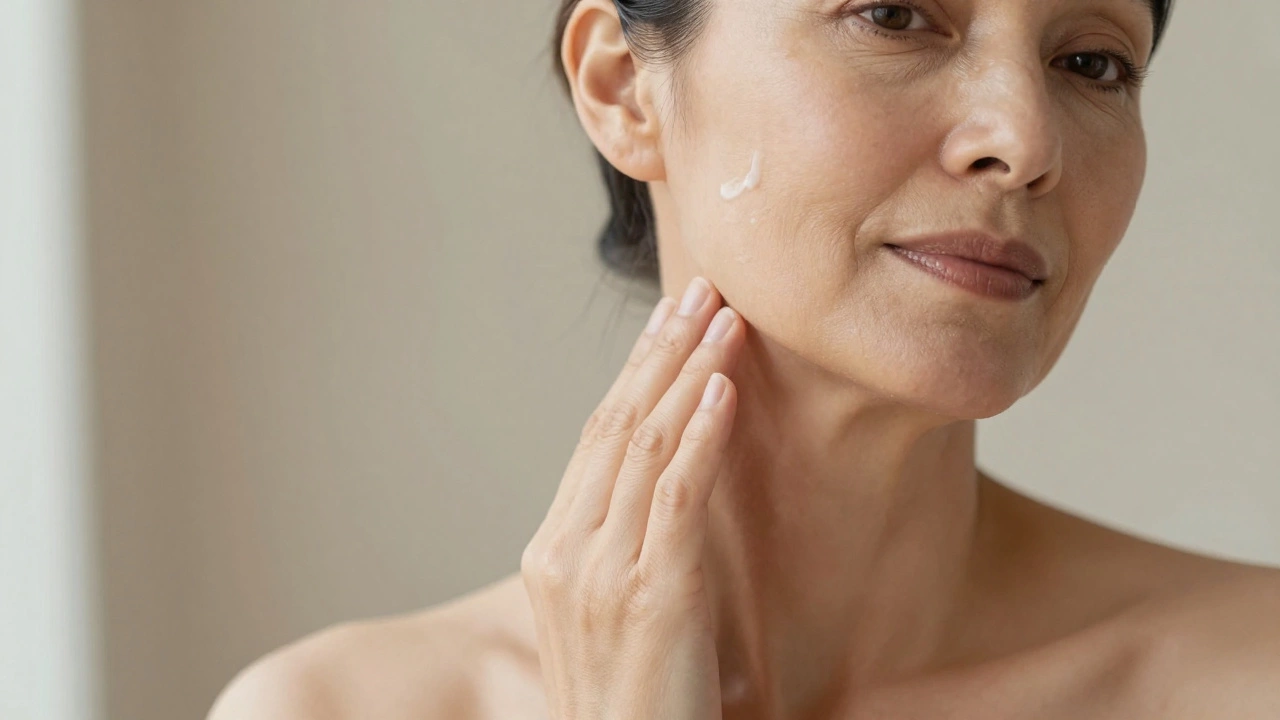
- Ignoring Neck and Décolletage: The skin on your neck is thinner and has fewer oil glands. Apply your anti-aging serums down to your chest.
Final Thoughts on Choosing Your Weapon
So, what is the most powerful anti-aging substance? Scientifically, it is retinol. It has the deepest body of evidence supporting its ability to reverse structural damage. However, the "best" substance is the one you can use consistently without damaging your skin barrier. If retinol burns your face, it is not powerful for you-it is harmful. In that case, bakuchiol or a well-formulated Vitamin C serum becomes your champion.
Start slow. Patch test new products. Listen to your skin. And remember, the most powerful tool in your anti-aging arsenal is patience combined with consistency.
Is retinol safe for all skin types?
Retinol is effective for most skin types, but it can be too harsh for those with severe rosacea, active eczema, or extremely sensitive skin. If you fall into these categories, consider starting with a lower concentration (0.1%) or switching to bakuchiol, which offers similar benefits without the irritation.
Can I use Vitamin C and Retinol together?
It is generally recommended to use them at different times of the day. Vitamin C is best used in the morning for antioxidant protection, while retinol is best used at night because it can make your skin more sensitive to sunlight. Using them simultaneously can also destabilize the Vitamin C or cause excessive irritation.
How long does it take to see results from anti-aging serums?
You may notice improved hydration and brightness within two weeks, especially with Vitamin C and Hyaluronic Acid. However, significant changes in wrinkle depth and skin texture due to collagen remodeling typically take 12 to 24 weeks of consistent use with retinol or bakuchiol.
Is bakuchiol as effective as retinol?
Clinical studies suggest bakuchiol is comparable to retinol in improving skin firmness and reducing wrinkles, but it works more gently. It does not carry the same risk of irritation or photosensitivity, making it a safer long-term option for sensitive skin, though it may take slightly longer to see dramatic results.
Do I really need sunscreen if I use anti-aging products?
Yes, absolutely. Sunscreen is the most critical anti-aging step. Without it, UV rays will continue to break down collagen, negating the benefits of your serums. Retinol also increases sun sensitivity, making daily SPF 30 or higher essential to prevent further damage.