Anti-Aging Treatment Selector & Estimator
Step 1: Select Your Primary Concerns
Select all that apply to see personalized recommendations.
Your Personalized Plan
Select your concerns above to generate a recommendation based on the 2026 Anti-Aging Guide.
Walking into a clinic with the question "what treatment will make me look younger?" is like walking into a hardware store asking for the perfect tool. The answer depends entirely on what you’re trying to fix. Are you battling deep wrinkles around your eyes? Is your jawline losing its definition? Or is your skin just looking dull and tired?
In 2026, the landscape of anti-aging treatments is medical and cosmetic procedures designed to reverse or slow visible signs of aging, including wrinkles, volume loss, and skin texture changes has shifted dramatically. We are no longer in the era of one-size-fits-all injections. Today’s approach is layered, personalized, and often combines multiple modalities to achieve a natural, refreshed look rather than a frozen or overdone appearance.
The goal isn’t to erase every line-that’s impossible and often undesirable-but to restore vitality. Here is a breakdown of the most effective treatments available right now, categorized by the specific aging concern they address.
Restoring Volume: Dermal Fillers and Biostimulators
As we age, we don’t just lose collagen; we lose fat pads and bone density. This causes the face to sag and hollow out, particularly in the cheeks, temples, and under-eye areas. If your primary concern is a "tired" or "sunken" look, volume restoration is your first step.
Dermal fillers are injectable gels, typically made from hyaluronic acid, used to add volume, smooth wrinkles, and enhance facial contours remain the gold standard for immediate results. Hyaluronic acid (HA) fillers attract water, plumping up the skin instantly. They are reversible if you don’t like the result, which makes them a safe starting point for many patients.
However, the real game-changer in recent years has been the rise of biostimulatory fillers are injectable treatments that stimulate the body's own collagen production over time, providing gradual and long-lasting structural support. Unlike HA fillers that sit in the tissue, biostimulators like Sculptra (poly-L-lactic acid) and Radiesse (calcium hydroxylapatite) trigger your body to build new collagen networks. The results aren’t instant-you’ll see improvement over 3 to 6 months-but they last much longer, often two years or more, and provide a more structural lift than simple filling.
- Best for: Cheek augmentation, temple hollows, chin projection, and overall facial lifting.
- Recovery: Minimal. Some swelling and bruising for 3-5 days.
- Lasts: HA fillers: 6-18 months. Biostimulators: 2+ years.
Smoothing Dynamic Wrinkles: Neuromodulators
If your lines appear when you talk, laugh, or frown, these are dynamic wrinkles. They are caused by repeated muscle movements. Over time, these dynamic lines become static, meaning they stay even when your face is at rest. To prevent this, you need to relax the muscles causing them.
Botox is a brand name for botulinum toxin type A, an injectable neuromodulator that temporarily paralyzes muscles to reduce the appearance of wrinkles is still the most recognized name, but it’s not the only option. Dysport, Xeomin, and Jeuveau work similarly. In 2026, the technique matters more than the brand. The trend is toward "micro-dosing"-using smaller amounts spread across more points to maintain natural expression while softening lines. No one wants the "frozen forehead" look anymore.
Neuromodulators are also being used off-label for non-cosmetic issues that affect appearance, such as masseter reduction (slimming a square jaw) or brow lifts. By relaxing the tail of the eyebrow, a skilled injector can create a subtle, alert lift without touching the forehead muscles directly.
- Best for: Crow’s feet, glabellar lines (between eyebrows), forehead lines, bunny lines.
- Recovery: None. You can resume normal activities immediately.
- Lasts: 3-4 months.
Improving Skin Texture: Lasers and Resurfacing
Volume and wrinkles are only half the battle. Sun damage, acne scars, and uneven tone can make you look older than you feel. This is where energy-based devices come in. If your skin looks rough, leathery, or blotchy, you need resurfacing.
Laser resurfacing is a procedure using concentrated light beams to remove damaged outer layers of skin and stimulate collagen production in deeper layers comes in two main flavors: ablative and non-ablative. Ablative lasers (like CO2) remove the top layer of skin entirely. They offer dramatic results but require 1-2 weeks of downtime. Non-ablative lasers heat the deeper skin layers without damaging the surface, offering mild improvements with little to no downtime.
In 2026, fractional lasers are the sweet spot. They treat tiny columns of skin, leaving surrounding tissue intact for faster healing. For those who want zero downtime, radiofrequency (RF) microneedling is gaining massive popularity. Devices like Morpheus8 combine microneedling with RF energy to tighten skin and improve texture simultaneously. It’s particularly effective for the neck and jawline, areas that are tricky to treat with traditional lasers.
- Best for: Sun spots, fine lines, acne scars, pore size, skin laxity.
- Recovery: Varies. Non-ablative: 1-2 days redness. Ablative: 7-14 days peeling.
- Lasts: Collagen remodeling continues for 6-12 months after treatment.
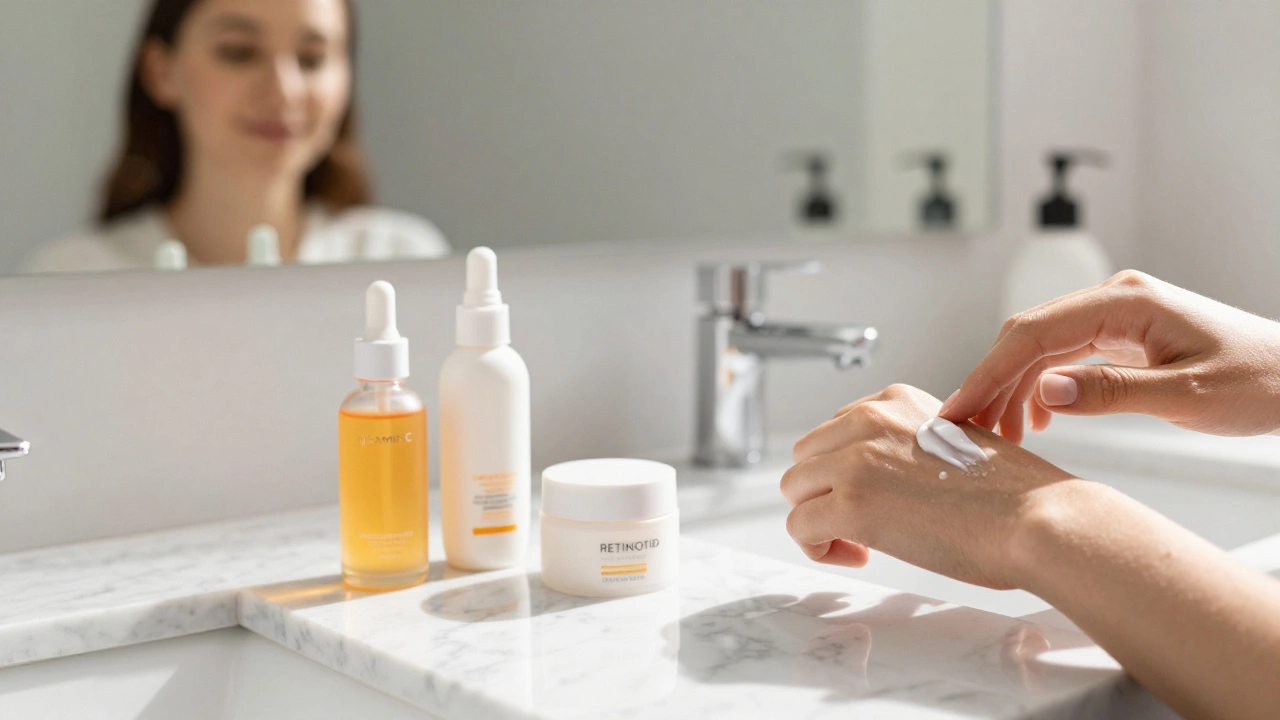
The Power of Topicals: Retinoids and Vitamin C
No procedural treatment works in isolation. Your daily skincare routine supports and extends the results of your clinical treatments. If you neglect your home care, you’ll need procedures more frequently to maintain the same look.
Retinoids are derivatives of vitamin A that accelerate cell turnover, boost collagen production, and fade hyperpigmentation are the single most proven anti-aging ingredient in dermatology. Prescription-strength tretinoin is the gold standard, but over-the-counter retinol and newer encapsulated retinoid technologies have closed the gap significantly. They work slowly but deeply, thickening the dermis and thinning the stratum corneum (the dead outer layer).
Pair retinoids with Vitamin C is a potent antioxidant that protects skin from free radical damage, brightens complexion, and boosts collagen synthesis in the morning. Vitamin C neutralizes the environmental aggressors (UV rays, pollution) that break down collagen throughout the day. Without this protection, all your expensive treatments are fighting an uphill battle against daily oxidative stress.
Emerging Trends in 2026: Exosomes and PRP
The frontier of anti-aging is moving toward biological enhancement. Two treatments are generating significant buzz this year: Platelet-Rich Plasma (PRP) and exosomes.
PRP therapy is a treatment involving the injection of a patient's own concentrated platelets into the skin to promote healing and regeneration uses your own blood. After a draw, the plasma is spun to concentrate growth factors, then injected or applied topically (often after microneedling). It’s safe because it’s autologous (from your own body), but results can be variable depending on your baseline health and blood quality.
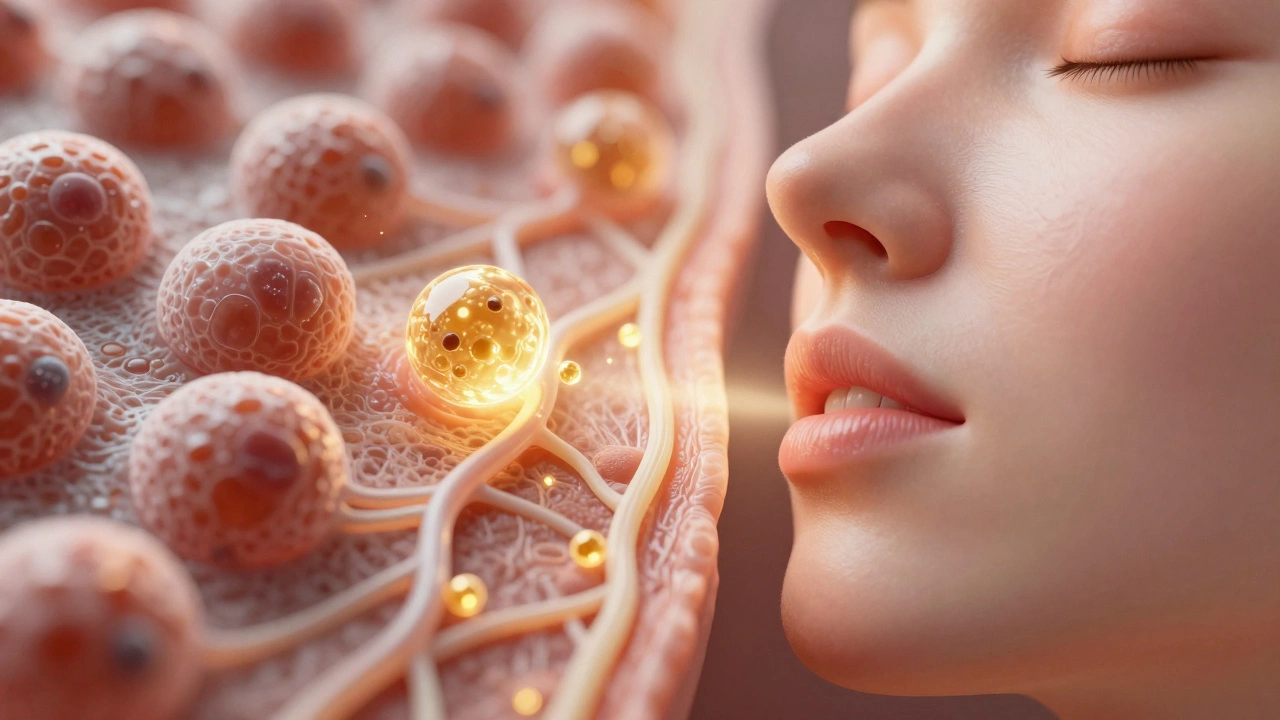
Exosomes are tiny extracellular vesicles derived from stem cells that carry signaling molecules to instruct nearby cells to repair and regenerate are the next evolution. Instead of injecting whole stem cells (which is legally complex and carries risks), clinics use exosomes-the messaging packets released by stem cells. These packets tell your skin cells to behave younger: produce more collagen, reduce inflammation, and heal faster. Early data suggests exosomes may outperform PRP in terms of consistency and potency, though they come at a higher price point.
| Treatment Type | Primary Concern | Downtime | Average Cost (USD) | Longevity |
|---|---|---|---|---|
| Botox/Neuromodulators | Dynamic wrinkles | None | $300 - $600 per area | 3-4 months |
| Hyaluronic Acid Fillers | Volume loss | 1-3 days | $600 - $900 per syringe | 6-18 months |
| Biostimulators (Sculptra) | Structural support | 3-5 days | $800 - $1,200 per vial | 2+ years |
| Fractional Laser | Texture/Tone | 3-7 days | $1,000 - $3,000 per session | 1-2 years |
| RF Microneedling | Laxity/Scars | 1-2 days | $1,000 - $2,500 per session | 1-2 years |
How to Choose the Right Path
Selecting a treatment starts with an honest assessment of your anatomy. Look in the mirror with a neutral expression. Do you see shadows? That’s volume loss. Do you see creases that disappear when you smile? Those are dynamic lines. Is your skin rough to the touch? That’s a texture issue.
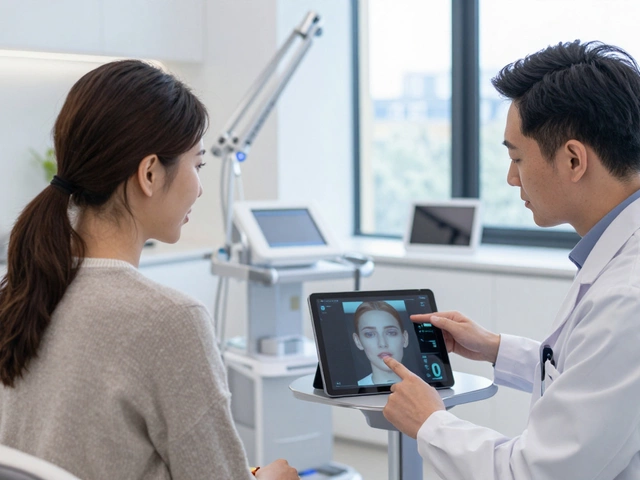
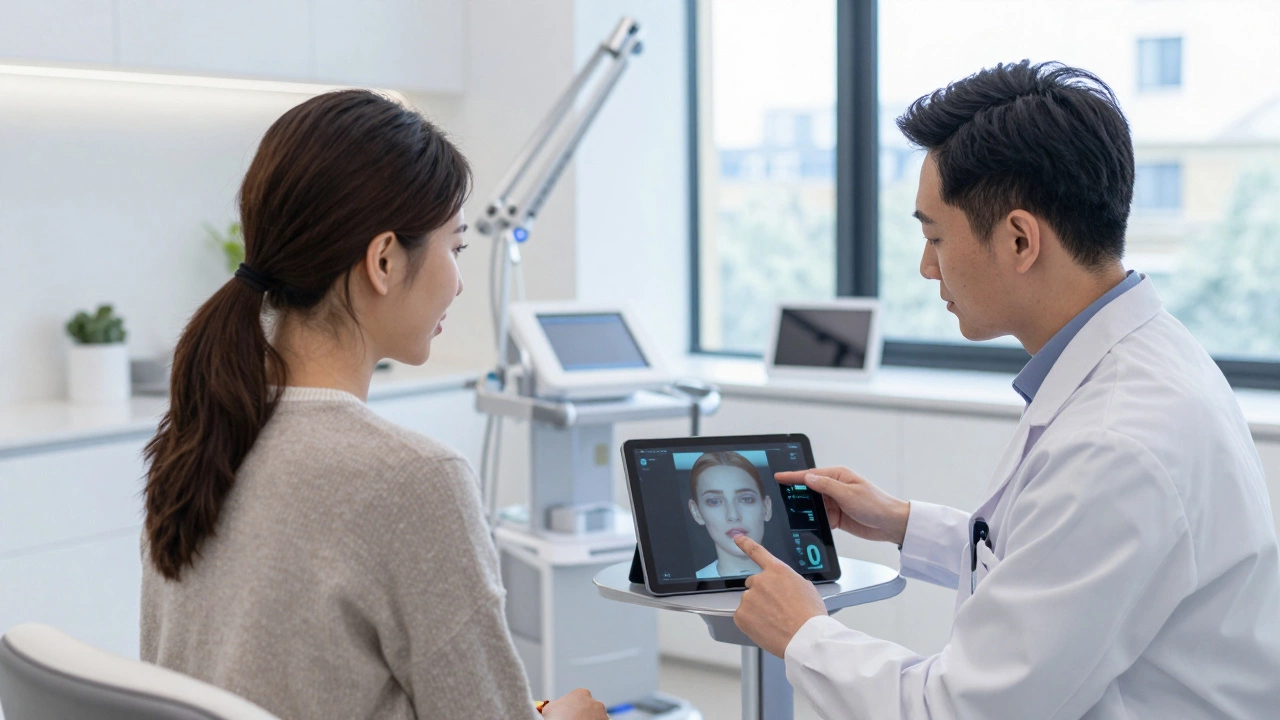
Consultation is key. Avoid providers who push a single product. A good practitioner will listen to your concerns, examine your skin type and bone structure, and propose a combination plan. For example, you might need Botox for your forehead, filler for your cheeks, and a laser session for sun damage. Layering these approaches yields the most youthful, natural result.
Remember, prevention is cheaper than correction. Start with sunscreen, retinoids, and a healthy lifestyle. Use procedures to refine and restore, not to overhaul. The best anti-aging treatment is the one that makes you look like a well-rested version of yourself, not someone else.
Which anti-aging treatment is best for beginners?
For beginners, neuromodulators like Botox are often the best starting point. They have minimal downtime, low risk, and subtle results that allow you to get comfortable with aesthetic treatments. Pairing this with a strong topical routine containing retinoids and sunscreen provides a solid foundation before considering fillers or lasers.
Do anti-aging treatments hurt?
Most treatments involve some discomfort, but it is manageable. Injectables usually include lidocaine (a numbing agent) in the product or are preceded by topical numbing cream. Lasers and microneedling feel like rubber band snaps or hot pins. Most clinics offer cooling devices during these procedures to minimize pain.
How long does it take to see results from biostimulators?
Biostimulators like Sculptra do not provide instant volume. You may see some initial hydration-related plumping, but the true collagen-building effect takes 3 to 6 months to fully manifest. Multiple sessions are often required for optimal results, but the longevity of the outcome is significantly better than traditional fillers.
Can I combine different anti-aging treatments?
Yes, combining treatments is common and often recommended for comprehensive rejuvenation. However, spacing is important. Generally, injectables and energy-based devices should not be performed on the same day unless done by an experienced provider who understands how swelling and tissue manipulation interact. A typical protocol might involve injectables first, followed by laser treatments 4-6 weeks later once swelling has subsided.
Are exosomes safe and FDA-approved?
Exosomes are currently classified as investigational in many regions, including the US, meaning they are not fully FDA-approved for general commercial sale as standalone drugs. However, they are widely used in medical spas and dermatology clinics under physician supervision. Safety profiles are generally excellent since they are cell-free, but it is crucial to verify the source and sterility of the exosome product used.