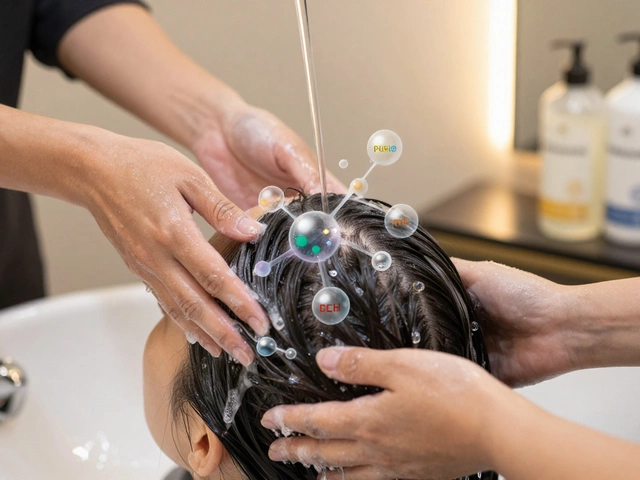
Hair Product Buildup Estimator
How much product buildup do you have?
Salon professionals need to remove product residue to ensure treatments work properly. This calculator estimates your potential buildup based on your hair care habits.
Your Results
Recommended: Get a professional wash before your next salon service.
Ever sat in the salon chair, feeling the cool water hit your scalp, and wondered - why do salons wash your hair before they even start the color, cut, or blowout? It feels like a ritual you don’t need, especially if you just washed it at home yesterday. But there’s a science behind it - and it’s not just about cleanliness.
It’s Not About Cleanliness - It’s About Control
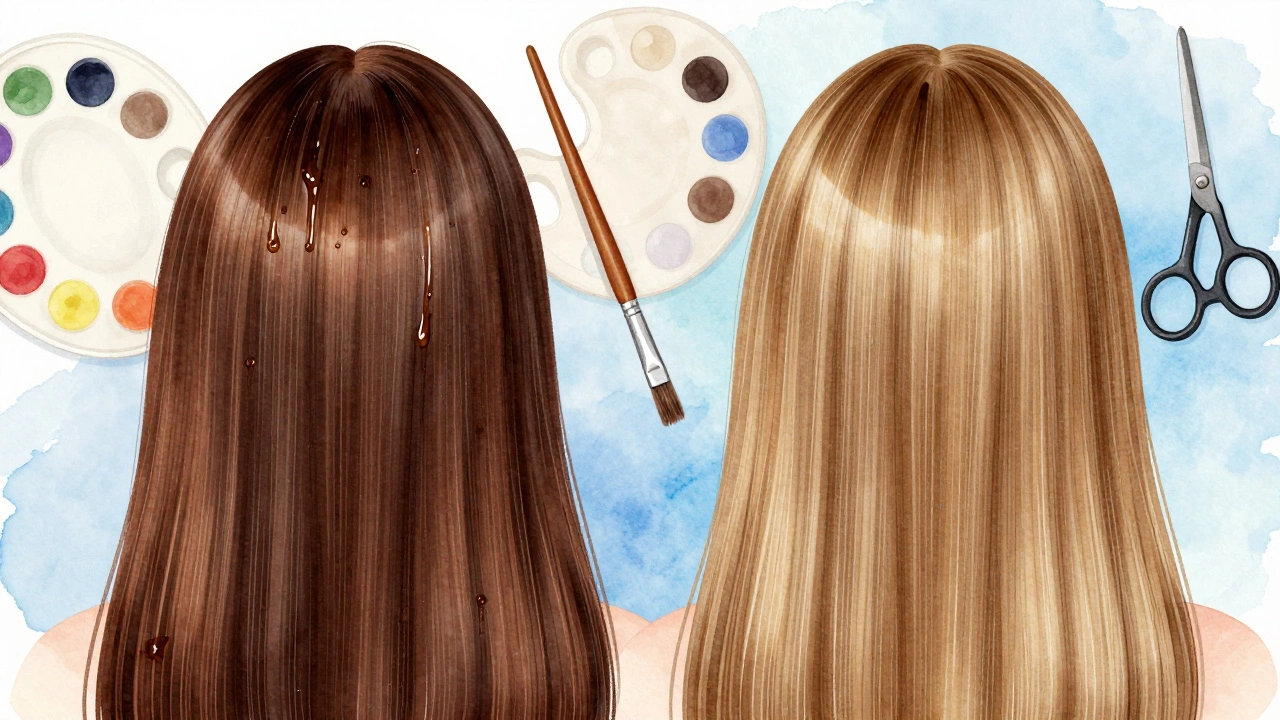
Most people think salons wash hair to make it clean. That’s only part of it. The real goal? To create a consistent, predictable base for every service. Your hair at home might have product buildup, oils, or dry shampoo residue. Even if you washed it the night before, your scalp’s natural oils have already started to redistribute. Salon professionals need a blank canvas.Think of it like painting. You wouldn’t put fresh acrylic over dried oil paint and expect a smooth finish. Same with hair. If you’ve used dry shampoo, texturizing spray, or even a heavy conditioner, those ingredients interfere with how color lifts, how cutters assess texture, or how heat tools behave. A clean, neutral base lets the stylist work with your hair’s true condition - not a layer of guesswork.
How Much Buildup Are We Talking About?
A 2023 study from the International Journal of Trichology found that 78% of clients who came in with freshly washed hair still had detectable levels of styling product residue on the scalp. That residue includes silicones, waxes, and polymers that can:- Block color penetration by up to 40%
- Make highlights look patchy or uneven
- Reduce the effectiveness of keratin treatments
- Alter how scissors glide through hair, leading to inaccurate cuts
Even natural oils matter. Your scalp produces about 1 gram of sebum daily. If you haven’t washed in 3 days, that’s 3 grams of oil coating your strands - enough to repel chemical treatments and create uneven absorption. Salons don’t wash because you’re dirty. They wash because your hair’s chemistry is unpredictable without it.
The Science of Water Temperature and pH
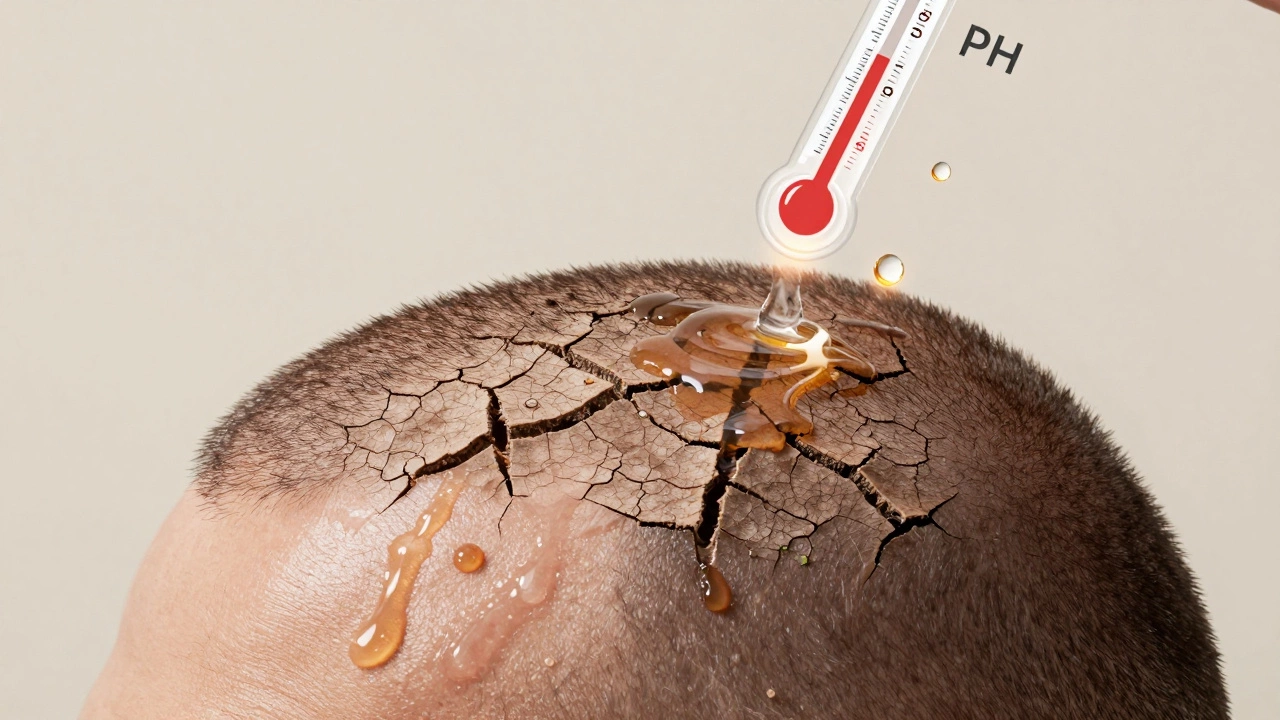
Not all shampoos are the same. Salon shampoos are formulated with specific pH levels - usually between 4.5 and 5.5 - to match your scalp’s natural acidity. This helps seal the cuticle, which is essential for:- Locking in moisture before a deep conditioning treatment
- Preventing color from fading too fast
- Ensuring heat protection products work as intended
Most at-home shampoos are alkaline (pH 7-8), which opens the cuticle. That’s fine for daily use, but it’s the opposite of what you want before coloring or straightening. Salon shampoos gently lift residue without stripping your hair’s natural balance. The water temperature matters too - lukewarm, not hot. Hot water swells the hair shaft too much, making it more vulnerable to damage during chemical processes.
What Happens If You Skip the Wash?
I’ve seen it happen. A client comes in with freshly washed hair, insists they don’t need it washed again, and then gets a full head of highlights. Result? The bleach lifted unevenly - some strands barely lightened, others turned orange. Why? The dry shampoo on her roots created a barrier. The stylist couldn’t get the formula to penetrate evenly.Another time, a client skipped the wash before a keratin treatment. The smoothing serum didn’t bond properly. The result? Two weeks later, her hair was frizzy again. She thought the treatment failed. It didn’t. It just never had a chance to work.
Skipping the wash isn’t saving time - it’s risking the outcome. Your stylist isn’t trying to upsell you. They’re trying to prevent a bad result.
It’s Also About Scalp Health
Salon shampoos often contain ingredients that target scalp concerns: dandruff, oiliness, sensitivity, or buildup from hard water. In Wellington, where the water is hard and mineral-rich, buildup on the scalp is common. A single wash at home doesn’t cut it. Salon shampoos use chelating agents to remove calcium and magnesium deposits - something your regular shampoo won’t touch.Plus, the scalp massage during the wash? It’s not just relaxing. It boosts circulation, helps loosen dead skin cells, and gives the stylist a chance to spot issues - redness, thinning, irritation - before they become bigger problems.
Why You Shouldn’t Just Show Up With Clean Hair
You might think: “I just washed it. Why waste time and money?” But here’s the catch: you’re not washing it the way they do.Salon shampoos are professional-grade. They’re concentrated. They’re designed to remove stubborn residue without over-drying. They’re used with proper technique - the right amount of product, proper lathering, targeted rinsing. Most people just splash water and rub their scalp. That’s not cleaning - that’s surface-level rinsing.
Also, the timing matters. If you wash your hair at 7 a.m. and go to the salon at 4 p.m., your hair has had 9 hours to reabsorb oils and redistribute residue. That’s long enough to ruin a precision service.
What If You’re on a Budget?
If you’re trying to save money, don’t skip the wash - ask for a basic shampoo service. Many salons offer a “shampoo only” option for under $15. It’s cheaper than redoing a bad color or paying for a treatment that didn’t take. Some even let you bring your own shampoo if you have a sensitive scalp - just don’t expect them to use it unless it’s salon-safe.And remember: the wash isn’t just about your hair. It’s part of the whole experience. It’s the moment you relax, the scent of the product, the warmth of the water. It’s the transition from “home” to “treatment.” Skipping it doesn’t save money - it steals the value.
Final Thought: It’s Not a Bonus - It’s a Requirement
Salons wash your hair because it’s the only way to guarantee a good result. It’s not about making you feel pampered - though that’s a nice side effect. It’s about chemistry, consistency, and control. Your hair doesn’t care if you washed it yesterday. It only cares if the product can reach it properly.Next time you sit in that chair, don’t resent the shampoo. Appreciate it. That wash? It’s the invisible foundation of everything that comes after.
Do I really need to wash my hair before going to the salon if I washed it the night before?
Yes. Even if you washed your hair the night before, natural oils, product residue, and environmental buildup have had time to return. Salon shampoos are formulated to remove these substances completely and prepare your hair’s pH for treatments. What you think is clean isn’t always clean enough for professional services.
Can I bring my own shampoo to the salon?
Some salons allow it, especially if you have allergies or sensitive skin. But most won’t use it for color or chemical treatments because they can’t guarantee it won’t interfere with the process. Always ask ahead of time. If they say no, it’s not about control - it’s about safety and results.
Why do salons use different shampoos than what I buy at the store?
Salon shampoos are concentrated, pH-balanced, and free from fillers like water and cheap surfactants. They’re designed to remove buildup without stripping moisture. Store-bought shampoos often contain silicones and sulfates that can interfere with coloring, straightening, or keratin treatments. Professional formulas are engineered for precision, not daily use.
Does washing hair before a cut really make a difference?
Absolutely. Wet hair behaves differently than dry hair. A stylist needs to see how your hair falls naturally, how it parts, and how it textures when clean and damp. Product buildup can make hair look thicker or thinner than it is, leading to inaccurate cutting. A clean wash gives the stylist the most accurate reading of your hair’s true structure.
Is the scalp massage during the wash just for relaxation?
Not entirely. While it’s relaxing, the massage also helps loosen product buildup, improves blood flow to the scalp, and lets the stylist check for signs of dandruff, inflammation, or thinning. It’s a quick health check disguised as a luxury - and it’s one of the most valuable parts of the service.