Medical Grade Skincare Value Calculator
How This Works
Compare your current skincare investment with medical grade alternatives to see the real value. Based on scientific facts from the article: medical grade products contain higher concentrations of active ingredients, have better stability, and deliver measurable results that often last longer than drugstore products.
Your Current Products
Medical Grade Alternative
Your Results
$0
Based on 3-month shelf life and 8-week replacement cycle
$0
Based on 6-month shelf life and 24-week replacement cycle
Why this matters: Medical grade products contain higher concentrations of active ingredients (15-20% vs 0.5-1% in drugstore), use stable packaging, and have clinical proof of effectiveness.
Ever picked up a bottle of medical grade skincare and blinked at the price? A simple serum can cost $150, $200, even $300. Meanwhile, you can buy a drugstore moisturizer for $12. It’s not just the label that’s different-it’s everything else. So why does medical grade skincare cost so much? It’s not just branding. It’s not just hype. There are real, measurable reasons behind the price-and they matter if you’re serious about your skin.
It’s Not Skincare. It’s Medicine.
Medical grade skincare isn’t just fancy moisturizer with a doctor’s name on it. It’s formulated and tested like a drug. That means it has to meet standards set by the FDA and other global regulatory bodies. Unlike over-the-counter products, which can make vague claims like "brightens" or "hydrates," medical grade products must prove their ingredients actually do what they say. That’s not easy. It takes years of clinical trials, controlled studies, and peer-reviewed data.Take retinoids, for example. You can buy a 0.025% retinol cream at the pharmacy. But a medical grade retinoid like tretinoin 0.1%? That’s a prescription-strength compound. It’s not just stronger-it’s been tested on hundreds of people over months to prove it reduces fine lines, evens tone, and increases collagen. That research doesn’t come cheap.
Higher Concentrations, Fewer Fillers
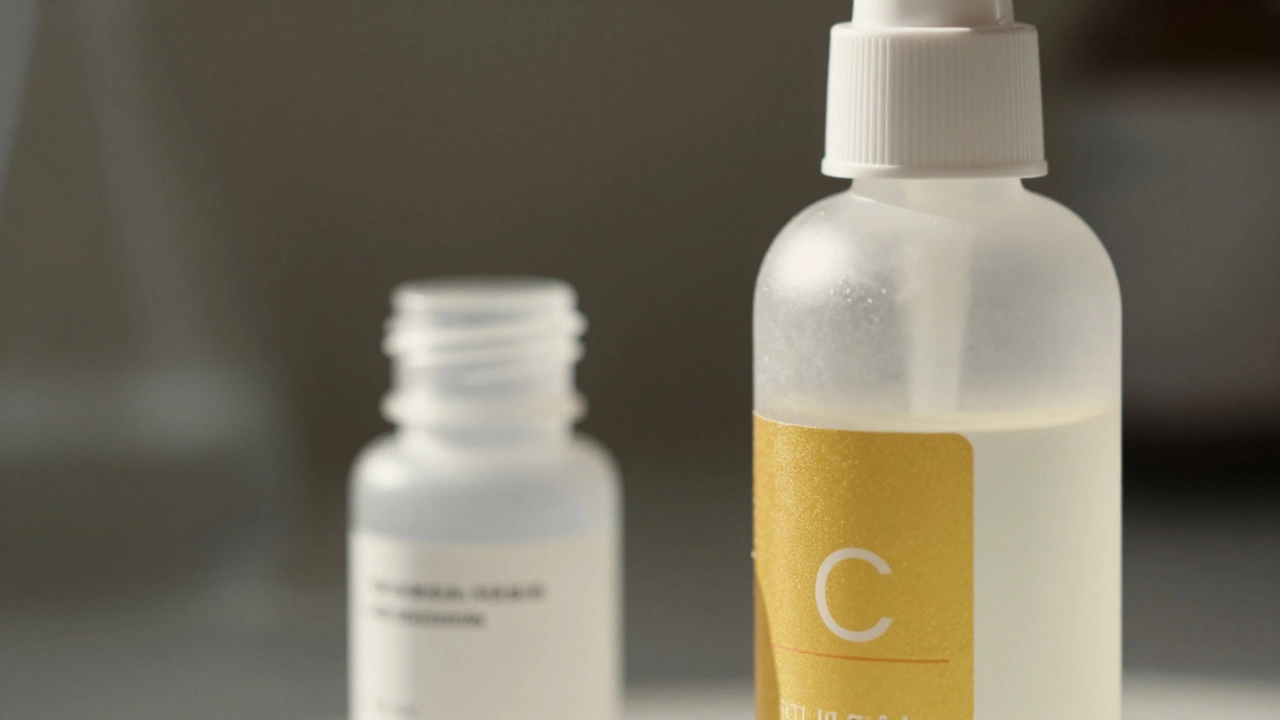
Drugstore products are packed with water, fragrances, preservatives, and thickeners. Why? Because they’re made for mass production. They need to be stable on shelves for years, smell nice, and feel smooth. But those additives dilute the active ingredients.Medical grade products skip the fluff. A typical medical grade vitamin C serum might contain 15-20% L-ascorbic acid. That’s the highest concentration proven to be stable and effective. Compare that to a $25 serum that lists vitamin C as the 12th ingredient. That’s barely a trace. The medical version doesn’t need to smell like a tropical vacation-it needs to work. And that means using more of the real stuff.
Stability and Packaging Are Part of the Cost
Active ingredients like retinol, vitamin C, and peptides are unstable. They break down when exposed to light, air, or heat. That’s why medical grade products come in opaque, airless pumps or dark glass bottles. Some even use nitrogen flushing to keep the formula fresh. A $5 plastic pump bottle from a drugstore? It lets oxygen in with every use. The product inside degrades fast. You’re not getting what’s on the label.That specialized packaging isn’t optional. It’s required to ensure the product remains potent until the last drop. And yes, that adds to the cost. But it also means you’re not wasting money on something that’s already half-dead by the time you open it.
Prescription-Only Ingredients
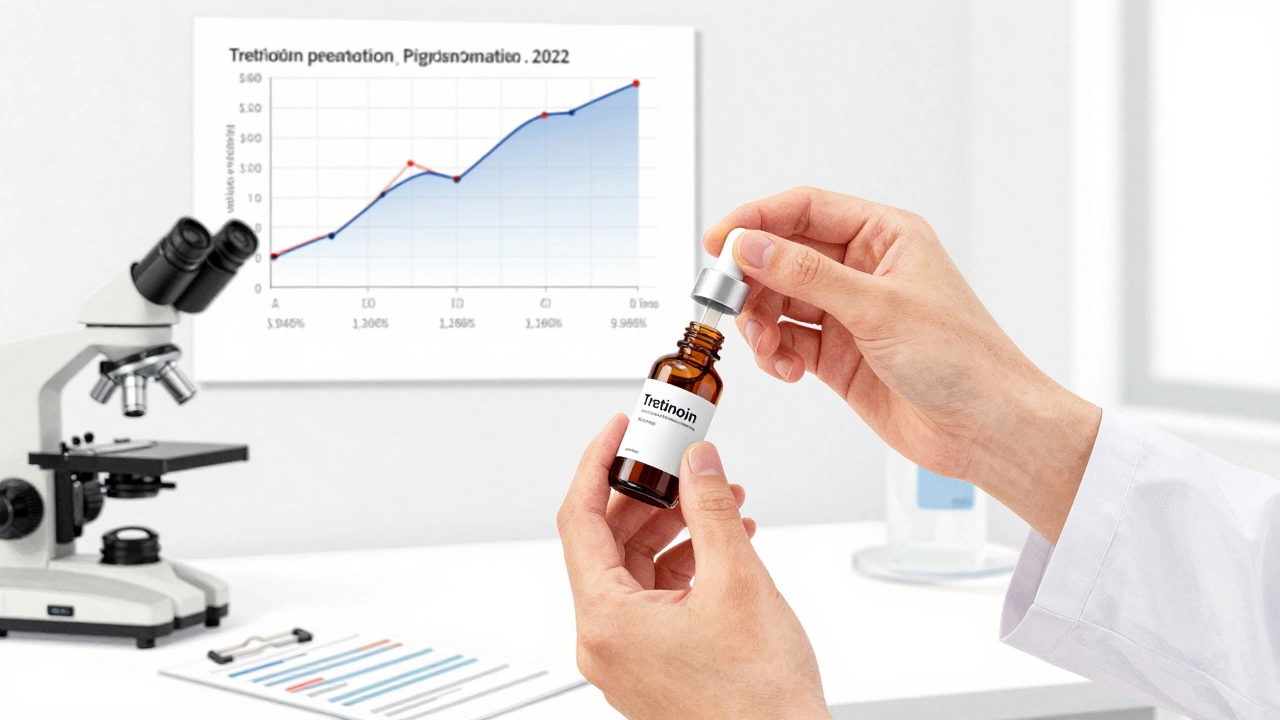
Many medical grade products contain ingredients you can’t buy without a prescription. Tretinoin, hydroquinone, azelaic acid, and high-dose niacinamide are all regulated. That means they can only be sold through licensed dermatologists, plastic surgeons, or certified medspas. The manufacturer can’t just ship them to Amazon or Target. They have to go through a controlled distribution chain.This limits supply. It also adds layers of oversight. Each batch is tracked. Each prescription is logged. Each practitioner has to be trained on proper use. All of that administrative and regulatory overhead gets factored into the price.
Formulated by Dermatologists, Not Marketing Teams
Most skincare brands hire marketers to create products based on trends. "Anti-pollution". "Blue light defense". "Glow from within". These are buzzwords, not science.Medical grade lines are developed by board-certified dermatologists. They start with a clinical problem-acne scarring, melasma, photoaging-and build a formula to solve it. The goal isn’t to look pretty on a shelf. It’s to change skin biology. That’s why you’ll see formulas with precise pH levels, penetration enhancers, and synergistic combinations. A good medical grade product doesn’t just have one hero ingredient. It has a team working together.
For example, a medical grade brightening serum might combine 8% tranexamic acid, 2% niacinamide, and 0.5% licorice root extract-all proven in studies to block melanin transfer. That’s not guesswork. That’s pharmacology.

No Advertising Budgets, But Higher Markup
You won’t see medical grade skincare on Instagram ads or billboards. Brands like SkinCeuticals, Obagi, or ZO Skin Health don’t spend millions on influencers. Their marketing is done by dermatologists in clinics. That means less money spent on ads-but higher margins to cover R&D, clinical testing, and regulatory compliance.Here’s the math: A $200 serum might cost $15 to produce. The rest? That’s the cost of proving it works, packaging it safely, distributing it legally, and training professionals to recommend it. It’s not a luxury. It’s a medical product with a price tag that reflects its value.
Results You Can Measure
The biggest difference? You can measure the results. Dermatologists use tools like dermoscopes, VISIA skin analyzers, and biopsies to track changes. A patient using a medical grade regimen might see a 40% reduction in pigmentation in 12 weeks. That’s not anecdotal. That’s data.Compare that to a drugstore product. Did your skin get brighter? Maybe. Did it improve texture? Possibly. But you can’t prove it. There’s no baseline. No before-and-after scans. No clinical documentation. Medical grade skincare gives you proof. And proof has value.
Is It Worth It?
If you’re happy with your $15 moisturizer and don’t care about fine lines, sun damage, or stubborn dark spots, then no-you don’t need it. But if you’ve tried everything and still struggle with acne scars, uneven tone, or signs of aging, medical grade skincare isn’t an indulgence. It’s the next step.Think of it like this: You wouldn’t use a toy hammer to fix a broken foundation. You wouldn’t use a grocery store battery to power a heart monitor. Why treat your skin any differently?
The price isn’t about status. It’s about science. It’s about potency. It’s about results you can trust. And if your skin is worth protecting, then it’s worth investing in.
Can I get medical grade skincare without seeing a dermatologist?
Some medical grade brands sell directly to consumers through authorized online retailers, but you still need a prescription for the strongest actives like tretinoin or hydroquinone. Most reputable brands require verification that you’ve been evaluated by a licensed provider. Avoid websites selling "medical grade" products without any professional oversight-those are often counterfeit or diluted.
How long does it take to see results from medical grade skincare?
It varies by product and concern. For acne, you might see improvement in 4-6 weeks. For pigmentation, 8-12 weeks is typical. Anti-aging results like collagen building and fine line reduction take 3-6 months. Medical grade products work deeper and slower than surface-level treatments. Patience is part of the process.
Are medical grade products better than laser treatments?
They’re not replacements-they’re partners. Lasers target texture and pigmentation quickly but don’t prevent future damage. Medical grade skincare maintains results and protects skin between procedures. Many dermatologists combine both: lasers for dramatic improvement, then medical grade products to sustain it.
Do medical grade products cause more irritation?
They can, because they’re stronger. But they’re also designed with buffers and stabilizers to reduce irritation. A dermatologist will start you on a lower concentration and gradually increase it. Most people tolerate them well when used correctly. Never start with the highest strength-your skin isn’t a lab rat.
Can I mix medical grade products with drugstore brands?
Sometimes, but not always. Mixing can dilute effectiveness or cause reactions. For example, using a drugstore vitamin C with a medical grade retinoid might destabilize both. Stick to one system unless your dermatologist approves a hybrid routine. Simplicity is key with potent ingredients.
If you're serious about your skin, stop comparing prices and start comparing results. The right medical grade product doesn’t just sit on your shelf-it changes your skin’s future.