Professional Skincare Investment Calculator
Not sure if you should switch to clinical-grade products? Answer these questions to determine your potential return on investment.
Your Professional Skincare Potential
0%Why this recommendation?
You’re standing in the aisle of a drugstore or scrolling through an online beauty retailer, staring at two bottles. One costs $15 and promises "radiance." The other costs $85 and claims to "correct hyperpigmentation." They look similar. They smell similar. But if you’ve ever wondered why your dermatologist or high-end esthetician rolls their eyes at the cheap stuff while swearing by the expensive stuff, you are asking the right question.
Here’s the blunt truth: Professional skincare is not just marketing hype designed to empty your wallet. It is a distinct category of skin health management that relies on higher concentrations of active ingredients, stricter manufacturing standards, and personalized protocols. Unlike over-the-counter (OTC) cosmetics, which focus largely on surface-level aesthetics, professional-grade formulations are engineered to alter skin physiology at a cellular level.
| Feature | Over-the-Counter (OTC) | Professional / Clinical Grade |
|---|---|---|
| Active Ingredient Concentration | Low (often <1% for potent actives like retinol) | High (20-30% acids, prescription-strength precursors) |
| Penetration Depth | Epidermis (surface layer) | Dermis (deeper structural layers) |
| Regulation | Cosmetic regulations (broad safety net) | Nutraceutical/Medical device standards (strict efficacy testing) |
| Goal | Temporary improvement, hydration, scent | Long-term correction, disease prevention, structural change |
The Science Behind the Price Tag
Why does a bottle of vitamin C serum from a pharmacy cost less than half what a clinic sells it for? It comes down to pH levels and stability. Vitamin C (ascorbic acid) needs a low pH environment (below 3.5) to penetrate the skin barrier effectively. Most mass-market brands add buffering agents to raise the pH so the product doesn’t sting or turn brown too quickly on the shelf. This makes the product stable but renders it largely ineffective for deep repair.
Professional brands, such as those formulated by chemists working with medical suppliers, prioritize bioavailability. They use encapsulated delivery systems-think of them as tiny microscopic taxis-that carry active ingredients past the outer dead layer of skin (the stratum corneum) and release them where they actually work. When you buy professional skincare, you aren't paying for the fancy glass jar; you're paying for the technology that ensures the ingredient reaches its destination before it degrades.
Who Actually Provides Professional Skincare?
This is where confusion often creeps in. Not everyone wearing a white coat is a doctor, and not every spa therapist prescribes clinical products. Understanding the hierarchy helps you know who to trust with your face.
- Dermatologists: Medical doctors (MDs) who diagnose skin diseases. They prescribe medications (like Tretinoin) and perform surgical procedures. Their focus is pathology and medical intervention.
- Medical Estheticians: Licensed professionals who work under the supervision of a dermatologist or plastic surgeon. They can perform medium-depth chemical peels, microdermabrasion, and laser therapies. They are the primary source for many high-end professional retail lines.
- Spa Estheticians: Licensed for basic facials, extractions, and superficial peels. While many carry professional lines, their scope is generally limited to maintenance and relaxation rather than medical correction.
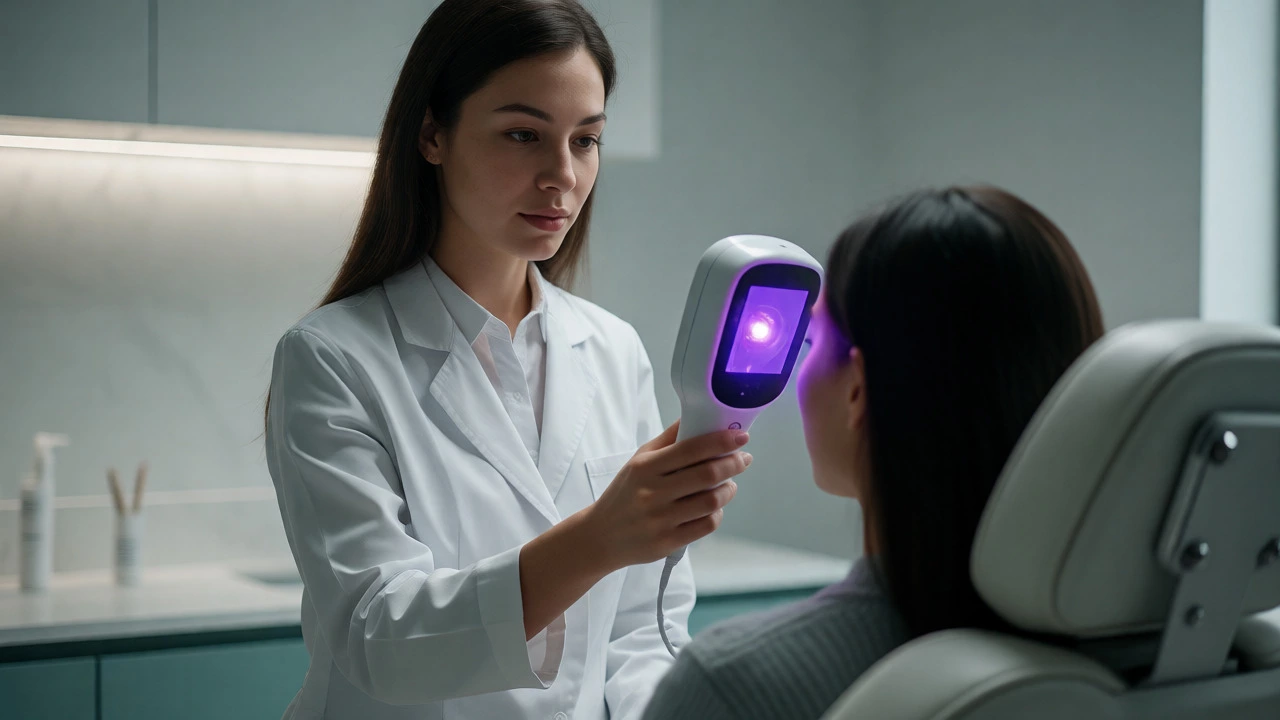
If you are looking for professional skincare, you should ideally seek out a provider who offers a consultation, not just a menu of services. A good practitioner will assess your skin type using tools like a Wood’s lamp (which reveals pigmentation and bacteria) or a digital skin analysis camera before recommending a regimen.
Key Ingredients That Define the Category
You won’t find these ingredients in your average supermarket moisturizer, or if you do, the concentration is negligible. These are the heavy lifters of the clinical world:
Retinoids (Prescription vs. OTC)
Vitamin A derivatives are the gold standard for anti-aging. OTC retinol must convert into retinoic acid within the skin to work, a process that loses potency. Professional brands often use retinaldehyde or encapsulated retinol in higher percentages (up to 1%), delivering results closer to prescription Tretinoin without the same level of irritation.
Hyaluronic Acid (Multi-Molecular Weight)
Everyone knows hyaluronic acid hydrates. But cheap versions sit on top of the skin and evaporate, sometimes pulling moisture *out* of your skin if the air is dry. Professional formulations use multi-molecular weights: large molecules plump the surface, while nano-sized molecules penetrate deeper to bind water within the dermis.
Growth Factors
These are proteins that signal your cells to regenerate. Originally derived from human blood plasma, modern lab-synthesized growth factors stimulate collagen production. They are expensive to produce and highly unstable, which is why they rarely appear in mass-market products. Brands like SkinMedica or PCA Skin have built entire empires around this single concept.

The Importance of Personalization
One size fits all is a myth in skincare. Your neighbor’s acne treatment might cause you eczema. Professional skincare thrives on customization. During a facial, an esthetician might mix a serum specifically for your current state-perhaps adding an antioxidant booster because you’ve been traveling, or increasing exfoliation strength because your skin has adapted to your previous routine.
This dynamic approach prevents plateauing. If you stick to the same $20 cleanser for five years, your skin adapts, and results stall. Professional protocols evolve. You might start with a gentle enzyme peel, move to a salicylic acid mask after six weeks, and then introduce a retinoid at night. This phased introduction builds tolerance and maximizes efficacy without damaging your barrier.
Is It Worth the Investment?
Let’s do the math. A $20 cream lasts two months. That’s $10 a month. A $90 professional serum lasts three months. That’s $30 a month. Is the difference worth it? For some, yes. For others, no.
You should invest in professional skincare if:
- You have specific concerns like melasma, severe acne scarring, or rosacea that OTC products haven’t touched.
- You want to prevent aging rather than fix it later. Prevention is cheaper than correction.
- You have sensitive skin and need fewer, higher-quality ingredients to avoid reactions.
You might skip it if:
- Your skin is resilient, clear, and you only need basic cleansing and sun protection.
- You are inconsistent with application. Expensive products wasted in a drawer are more costly than cheap ones used daily.
- You are currently pregnant or nursing and cannot use common actives like retinoids or high-dose salicylic acid.
Beware of "Pseudo-Professional" Marketing
The term "clinical" is loosely regulated. Any brand can slap the word "dermatologist-tested" on a bottle, even if one doctor tried it once and shrugged. True professional lines usually require purchase through a licensed practitioner or a verified clinic website. If you see a "professional" brand sold in a discount bin at a grocery store, check the ingredient list. Often, these are diluted versions of the real deal, reformulated for mass distribution.
Look for transparency. Reputable brands publish their pH levels, active percentages, and clinical trial data. If a brand hides behind vague terms like "proprietary blend" without disclosing key actives, treat it with skepticism.
Building Your First Professional Routine
Don’t overhaul everything overnight. Start with the core trio that forms the backbone of any clinical protocol:
- Cleanse: Use a pH-balanced cleanser that removes debris without stripping lipids. Avoid foaming sulfates if you have dry skin.
- Treat: Choose one active based on your primary concern. Antioxidants (Vitamin C, Ferulic Acid) for morning; Retinoids or Peptides for evening. Do not mix conflicting actives initially.
- Protect: Sunscreen is non-negotiable. Professional mineral sunscreens (Zinc Oxide/Titanium Dioxide) offer broad-spectrum protection without the chemical filters that can irritate compromised barriers.
Once this routine is established for 4-6 weeks, introduce a weekly exfoliation step. This gradual build-up respects your skin barrier, ensuring long-term compliance and better results.
Can I buy professional skincare directly from the brand?
It depends on the brand. Some companies like Obagi or SkinCeuticals restrict sales to authorized providers to ensure proper usage guidance. Others allow direct-to-consumer sales but may offer lower prices or bundles through clinic portals. Always verify that the seller is an authorized retailer to avoid counterfeit or expired stock.
How long until I see results from professional skincare?
Skin cell turnover takes approximately 28 days, though this slows with age. Expect initial hydration improvements in 1-2 weeks. Pigmentation changes and texture refinement typically take 8-12 weeks. Collagen remodeling, visible as reduced fine lines, requires consistent use for 6 months or longer.
Is professional skincare safe for sensitive skin?
Yes, often safer than OTC options. Professional lines tend to exclude common irritants like fragrance, essential oils, and harsh alcohols. However, high concentrations of actives can still cause irritation. Start slowly, patch test new products, and consult a professional to tailor strengths to your tolerance level.
Do I need a facial to use professional skincare?
Not strictly, but it helps significantly. Facials provide deep cleaning and exfoliation that home routines cannot replicate, allowing topical products to penetrate better. Many clinics offer discounts on retail products when purchased during a service visit, making the overall investment more manageable.
What is the difference between medical grade and cosmeceutical?
Cosmeceuticals are cosmetic products with biologically active ingredients purported to have medical benefits. Medical grade implies a higher standard of evidence, often involving peer-reviewed studies and stricter quality control. In practice, the terms overlap, but medical grade usually indicates stronger actives and proven efficacy data.