Beauty Brand Decoder
Click on a brand to reveal its parent company and key stats.
Maybelline
Drugstore MakeupCeraVe
Dermatologist SkincareMAC
Pro MakeupDove
Personal CareOlay
Anti-Aging SkincareNARS
Luxury CosmeticsCompany Name
Estimated Annual Revenue:
€0 Billion
Primary Strength:
Strength
Other Notable Brands Owned:
Test Your Knowledge
Q: Which conglomerate is known for dominating the Asian market with skincare science?
You walk into a drugstore or scroll through Sephora, and you are hit with a wall of logos. Some look familiar because your mom used them in the 90s. Others are viral on TikTok this week. But if you strip away the marketing noise and look at the cold, hard numbers, who actually owns the biggest slice of the global beauty pie?
The answer isn't just one company; it's a battle between massive conglomerates that own dozens of brands each. As of 2026, L'Oréal remains the undisputed king of the hill. They hold the largest market share globally by revenue, dwarfing competitors like Estée Lauder Companies and Unilever. But "biggest" can mean different things: most revenue, most units sold, or highest stock value. Let's break down who really runs the show.
Why L'Oréal Holds the Crown
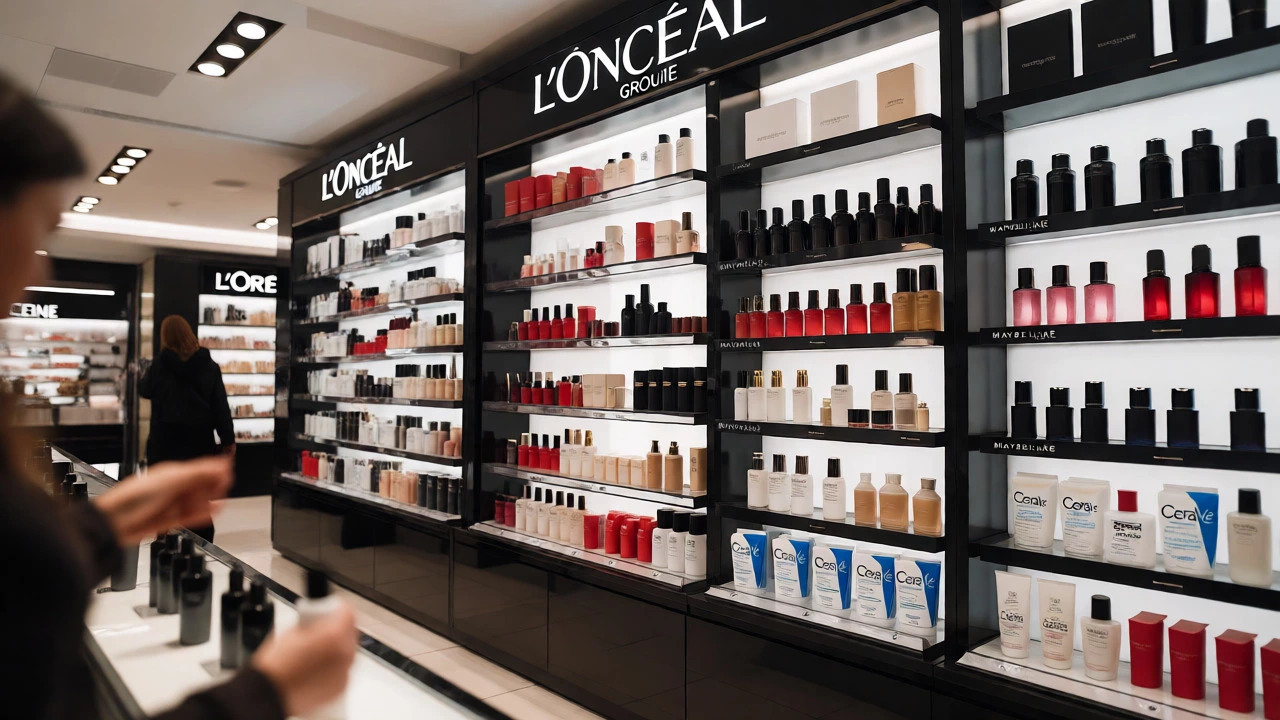
L'Oréal isn't just big; they are everywhere. You might not realize it, but when you buy a tube of Maybelline, a bottle of Lancôme, or a jar of CeraVe, you are giving money to the same parent company. This strategy is called portfolio diversification. By owning brands across every price point-from mass-market drugstore items to ultra-luxury department store goods-they capture customers at every stage of their life.
In recent years, L'Oréal has aggressively pivoted toward "Beauty Tech." They aren't just selling lipstick; they are selling personalized skincare diagnostics and hair color apps. This tech-forward approach helped them weather economic downturns better than traditional luxury houses. Their revenue consistently hovers around €40 billion annually, a figure that puts them far ahead of the second-place contenders. If you want to understand the scale, think of it this way: L'Oréal sells a product somewhere in the world roughly every two seconds.
The Heavy Hitters: A Market Share Comparison
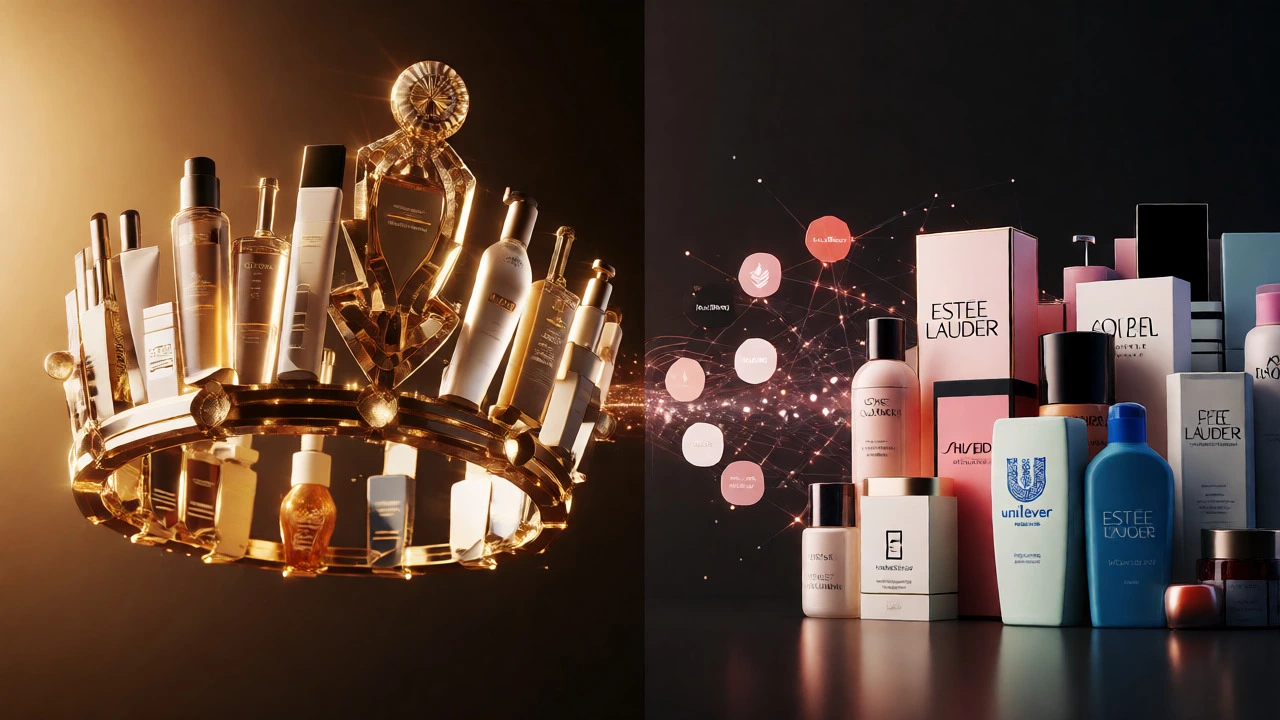
While L'Oréal leads, the competition is fierce. The top five companies control nearly half of the global beauty market. Here is how the major players stack up against each other in terms of reach and ownership.
| Company | Estimated Annual Revenue | Key Owned Brands | Primary Strength |
|---|---|---|---|
| L'Oréal Group | €41 Billion | Lancôme, YSL Beauty, Maybelline, CeraVe, Kiehl's | Global distribution & R&D innovation |
| Unilever | $50+ Billion (Total FMCG)* | Dove, Vaseline, Simple, TRESemmé | Mass-market volume & personal care dominance |
| Estée Lauder Companies | $15.8 Billion | MAC, Clinique, La Mer, Tom Ford Beauty, Jo Malone | Prestige/Luxury segment leadership |
| Procter & Gamble (P&G) | $82 Billion (Total FMCG)* | Olay, Head & Shoulders, Gillette Venus | Household trust & male grooming |
| Shiseido | $7.5 Billion | NARS, Clé de Peau Beauté, Drunk Elephant | Asian market dominance & skincare science |
*Note: P&G and Unilever revenues include food and household cleaning products, not just beauty. In pure beauty sales, L'Oréal still outpaces them significantly.

It’s Not Just About Lipstick: Skincare is the New Gold
If you thought makeup was the biggest category, you'd be wrong. Skincare now accounts for over 40% of the total beauty market. This shift changed who became the biggest player. Ten years ago, makeup giants ruled. Today, companies that mastered dermatological skincare won.
Look at CeraVe. It went from a niche pharmacy brand to a billion-dollar asset under L'Oréal's roof. Why? Because consumers stopped buying expensive creams based on scent and started buying ingredients like ceramides and hyaluronic acid based on science. This trend forced legacy brands to rethink their entire product lines. If you're wondering why your favorite perfume brand suddenly launched a serum, it's because margins in skincare are higher and loyalty is stickier once someone finds a routine that works.
The Rise of Indie Brands and Acquisition Culture
Does being the "biggest" mean the best? Not always. The fastest-growing brands right now are often indie startups that get bought out by the big guys. When Rare Beauty exploded, LVMH (the luxury giant behind Fenty) didn't build a new factory; they leveraged existing supply chains. Similarly, when Drunk Elephant became a cult favorite, Shiseido acquired it for $1 billion.
This acquisition model is how big brands stay relevant. They monitor social media trends. If a small brand goes viral on Instagram for a specific ingredient combo, the conglomerate buys it before it becomes too expensive. So, while L'Oréal is the biggest owner, many of the products you love today started as tiny operations in garages or apartments. The "biggest" brand is essentially a collection of the smartest acquisitions.
Regional Differences: Who Wins Where?
Geography matters. While L'Oréal is global, certain regions have local favorites that punch above their weight.
- North America: Dominated by Estée Lauder and Procter & Gamble due to strong retail partnerships with Walmart and Target.
- Asia-Pacific: Shiseido and Amorepacific (Korea) hold significant sway. Korean beauty standards heavily influence global trends here.
- Europe: L'Oréal is home turf. They have unparalleled shelf presence in pharmacies and supermarkets across France, Germany, and Italy.
- Australia/NZ: We see a mix. While global giants dominate, local clean-beauty brands are gaining traction, though they rarely challenge the top three in revenue.
If you live in Wellington, you likely see L'Oréal brands in Chemist Warehouse and Estée Lauder counters in department stores. But notice how smaller, eco-conscious brands are taking up more end-cap space. That's the pressure the big dogs feel.
How to Spot the Parent Company
Ever wonder who owns that random brand you found online? Here is a quick heuristic to decode the corporate web:
- Check the Price Point: Ultra-luxury usually points to LVMH, Estée Lauder, or Chanel (who stays independent). Mass-market points to L'Oréal, Unilever, or P&G.
- Look at the Ingredients: If it's heavily marketed on "clinical results," it's likely backed by a major R&D lab (L'Oréal or Beiersdorf).
- Read the Fine Print: On the back of packaging, look for "Manufactured for..." or "Distributed by..." This often reveals the parent entity.
Understanding this helps you make smarter choices. If you want ethical sourcing, knowing that a brand is owned by a massive conglomerate might change your mind about its sustainability claims. Conversely, if you want consistent quality, sticking with established parents like L'Oréal offers safety.
Is L'Oréal the only big cosmetics brand?
No, but it is the largest by pure beauty revenue. Other major players include Estée Lauder Companies, Unilever, Procter & Gamble, and Shiseido. Each dominates different segments, such as luxury, mass-market, or Asian markets.
Who owns Maybelline?
Maybelline is owned by the L'Oréal Group. It serves as their primary entry-level makeup brand, competing directly with Revlon and CoverGirl in the drugstore aisle.
Is Estée Lauder bigger than L'Oréal?
No. In terms of total revenue and global market share, L'Oréal is significantly larger. Estée Lauder focuses more heavily on the prestige and luxury sectors, whereas L'Oréal has a broader portfolio including mass-market and active cosmetics.
Which country has the biggest cosmetics market?
The United States is currently the largest single-country market for beauty products, followed closely by China. However, growth rates in Southeast Asia and India are outpacing these mature markets.
Do big brands test on animals?
Policies vary. L'Oréal has committed to no animal testing for finished products since 2013, except where required by law (like in mainland China, though regulations there are changing). Always check for Leaping Bunny or PETA certification if this is critical to you.