
Build Your Perfect Skincare Routine
Select your skin type and primary concern to generate a personalized AM/PM guide.
You’ve probably seen those ten-step Korean beauty routines on TikTok, or maybe you’re still using a bar of soap that’s been sitting in your shower since 2019. Both extremes are missing the point. A proper skin care routine isn’t about how many bottles you own; it’s about consistency and using products that actually work with your skin’s biology, not against it.
Here’s the truth: most people over-cleanse and under-protect. Your skin barrier-that thin layer of lipids holding everything together-is fragile. If you strip it with harsh scrubs or ignore it by skipping sunscreen, no amount of expensive serums will fix the damage. Whether you have oily, dry, or combination skin, the core structure remains the same. You just tweak the specific products based on your needs.
Quick Summary / Key Takeaways
- AM Routine: Cleanse gently, hydrate, protect with SPF. Keep it short (3 steps max).
- PM Routine: Remove makeup/sunscreen, treat issues (acne/aging), repair with moisturizer.
- Sunscreen is non-negotiable: It prevents 80% of visible aging. No exceptions, even indoors.
- Consistency beats intensity: Doing three simple things daily works better than doing ten things once a week.
- Patch test new products: Wait 24 hours to check for reactions before applying to your whole face.
The Morning Routine: Protect and Hydrate
Your morning job is defense. While you sleep, your skin repairs itself. In the morning, you need to shield it from UV rays, pollution, and free radicals. Don’t waste time with heavy treatments here; they might make your skin sensitive to sunlight later.
Start with a gentle cleanser. If you have dry skin, you might skip cleansing entirely and just splash with water. Why? Because your natural oils from the night are valuable. If you have oily skin, use a low-pH foaming cleanser to remove excess sebum without stripping the barrier. Look for ingredients like glycerin or ceramides, which help maintain moisture while cleaning.
Next, apply an antioxidant serum. Vitamin C is the gold standard here. It brightens dullness and boosts your sunscreen’s effectiveness. But if Vitamin C stings or oxidizes too quickly (turning orange/brown), try Niacinamide instead. It controls oil production and reduces redness. Apply this to damp skin to help absorption.
Finish with moisturizer and sunscreen. Yes, even if you have oily skin. Skipping moisturizer can actually make your skin produce *more* oil to compensate for dehydration. Use a lightweight, gel-based moisturizer if you’re oily, and a cream-based one if you’re dry. Then, apply broad-spectrum SPF 30 or higher. This is the single most important step. Without it, all other efforts are wasted because UV damage undoes collagen production faster than any serum can rebuild it.
The Evening Routine: Repair and Treat
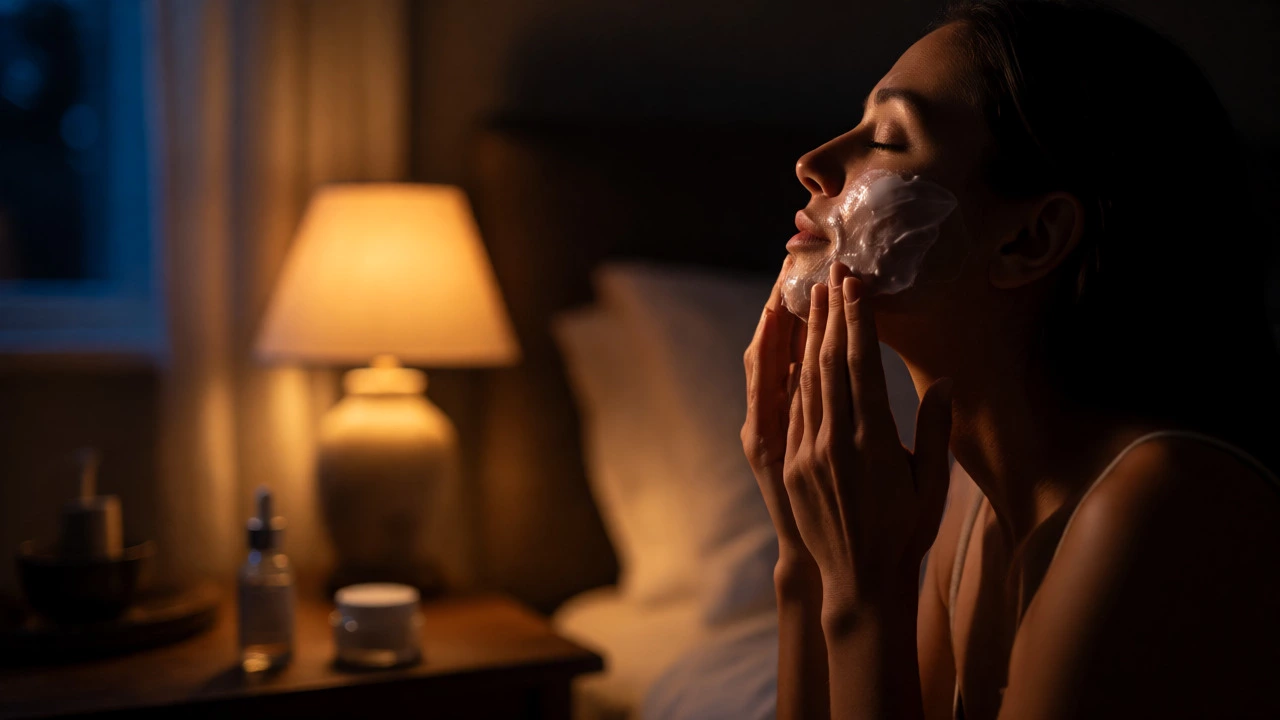
Nighttime is when your skin goes into repair mode. Cell turnover peaks between 10 PM and 2 AM. This is your window to address specific concerns like acne, hyperpigmentation, or fine lines.
If you wear makeup or sunscreen, double cleansing is worth trying. Start with an oil-based balm or micellar water to break down waterproof products. Follow up with your regular water-based cleanser. This ensures your pores are truly clear so active ingredients can penetrate effectively.
Now, apply your treatment actives. This is where you target problems. Retinoids (like retinol or prescription tretinoin) are best applied at night because sunlight degrades them. They speed up cell turnover and boost collagen. Start slow-twice a week-to avoid irritation. If you struggle with acne, benzoyl peroxide or salicylic acid can be spot-treated or used as a leave-on exfoliant. For dark spots, look for alpha arbutin or azelaic acid.
Seal everything with a richer moisturizer. Night creams often contain heavier occlusives like shea butter or squalane to lock in hydration overnight. This prevents transepidermal water loss (TEWL), keeping your skin plump and calm while you sleep.
Choosing Products Based on Skin Type
There is no "one size fits all" product list. What works for your friend with oily skin might clog your pores if you’re dry. Here’s how to match textures to your needs.
| Skin Type | Cleanser Texture | Moisturizer Texture | Key Active Ingredient |
|---|---|---|---|
| Oily/Acne-Prone | Gel or Foaming | Oil-free Gel | Salicylic Acid, Niacinamide |
| Dry/Dehydrated | Cream or Milk | Rich Cream | Hyaluronic Acid, Ceramides |
| Combination | Low-Foam Gel-Cream | Lightweight Lotion | Niacinamide, Azelaic Acid |
| Sensitive | Fragrance-Free Cream | Barrier Repair Balm | Centella Asiatica, Oat Extract |
Notice the pattern? Oily skin needs lightweight, non-comedogenic formulas. Dry skin needs occlusives to hold water. Sensitive skin needs minimal ingredients to reduce reaction risks. Always patch-test new products on your inner arm or behind your ear for 24 hours before slathering them on your face.
Common Mistakes That Wreck Your Skin Barrier
Most skin issues aren’t caused by bad genes; they’re caused by bad habits. The biggest culprit is over-exfoliation. Using physical scrubs (like apricot kernels) every day creates micro-tears in your skin. Chemical exfoliants (AHAs/BHAs) are gentler but still dangerous if used daily. Stick to exfoliating 1-2 times a week max.
Another mistake? Ignoring the neck and chest. These areas show age faster than your face because they have fewer oil glands and get less attention. Extend your skincare routine downward. Also, stop touching your face. Your hands carry bacteria that cause breakouts. If you must touch your face, wash your hands first.
Finally, don’t expect overnight results. Skincare is a marathon. Acne treatments take 6-8 weeks to show full effects. Hyperpigmentation can take months. Consistency matters more than perfection. Missing a day won’t ruin you, but quitting after two weeks because you didn’t see magic will.

Troubleshooting: When Things Go Wrong
Breakouts after starting a new routine? This could be purging (accelerated cell turnover bringing underlying pimples to the surface) or breaking out (irritation). Purging happens in areas where you usually get acne and clears up in 4-6 weeks. Breaking out appears in new places and persists. If it hurts, burns, or itches, stop immediately.
Dry patches despite moisturizing? You might be using too many active ingredients. Strip back to basics: cleanser, moisturizer, SPF. Add actives back one at a time, waiting two weeks between each addition. This helps identify the culprit.
Sunscreen feels greasy? Try a chemical sunscreen with modern filters like Tinosorb S or Uvinul A Plus. They absorb better than older zinc oxide formulas. Or switch to a powder SPF for reapplication over makeup.
Do I really need a separate eye cream?
Not necessarily. Most eye creams are just expensive moisturizers in small jars. If your regular moisturizer is safe for the eye area and doesn’t cause milia (tiny white bumps), use it. However, if you have specific concerns like puffiness, caffeine-based eye gels can provide temporary vasoconstriction. For deep wrinkles, retinol is more effective, but start with a lower concentration near the eyes.
Can I use vitamin C and niacinamide together?
Yes, the old myth that they cancel each other out has been debunked. Modern formulations allow both to coexist stably. In fact, they complement each other well. Vitamin C protects against environmental damage, while niacinamide strengthens the barrier and controls oil. Just ensure your pH levels are compatible, or apply them at different times if you have very sensitive skin.
How long does it take to see results from retinol?
Expect a "retinol uglies" phase in the first 2-4 weeks, where skin may peel or appear worse due to increased cell turnover. Visible improvements in texture and tone typically appear after 8-12 weeks. Significant anti-aging benefits require consistent use for 6 months or longer. Patience is key.
Is natural skincare always better?
No. "Natural" is an unregulated marketing term. Poison ivy is natural, but it irritates your skin. Essential oils, common in natural brands, are frequent allergens. Synthetic ingredients like hyaluronic acid and peptides are often safer, more stable, and more effective than their natural counterparts. Focus on ingredient efficacy, not origin.
Should I change my routine in winter?
Yes, especially in climates like Wellington where wind and humidity changes affect skin. In colder months, switch to a richer moisturizer and consider adding a humidifier to combat dry indoor air. You might also reduce exfoliation frequency if your skin feels tight or sensitive. Sunscreen remains essential year-round, as UV reflection from clouds and surfaces persists.
Final Thoughts: Keep It Simple
A proper skin care routine isn’t about following trends; it’s about respecting your skin’s limits. Start with cleanse, moisturize, protect. Once that’s solid, add one treatment at a time. Listen to your skin-if it feels tight, add moisture. If it breaks out, simplify. There’s no shame in a three-step routine that actually gets done versus a ten-step ritual you skip twice a week. Your future self will thank you for the consistency, not the complexity.